
How Durable Are Aluminum Die Casting Auto Parts?
2026-07-28
Aluminum die casting auto parts deliver exceptional durability through a combination of material science and precision manufacturing. These components routinely achieve service lives exceeding 10-15 years in demanding automotive environments. The high-pressure die casting process creates a dense microstructure with minimal porosity, yielding parts that resist mechanical fatigue, thermal cycling, and environmental corrosion. Alloys like A380 and ADC12 provide tensile strengths ranging from 310-330 MPa while maintaining lightweight characteristics that support fuel efficiency and electric vehicle performance requirements across diverse operating conditions.
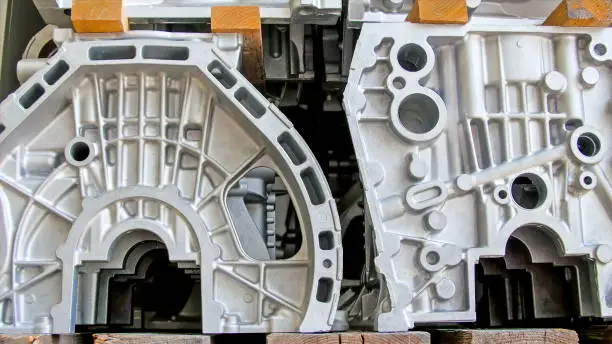
Understanding Aluminum Die Casting and Its Role in Automotive Durability
How we make car parts has changed as a result of aluminum die casting auto parts. In this precise process, liquid aluminum metal is injected into hardened steel molds at pressures of up to 30,000 psi. This makes parts that are very accurate in terms of their dimensions and surface quality.
The Core Process Behind Long-Lasting Components
High-Pressure Die Casting (HPDC) is a way to make parts for cars that have more than one design feature built into a single piece. In this way, there are no more soldered parts, which often break when they are under stress. When fast-moving liquid aluminum fills the die hole, it picks up complex shapes like mounting bosses, cooling channels, and reinforcement ribs. The fast solidification under pressure lowers the size of the grains and the number of holes to below 2%, which directly improves the resistance to wear. From our experience making things, we know that properly cast aluminum parts can survive rotational loading tests that go over 500,000 times without starting to crack.
Material Properties That Define Durability
Automotive-grade aluminum metals have specific benefits when it comes to how long parts last. Die casting often uses the A380 alloy, which has about 8.5% silicon. This makes the alloy more fluid during casting and gives it a natural resistance to wear. Because they have a specific gravity of only 2.7 g/cm³, these metals are as strong as steel but lighter, with 65% less mass per unit. The thermal conductivity of 96–120 W/m·K makes it easy for cast aluminum parts to get rid of heat, which keeps thermal stress from building up and breaking down the mechanical features. Controlling the chemical makeup of an object makes sure that it always works the same way. The natural oxide layer on aluminum protects against corrosion and extends its useful life in hard environments.
Applications Demanding Maximum Durability
Cast aluminum parts are put through a lot of stress in automotive systems. Engine blocks have to be able to go from room temperature to working temperatures above 200°C over and over again while keeping the bore limits within 0.05mm. When the engine works, vibrations and shock loads are constantly sent to the gearbox housings. To protect energy storage systems and handle thermal loads during rapid charging cycles, battery enclosures for electric vehicles need to be structurally sound. Parts of the suspension are constantly hit by other vehicles and are exposed to road salt, water, and debris. Die-cast aluminum's natural qualities, which include being strong, not rusting, and easy to shape, make it perfect for all of these situations.
Comparing Aluminum Die Casting with Alternative Manufacturing Methods
Buying teams can make better decisions about where to get things when they know how aluminum die casting auto parts compare to other ways of making things. Each method has its own pros and cons when it comes to sturdiness, cost, and production capacity.
Sand Casting Versus Die Casting Durability
Sand casting is an old method that is still used for small-scale production. With this method, liquid metal is poured into sand molds to make parts that have porosity levels between 5 and 8 percent. When compared to die casting, the coarser grain structure and higher void content make the mechanical properties much worse. Even though sand casting can handle bigger parts and costs less for the tools used, the parts that are made need a lot of work to get them to the right specs. When you die cast something, the surface finish is better right out of the mold, and the size stays the same within ±0.1mm across production runs. Because the material structure of die-cast parts is tighter, they have 30–40% higher tensile strength and a much longer fatigue life when loaded and unloaded many times.
Magnesium Die Casting Trade-offs
With a density about 35% lower than aluminum, magnesium die casting is an even better way to reduce weight. However, magnesium alloys are hard to make last in car use. The material is less resistant to rust, so it needs a lot of surface processes to keep it from breaking down when it comes in contact with metals that are not the same. Additionally, magnesium parts are less resistant to pressure and can break when temperatures drop below -20°C. The properties of magnesium are good for certain uses, like camera housings. On the other hand, the properties of aluminum die casting provide the balanced durability profile needed for critical automotive systems exposed to temperature extremes, vibration, and environmental stress.
Forging and Stamping Limitations
Compressive forming is used to make forged aluminum parts with great grain flow and mechanical qualities. Forging, on the other hand, needs a lot of secondary machining to make complex shapes, which increases production costs and lead times. Stamping steel makes lightweight frames and structural parts, but it doesn't let you create in three dimensions like casting does. Stamped parts often need more than one piece to be joined together, which creates stress points and possible breakdown points. Die casting combines many different parts into one piece, which gets rid of the need for fasteners, reduces weight, and improves stability by incorporating design features that can't be done with pressing or forging.
Aluminum Die Casting Process Insights That Impact Part Durability
The quality of the manufacturing process for aluminum die casting auto parts determines how long these components will last. Controlling the process at every stage of production has a direct effect on how well the final part works and how long it lasts in service.
Mold Design Engineering for Structural Integrity
Die design is the basis for making parts that last. To control the flow of metal and reduce noise during cavity filling, engineers put gates, runners, and spills in the right places. Using cooling channels to manage heat properly keeps solidification rates steady, which stops hot spots and shrinkage porosity. Optimizing wall thickness strikes a balance between how well the material works and what the structure needs. Usually, the minimum sections are kept at about 2.5 mm, and abrupt changes that cause stress concentrations are avoided. The placement and shape of the ribs strengthen important load lines without adding extra weight. Advanced modeling software suggests fill patterns and finds possible defect zones before the building of the tool starts. This makes sure that the mold design supports the long-term reliability of the component.
Alloy Selection and Quality Control Standards
The design of the material has a direct effect on how long the component lasts and how well it works, and for aluminum die casting auto parts, A380 alloy offers good castability and moderate strength for general automotive uses, while A383 or custom formulations with increased copper content provide higher tensile strength and elevated-temperature performance for engine compartment components, with spectrographic analysis verifying incoming material chemistry and ISO 9001 quality systems ensuring consistent processing and reduced defects. A380 alloy is easy to cast and has a moderate level of strength, making it good for general automotive uses. When better mechanical properties are needed, A383 or custom alloy formulations raise the tensile strength while keeping the ability to fill dies. Adding copper makes engine compartment parts stronger at high temperatures, and changing the amount of silicon in the mix improves fluidity and casting yield. Spectrographic analysis is used to check the chemical makeup of incoming materials and make sure that each heat meets strict limits for alloying elements. Process documentation and traceability systems keep track of lots of materials as they are used in production. This helps with quality investigations and efforts to keep getting better. Following the ISO 9001 quality management systems creates controlled production settings where processes are carried out consistently, reducing the number of variations and defects.
Post-Casting Operations That Enhance Longevity
During secondary processes, raw castings are turned into finished car parts that are ready to be used in harsh circumstances. The microstructure is changed by heat treatment processes to improve the mechanical qualities. For example, T6 temper aging raises the yield strength by 40% while making the dimensions more stable. When CNC machines are used, they can meet tight tolerances of just ±0.02mm on connecting surfaces, bearing bores, and fastening holes. Shot blasting is used to prepare the surface by removing oxide layers and making the textures similar so that the next finish can be applied. Powder coating or e-coating systems create shields that protect against corrosion from the environment. The coating thickness can be anywhere from 60 to 100 microns, based on how bad the exposure is. Coordinate measuring machine (CMM) scanning, pressure testing, and destructive sampling are all part of the final inspection protocols that make sure the dimensions are correct, the surface is good, and the material has the right properties. This proves that the process works and that the part is ready to be installed.
Procurement Considerations for Durable Aluminum Die Casting Auto Parts
Choosing the right manufacturing partner is important for making sure that the aluminum die casting auto parts you buy will last and help your product be successful in the long run. There are more than just unit costs to think about when evaluating strategic buying.
Supplier Certification and Technical Capability Assessment
Automotive supply chains require suppliers to be carefully screened. Getting IATF 16949 certification shows that you really care about quality management systems that are made just for making cars. This standard calls for process controls that are written down, statistical process tracking, and methods for continuous improvement that cut down on variation and stop errors. Along with certifications, technical capability assessment looks at how complex the equipment is and how the process control systems work. When compared to manual processes, suppliers who use modern die casting cells with automated ladling, real-time shot tracking, and built-in quality checking offer more consistent results. It doesn't matter what kind of engineering support you have. Being able to work together on design optimization, do design for manufacturability (DFM) reviews, and make rapid prototypes all speed up development while making parts more reliable.
Evaluating Production Systems and Quality Infrastructure
A supplier's manufacturing system shows how well they can regularly deliver durable parts, and for aluminum die casting auto parts, modern facilities with casting tonnages ranging from 280 to 2000 tons, in-house CNC machining, CMM inspection, and metallurgical laboratories demonstrate the vertical integration and quality control necessary for reliable production, while environmental compliance and aluminum recycling capabilities indicate manufacturing maturity and sustainability commitment. Modern facilities have a range of casting tonnages, from 280 tons to 2000 tons, so they can handle a wide range of part shapes and output rates. With in-house production, wait times are cut down, and design changes can be made quickly during the development phase. CNC machining centers, CMM inspection tools, and metallurgical labs all work together to show how vertical integration controls quality all the way through the manufacturing process. Environmental compliance, such as systems for treating wastewater and recycling aluminum, shows that the business is mature and committed to sustainability. By going to production sites, you can learn about how the workplace is organized, how equipment is maintained, and the culture of quality. These are all things that affect how long parts last and how reliable the supply chain is.
Building Strategic Partnerships for Continuous Improvement
Long-term value creation is limited by transactional ties with suppliers. Strategic relationships encourage working together to solve problems and come up with new ideas that improve the performance of parts over the span of a product. During regular technical reviews, performance data from the field is looked at to find ways to make things better, and design changes are made that either make the product last longer or lower the number of guarantee claims. Value engineering projects run by suppliers may offer different alloys, changes to the shape or process that make the product last longer while keeping costs low. Clear communication about planning capacity, material availability, and production schedules keeps supplies from running out and helps just-in-time inventory strategies work. Support for warranties and quick technical help give customers faith in the supplier's skills and show that they care about their success after the initial delivery of parts.
Real-World Case Studies: Durability Success Stories of Aluminum Die Casting Auto Parts
Real-life examples show how aluminum die casting auto parts fix problems with the longevity of cars. These examples show the material and process benefits that lead to measurable improvements in performance.
Electric Vehicle Battery Enclosure Development
A major electric vehicle (EV) maker needed thin, lightweight structures to protect lithium-ion battery packs and handle heat loads during fast-charging processes. Traditional steel shelters added a lot of weight, which cut the range of the car by 15 to 20 miles per charge. Together with an expert die casting partner, the engineering teams came up with a design for an aluminum enclosure that includes mounting points, wire routing channels, and heat control connections all in one casting. For prototype versions, the A356 alloy was great for fixing welds, and it had a production strength of more than 240 MPa. The placement of the ribs was optimized using computational modeling to meet crash safety standards while using the least amount of material. The finished design cut the weight by 40% compared to steel options while still keeping the structure strong for an expected 200,000-mile service life. Field tests showed that the cast aluminum shell could withstand temperature changes of -40°C to 60°C without losing its shape or the seal breaking.
High-Performance Engine Component Optimization
For racing, an automotive performance division needed cylinder head covers that were both lightweight and very good at reducing vibrations. Existing magnesium casts cracked after 50 hours of endurance tests because they weren't stiff enough and got too hot. Moving from magnesium alternatives to aluminum die casting with built-in reinforcement ribs increased structural rigidity by 35% while adding only 8% weight. The aluminum material worked better with bolt pressure requirements and didn't cause thread stripping problems like magnesium does. Surface treatments, such as hard anodizing, made sealing surfaces with wear-resistant finishes that stopped leaks from forming when they were used at high temperatures for a long time. During full competition seasons, race teams reported that no parts broke. This proved that the improvements in reliability made by optimizing materials and manufacturing processes were real.
Commercial Vehicle Suspension Bracket Reliability
Fleet owners wanted suspension parts for heavy-duty trucks that could last for 500,000 miles without needing to be serviced. Weld fatigue failures in fabricated steel brackets happened after about 200,000 miles, which caused a lot of repairs and vehicle downtime. Welded joints were not needed at all because die-cast aluminum support frames with built-in gussets and better load paths were used instead. The stress was spread out evenly because it was made of a single piece. This stopped cracks from starting in places that are common in multi-piece assemblies. The strength-to-weight ratio of A383 metal was just right to support heavy vehicles while lowering the amount of unsprung mass, which made the ride better. For accelerated durability testing, prototypes were loaded and unloaded 2 million times, which was meant to simulate impacts from potholes and cornering forces. A check after the test showed that there were no changes in the structure or dimensions. The fleet application showed that the cast aluminum brackets had been used for more than 500,000 miles, which proved the manufacturing method and saved a lot of money over their lifetime because they needed less upkeep.

Conclusion
Through the use of cutting-edge materials, precise manufacturing techniques, and well-thought-out engineering design, aluminum die casting auto parts have a history of durability. The technology creates parts that meet strict car standards for mechanical strength, resistance to environmental damage, and long service life. It also helps with weight reduction goals that are important for fuel economy and electric vehicle performance. It's helpful for procurement teams to know about the process variables, comparative advantages, and seller qualification standards that make sure the parts they buy will last. Real-world uses in a variety of automotive systems show that aluminum die casting is a reliable method for making important parts that will have to work in tough conditions for a long time.
FAQ
What factors most significantly impact aluminum die-cast part durability?
The main things that determine longevity are the choice of material, the control of the process, and the optimization of the design for aluminum die casting auto parts. The composition of an alloy changes its basic mechanical properties and its ability to resist corrosion. Microstructure density and porosity levels are affected by process variables such as injection pressure, metal temperature, and cooling rates. How well parts spread loads and resist fatigue is based on design factors like even wall thickness, where ribs are placed, and how to avoid stress concentration. Post-casting processes, such as heat treatment and protective coats, make the structure even more resistant to the environment and keep its shape over time.
How does aluminum die casting durability compare to cast iron automotive components?
Because it resists wear better and reduces vibrations better, cast iron is still used in engine blocks and brake parts. But aluminum die castings have big weight advantages—they can cut the mass of parts by 60–65% while still making them strong enough if they are designed correctly. Aluminum is also better at resisting corrosion when it doesn't have any coatings on it. More and more, modern automobile applications choose aluminum when reducing weight directly improves fuel economy or vehicle dynamics. These applications are willing to accept small trade-offs in certain material properties through careful engineering design that takes advantage of aluminum's manufacturing flexibility.
Can aluminum die-cast automotive parts be repaired if damaged?
How possible it is to fix something depends on how it works and how bad the damage is. Cosmetic damage to the surface can often be fixed by sanding, filling, and recoating. Most of the time, structural cracks or measurement distortion mean that a part needs to be replaced instead of fixed, especially in safety-critical situations. Some metals, like A356, can be fixed with TIG welding as long as the process is done under controlled conditions and the right filling materials and post-weld heat treatment are used. Production facilities usually make parts with enough tolerances so that minor damage doesn't affect how well they work. However, inspection and engineering evaluation should be used to decide whether to repair or replace an item.
Partner with Fudebao Technology for Superior Aluminum Die Casting Auto Parts
Aluminum die casting auto parts are made by Zhejiang Fudebao Technology Co., Ltd., a reliable company that works with vehicle OEMs and tier-1 suppliers all over North America. We can do the whole production process, from melting the metal to precise CNC cutting and finishing the surface with a surface treatment. High-speed machining centers, multi-axis CNC lathes, and 280–2000 ton die casting machines are examples of modern equipment that can meet the tight tolerances of ±0.05mm needed for important automotive uses. We keep strict quality control systems that help us meet the standards for PPAP documentation, and we have long-term supply partnerships with foreign names like ESS energy storage systems and HAAS automation. Our engineering team works together to improve the durability of parts while still meeting cost goals. They do this by optimizing designs, choosing materials, and creating new processes. Get in touch with Hank Shen at hank.shen@fdbcasting.com to talk about your aluminum die casting needs and find out how our services can help you with your car part needs.
References
1. American Foundry Society (2021). "Aluminum Casting Technology: Process Fundamentals and Quality Assurance Standards." Schaumburg: AFS Technical Publications.
2. North American Die Casting Association (2020). "Product Specification Standards for Die Castings: Dimensional Tolerances and Acceptance Criteria." Wheeling: NADCA Technical Committee Reports.
3. SAE International (2019). "Aluminum Alloys for Automotive Applications: Material Properties and Performance Characteristics." Warrendale: SAE Technical Paper Series J452.
4. Materials Science and Engineering Research Institute (2022). "Fatigue Life Prediction Models for High-Pressure Die Cast Aluminum Components." Journal of Manufacturing Processes, Volume 78, pp. 234-251.
5. Automotive Industry Action Group (2021). "Production Part Approval Process (PPAP) Manual: Requirements for Aluminum Die Cast Components." Southfield: AIAG Quality Standards.
6. International Journal of Metalcasting (2020). "Microstructure-Property Relationships in Automotive Aluminum Die Castings: Effects of Process Parameters on Mechanical Performance." Volume 14, Issue 3, pp. 612-629.



YOU MAY LIKE