
Die Cast Aluminium Solutions for Automotive and Industrial OEMs
2026-08-21
Die cast aluminium represents a transformative manufacturing technology that enables original equipment manufacturers (OEMs) to produce complex, high-performance components with unmatched precision and efficiency. By injecting molten aluminum alloy under extreme pressure into steel molds, this process creates lightweight housings, brackets, engine parts, and structural elements that meet the rigorous demands of modern automotive and industrial applications. We've witnessed how this advanced casting technique addresses critical challenges facing engineering managers and sourcing directors—reducing component weight while maintaining structural integrity, achieving tight dimensional tolerances that ensure seamless assembly, and delivering cost-effective solutions for both prototype runs and high-volume production. The versatility of die cast aluminium makes it indispensable across automotive powertrains, industrial machinery, electrical equipment, and precision aerospace components.
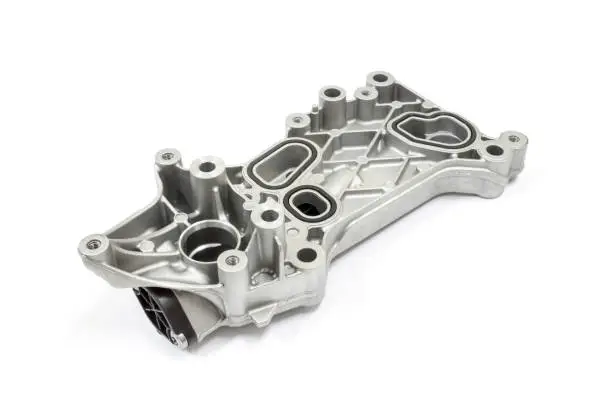
Understanding Die Cast Aluminium and Its Key Advantages
Aluminium alloys like A380, A383, and ADC12 can be turned into precision-engineered parts that work better than traditional ways of making things using high-pressure die cast aluminium. During this process, molten metal is pushed through hardened steel dies at up to 30,000 psi, making parts with a very smooth surface and precise measurements. This technology is unique because it can combine different design elements—such as mounting bosses, cooling fins, and integrated ribs—into a single net-shaped part. This gets rid of the need for extra steps and makes assembly simpler.
Superior Strength-to-Weight Performance
Die cast aluminium alloys have amazing performance benefits thanks to their mechanical qualities. A380 metal has a tensile strength of about 47 ksi and a yield strength of 23 ksi. It is very light, with a density of only 2.71 g/cm³. It is often used in industrial and automobile settings. This strength-to-weight ratio makes it possible to reduce mass by a lot compared to steel or cast iron alternatives. This directly helps vehicles use less gas and rotating machinery use less energy. The material's natural resistance to corrosion, which is improved by surface processes, makes parts last longer in harsh settings.
Enhanced Thermal Management Capabilities
Aluminium die cast aluminium parts act as active thermal management systems by taking advantage of the material's high thermal conductivity of about 96 W/m-K. This property is very useful for power electronics, motor housings, and electronic control unit enclosures that generate a lot of heat when they work. The casting process lets designers add complicated cooling fin shapes directly to the structure of the part. This increases the surface area for heat transfer without adding weight or extra steps to the manufacturing process. Electrical conductivity is useful for grounding and shielding against electromagnetic interference, which keeps delicate equipment safe from signal interference.
Dimensional Precision and Consistency
Die making is different from other methods of production because it is more consistent. As long as the tolerances are within ±0.002 inch per inch, which is what the North American Die Casting Association requires, the parts will fit perfectly in automated assembly lines without needing to be adjusted by hand. Together, these stable dimensions and consistent surface finish properties make quality more consistent across production runs. We have seen how this consistency helps just-in-time manufacturing strategies by letting procurement teams keep production going while keeping inventory levels low.
Comparing Die Cast Aluminium to Alternative Materials and Processes
The choice of material has a big effect on how well a product works, how efficiently it is made, and how much it costs to own it all. Knowing the pros and cons of die cast aluminium compared to other methods helps you make smart choices about where to get your materials.
Material Alternatives Analysis
Steel has better tensile strength than aluminium, but it is much heavier—about three times as dense as aluminium. The difference in mass directly leads to more fuel being used by vehicles and more energy being needed by industrial equipment. Even though magnesium is lighter than aluminium, it can be hard to work with because it can catch fire during processing and doesn't fight rust very well. Zinc die cast aluminium parts work great for thin-wall uses but aren't strong enough for structural parts. Engineering plastics are a lot lighter than aluminium, but they can't match aluminium's ability to conduct heat, block electromagnetic waves, or keep their shape at high temperatures.
Process Comparison Considerations
Sand casting can make bigger parts and smaller batches, but the surfaces are rougher and need a lot of machining, and the cycle times are longer, which limits throughput. Investment casting makes it possible to reproduce fine details, but each piece costs more. Forging makes grain structure and mechanical properties that are very good, but it limits design complexity and needs a lot of machining to get to the final shape. Permanent mold casting has less porosity than sand casting, but it can't make as much as high-pressure die cast aluminium. CNC milling from billet gives you more design options and higher accuracy, but it costs more when you make more than a few items at a time.
Depending on how complicated the parts are, the cost crossover point is usually somewhere between 1,000 and 2,000 pieces. Below this point, machining may have a lower total cost after the cost of the tools is spread out over time. Above this number, unit costs are much cheaper because die cast aluminium has a shorter cycle time and doesn't need many secondary processes. We help our customers do this research all the time, taking into account not only the piece price but also quality consistency, lead time needs, and supply chain risk factors.
How Automotive and Industrial OEMs Benefit from Die Casting Aluminium Solutions
OEM manufacturing programs can see measurable benefits in operational, financial, and strategic areas when they use die cast aluminium parts.
Meeting Stringent Quality and Regulatory Standards
For automotive uses, it's important to follow the Production Part Approval Process paperwork, which checks the dimensions, properties of the material, and ability of the production process. The statistical data needed for the PPAP application is generated by die cast aluminium's built-in process control, which is checked in real time by factors such as injection pressure, metal temperature, and cycle time. A coordinate measuring machine checks the physical dimensions and tolerances, making sure that the parts meet the engineering requirements. An X-ray scan can find internal holes that could weaken pressure-tight seals or the structure itself, and an optical emission spectroscopy test can confirm the alloy's chemistry as it is made.
Heat resistance and mechanical durability under constant operation are important to companies that make industrial tools. Low-pressure casting methods, which are used to make pump housings and compressor parts, lower turbulence during mold filling. This keeps gases from getting trapped and makes the casts thicker. Material approvals that link the makeup of an alloy to chemical analysis results that are specific to a batch give the proof that is needed for important uses. According to ASTM B117 standards, salt spray testing that lasts more than 500 hours proves that a surface treatment works to protect against corrosion.
Accelerating Development Cycles and Production Flexibility
Rapid prototyping cuts the time it takes to make a product by a large amount. Sample parts can be made in weeks instead of months with prototype tools made from metal or pre-hardened steel. This lets the design be confirmed and the functionality tested. This faster feedback loop lets engineering teams quickly change designs to get the best performance before investing in production tools. We've helped clients smoothly move from concept to production, keeping the design the same while increasing output capacity.
Changes in market demand can be accommodated by production that is flexible. Die cast aluminium tools can be used to make anywhere from a few hundred to several hundred thousand pieces, and cycle times measured in seconds allow for quick changes in capacity. Multi-cavity dies increase output without buying more equipment, which makes them useful for high-volume programs. This ability to grow is especially helpful when a new product comes out, because predicting demand is hard to do accurately.
Optimizing Total Cost of Ownership
By combining similar parts, building tasks and the work costs that come with them can be cut down. By combining useful surfaces, alignment locators, and mounting features into a single casting, the need for screws, brackets, and assembly fixtures is eliminated. This way of designing makes bills of materials easier to read, makes inventory less complicated, and lowers the chance of making mistakes during assembly. Because die cast aluminium produces shapes that are close to net shapes, they waste less material than subtractive manufacturing methods. This means that less material is used, which saves money.
A well-established industrial system helps the supply chain be more resilient. Standardized alloy specs and size requirements make dual-sourcing methods possible, which lowers the risk of supply disruptions. We keep the lines of communication open throughout the supply chain by giving updates on the state of production and warnings about possible schedule changes ahead of time. This helps procurement teams keep track of goods and plan production well.
Choosing the Right Die Cast Aluminium Supplier: A Strategic Guide
The supplier you choose has a big impact on the quality of the die cast aluminium product, how quickly it is delivered, and the success of your long-term partnership. Systematic review across multiple factors helps people make confident decisions about where to source goods.
Technical Capability Assessment
The process's ability and capacity are set by the tools used in manufacturing. Post-casting processes can be done precisely with high-speed machining centers and CNC lathes, which can reach limits of ±0.05mm for important features. The die cast aluminium machine's mass needs to meet the size and complexity of the part. Bigger parts need stronger clamping forces to keep flash from forming. Vacuum-assist die cast aluminium technology removes air from mold holes before metal is injected. This makes pressure-tight parts like transmission housings and electronic cases much less porous. When hermetic performance is needed, the ability to impregnate resins adds to the sealing guarantee.
Integrated manufacturing operations make it easier to keep an eye on quality and the flow of production. Having facilities for melting, casting, finishing, and surface treatment all under one roof makes logistics easier and leads times more stable. In-house creation and maintenance of tools speeds up mold changes and extends the life of tools through skilled refurbishment. Most production dies made of H13 steel last between 50,000 and 100,000 shots before they need to be reconditioned. The knowledge of the supplier has a direct effect on the longevity and consistency of the dimensions of the tools throughout their life cycle.
Quality Systems and Certifications
Management tools and process rules are checked by a third party. ISO 9001 certification shows dedication to quality management concepts, and IATF 16949 certification focuses on the needs of the car industry, covering things like traceability, error-proofing, and constant improvement. Aerospace providers keep their AS9100 certification, which includes strict standards for paperwork and configuration management. These licenses give people confidence that operations are run in a systematic way, which cuts down on variety and stops quality from escaping.
The abilities for inspection must match the requirements for the parts. Coordinate measuring machines that can touch-probe and scan with lasers are used to compare complicated three-dimensional shapes to CAD models. Optical emission spectrometers in material testing labs make sure that the amounts of iron, copper, and zinc stay within the acceptable ranges so that materials don't become brittle or lose their mechanical qualities. Pressure decay leak testing makes sure that seals on parts that protect critical electronics are still working properly. Cross-hatch bonding tests and long-term salt spray exposure make sure that painted or powder-coated housings that are exposed to the elements work well as coatings.
Partnership Considerations Beyond Price
How responsive and efficient logistics are affected by proximity. Suppliers with technical support staff in the same time zone as you make it easier to talk to them in real time during quality investigations and design reviews. Shorter shipping lengths cut down on wait times and transportation costs, and they also help with sustainability goals by leaving less of a carbon footprint. But capability match is more important than location—a faraway supplier who is technically skilled often offers better value than a local manufacturer who doesn't have the right tools or knowledge.
Case studies and examples from customers can help you figure out how well a provider is doing. Talking to engineering and procurement contacts at current customers shows how responsive, problem-solving, and reliable the delivery service is. Case studies that show similar levels of component complexity, output volumes, and quality standards show that the experience is useful. We encourage open communication about problems that have been solved in the past, because the way a problem is solved is often more important than the lack of problems.
Future Trends and Innovations in Die Cast Aluminium for OEMs
Innovations in materials, process technology, and digital transformation projects are all helping the die cast aluminium industry grow and change, opening up new OEM uses.
Advanced Alloy Development
Metallurgical study is mostly about making metals that work better for certain tasks. High-strength aluminium alloys that contain scandium or other microalloying elements have yield strengths that are higher than those of traditional formulas. This makes it possible for structural uses to be even lighter. Improvements to thermal stability make it possible for castings to keep their mechanical properties at high temperatures that are common in electric vehicle powertrains and parts under the hood of cars. Castability improvements lower the number of defects that can form, which opens up the design possibilities for thin-wall sections and complex shapes.
Digital Manufacturing Integration
Industry 4.0 technologies change how production is tracked and how processes are improved. Using industrial Internet of Things platforms to connect real-time sensor data from die cast aluminium tools lets repair be planned ahead of time, which stops unplanned downtime. Machine learning algorithms look at process parameters over thousands of cycles and find small links between settings and quality results that human operators can't see. Digital twin simulations show how the mold fills and solidifies, so gate locations, venting configurations, and cooling channel placement can be made better before the actual tooling is made. This cuts down on development costs and time to production.
Sustainability and Circular Economy
Environmental concerns lead to efforts to make materials more efficient and to recycle them. Aluminium can be recycled over and over again, which supports circular economy models in which post-consumer waste goes back into alloy supply chains with little quality loss. Melting kilns and heat recovery systems that use less energy lower the carbon footprint of production. When you reduce the weight of something, it uses less energy and saves money on gas. This has big environmental benefits during the use phase that are much bigger than the effects during production. Life cycle assessments are becoming more and more important when choosing materials, and the fact that die cast aluminium is environmentally friendly makes it more competitive.
Conclusion
Automobile and industrial OEMs that want to make lightweight, high-performance parts with precise dimensions and high production efficiency can get a lot out of die cast aluminium technology. The process combines the material's great strength-to-weight ratio, thermal conductivity, and resistance to corrosion with manufacturing skills that make it easier to combine complex features, cut down on extra steps, and support flexible production volumes. Strategically choosing suppliers by looking at their technical skills, quality systems, and how well they fit with the partnership makes sure that the implementation goes well. Die cast aluminium is an option that will keep up with the changes in the industry because it uses new alloys, digital manufacturing, and environmentally friendly methods. We've seen how buying teams that use these benefits can improve the performance of products, the reliability of the supply chain, and the total cost of ownership.
FAQ
What factors influence die cast aluminum component pricing?
The price of a component depends on how complicated the design is, how many are being made, what materials are used, and what surface processes are needed. Complex geometries that need complex tooling with multiple slides or intricate cores raise the initial cost, but this cost is spread out over a larger number of units produced. Higher volumes lower costs per piece by making better use of equipment and reducing the time needed for setup. The choice of alloy affects the cost of the raw materials; for example, specialty alloys like A380 cost more than normal types. Depending on the coverage area and performance needs, surface processes like powder coating, e-coating, or specialized finishes add processing steps and material costs through die cast aluminium.
How long does development from prototype to mass production typically require?
The schedule ranges from twelve to twenty weeks, based on how complicated the parts are and how they are made. It takes four to six weeks to make a prototype tooling, and another two weeks to make sample parts for design approval. The design and construction of production tools takes eight to twelve weeks, and includes lessons learned from testing prototypes. PPAP paperwork creation takes three to four weeks and happens at the same time as the finishing of production tools. This includes dimensional studies, material certifications, and process capability analyzes. When the needs of the program call for it, faster timelines can be reached through concurrent engineering methods and prioritized tooling schedules.
Why choose die cast aluminium over machined or fabricated alternatives?
Die cast aluminium works best when the number of parts made is high enough to justify the cost of the tools, the shapes of the parts are complicated and hard to make cheaply, and the integrated design eliminates the need for assembly. When compared to sand casting, this method gives a better surface finish. It also has tighter standards than permanent mold casting and shorter cycle times than investment casting. Die cast aluminium is more cost-effective above modest numbers and wastes less material than machining from billet. Any reduction in weight compared to steel fabrications saves money over time because it uses less energy and performs better in dynamic situations.
Partner with Fudebao Technology for Precision Die Cast Aluminium Solutions
Zhejiang Fudebao Technology Co., Ltd. is a leading die cast aluminium foundry that provides complete casting and precise machining services to the aerospace, automotive, and industrial equipment industries around the world. Our unified manufacturing method includes melting, low- and high-pressure die cast aluminium, CNC machining, and surface treatment. This allows us to deliver raw materials and finished parts all in one place, with accuracy of ±0.05mm. We have formed partnerships with well-known international brands, such as American HAAS automation machine tools and ESS energy storage systems, which shows that we can meet strict quality standards. Our engineering team works closely with your technical and sourcing experts to help with design-for-manufacturability, PPAP paperwork, and making sure that your production schedule is flexible and meets the needs of your supply chain. Reach out to Hank Shen at hank.shen@fdbcasting.com to talk about your specific die cast aluminium needs and find out how our technical skills and focus on the customer can add measurable value to your entire portfolio of components. Visit fdbcasting.com to explore our full list of production services and case studies of completed projects.
References
1. North American Die Casting Association. (2021). Product Specification Standards for Die Castings Produced by the Semi-Solid and Squeeze Casting Processes. NADCA Technical Publication.
2. American Society for Testing and Materials. (2019). ASTM B85-19: Standard Specification for Aluminum-Alloy Die Castings. ASTM International Standards.
3. Kaufman, J.G. & Rooy, E.L. (2004). Aluminum Alloy Castings: Properties, Processes, and Applications. ASM International Materials Park.
4. International Journal of Metalcasting. (2020). Advances in High-Pressure Die Casting Process Technology for Automotive Applications. Springer Publishing.
5. Hirsch, J. (2018). Recent Development in Aluminum for Automotive Applications. Transactions of Nonferrous Metals Society of China.
6. Society of Automotive Engineers. (2022). SAE J2700: Information Report on High-Pressure Die Cast Aluminum Alloys for Automotive Applications. SAE International Technical Paper Series.



YOU MAY LIKE