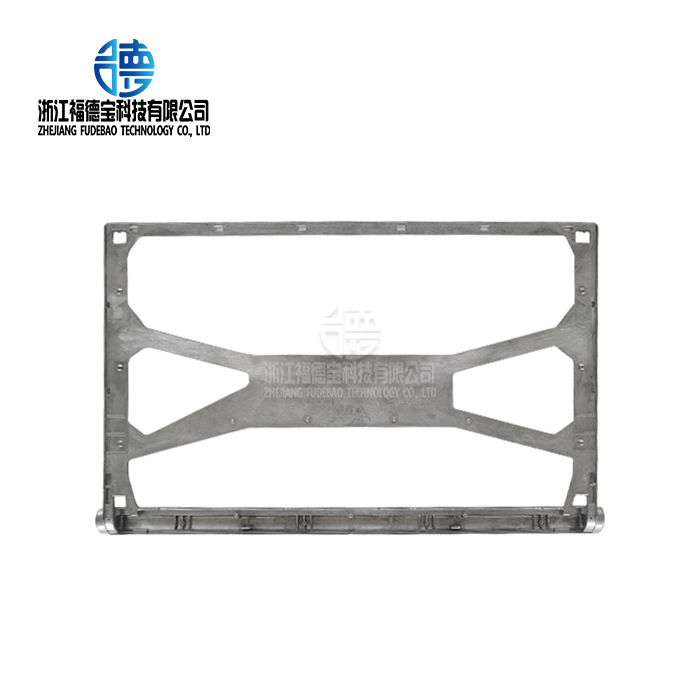
Custom Copper Casting Project for Marine Equipment
2026-05-22
Custom copper casting is the most reliable way to get parts for naval settings like propellers, valves, pumps, and electrical housings. This unique metalworking method uses precise shaping techniques along with copper alloys like bronze, brass, and cupronickel to make parts that are almost net-shaped and resistant to corrosion in salt water, biofouling, and heat stress. Copper-based casts are better at conducting electricity than aluminum or iron options. They also have self-healing oxide layers that make them last longer in tough ocean conditions.
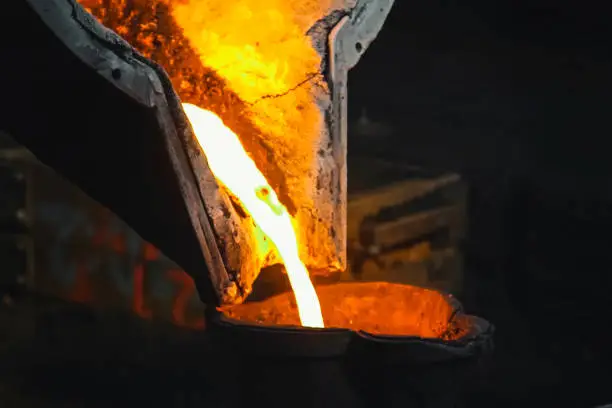
Understanding the Copper Casting Process for Marine Equipment
Marine equipment needs to be made of metals that are strong enough to stand up to constant contact to salt conditions and mechanical stress. The first step in the copper casting process is choosing the metal. This is done by engineers who balance the makeup to meet certain performance requirements. Aluminum bronze, which is made up of 9–12% aluminum, is very strong and doesn't cavitate, making it perfect for blades. Manganese brass can be easily machined to make complicated valve bodies, and cupronickel grades keep heat exchangers from getting clogged.
Melting and Alloying Stages
Induction furnaces reach temperatures of 1,950°F, which is high enough to completely dissolve any alloying elements. Metallurgists use spectroscopy to keep an eye on the chemical makeup and change the amount of tin, nickel, or aluminum to get the right mechanical qualities. Degassing methods get rid of hydrogen porosity, which is a typical flaw in naval valves that makes them less reliable under pressure. To get the right mix of fluidity and minimal oxidation, the molten metal only hits pouring temperature within a narrow range, usually between 2,100°F and 2,250°F.
Key Casting Methods for Marine Components
Sand casting is still a cheap way to make big pieces of naval gear like propeller hubs and rudder fittings. Green sand molds can handle complicated shapes and let you make changes to the design without having to buy expensive tools. With the lost-wax method of investment casting, detailed valve interiors can be made with wall thicknesses as low as 0.060 inches. This method gets very fine details that are needed for threaded joints and closing surfaces. Low-pressure casting is best for making pump housings in middle quantities. Molds are filled slowly to avoid turbulence and metal buildup.
Common Defects and Quality Challenges
When dissolved gases form nuclei during solidification, porosity threatens the structure's stability. Shrinkage holes form in heavy areas that aren't fed enough, so risers need to be placed strategically. When metal streams don't fuse fully, leaving planar gaps open to fatigue cracking, cold shuts happen. We're in charge of these with modeling software that tells us how the solidification will happen, which lets us improve the mold design before production starts.
Advantages of Custom Copper Casting in Marine Applications
Marine buying teams are always under pressure to make sure that operations are safe while also extending the time between repair checks. Copper castings solve both problems because they have special qualities that make them useful and allow for more manufacturing options than wrought goods or assembled parts.
Superior Corrosion Resistance Compared to Alternatives
Even after being anodized, aluminum casts rust quickly in salt water, so they need to be replaced over and over again, which is expensive. Materials made of iron are damaged by galvanic current when they are joined with nails made of stainless steel. Copper metals create stable patina layers, which are made up of cuprous oxide and basic copper salts and stop rust from getting through. In normal saltwater, cupronickel 90/10 doesn't rust more than 0.002 inches per year, so structures made of it stay strong for decades. Compared to steel parts that need cathodic protection systems, this long life saves a lot of money over their entire life.
Thermal and Electrical Conductivity Benefits
Marine electricity systems produce a lot of heat in small areas, so they need to be able to handle heat well. Copper casts get rid of heat four times faster than stainless steel, so motor housings and switches don't lose their insulation. Silicon bronze has an electrical conductivity of 40% IACS, which is good enough for grounding clamps and busbar connections. These qualities get rid of hotspots that make equipment break down faster, which is very helpful in robotic engine rooms and remote platforms.
Biofouling Resistance and Maintenance Reduction
Copper ions that are released from bronze blades stop barnacles from attaching and algae from growing. This is called oligodynamic action. This natural antibacterial effect lowers drag and keeps the boat's aerodynamic efficiency high between dry docks. Marine growth quickly builds up on aluminum blades, which increases fuel use by 15-20% within months. In ballast systems, brass valve bodies don't get clogged by tuberculation, a bacterial rusting process that happens in iron pipes. This keeps the flow paths clear.
Precision and Durability Versus Machining Alternatives
When solid billets are used to make complicated propeller blades, 60–70% of the material is wasted as chips, which drives up costs. Forging needs expensive dies that can't be used for small batches. Custom copper casting makes parts that are almost in the shape of a net and only need finish cutting on the most important areas. As-cast features with dimensional tolerances of ±0.015 inches cut down on secondary processes, which shortens wait times. Investment casts make blade shapes with 125 Ra surface finishes, which cuts down on the work of polishing.
Selecting the Right Copper Casting Method and Supplier for Your Marine Project
Marine projects depend on being able to match the needs for parts with the right production skills. To make sure deliveries happen reliably, procurement teams have to look at both technical factors and seller qualifications.
Evaluating Project Scope and Casting Technology Match
Rapid sand casting is good for prototyping because models can be 3D-printed in days instead of making lasting tools. This speeds up the validation of the idea before going to large-scale production. Orders of 50 to 500 units work well for semi-permanent model casting because they balance the cost of the tools with the cost of each piece. When making a lot of propellers, centrifugal casting equipment is necessary to get regular grain structures through controlled solidification.
Component complexity drives method selection. For valve bodies with internal openings that bend more than 90 degrees, investment casting needs to be able to include ceramic cores that dissolve after the copper casting is done. Green sand methods make it cheap to make simple flanges and frames. Differences in wall thickness are also important. Parts that are less than 0.125 inches need superheated investment metal to be fluid, while heavy pump cases can handle lower filling temperatures in sand molds.
Essential Supplier Selection Criteria
Certifications show that a factory has good quality control and expert know-how. ISO 9001 approval shows that there are written procedures for tracking down problems and fixing them. Marine classification society approvals from Lloyd's Register or DNV-GL show that the materials used and testing methods are in line with what is needed for ship parts. When security companies need to buy naval equipment, they need to be registered with ITAR.
Experience in marine-specific metals separates competent foundries from generalists. To get the best mechanical qualities from nickel-aluminum bronze, it needs to go through careful heat treatment cycles. This is something that has been learned over many years of working on marine casting projects. Lead times depend on how well the cast works, how many patterns are available, and how long the heat process takes. Pattern files for popular marine fittings are kept by established providers. This cuts delivery times from 12 weeks to 6 weeks. Shipping times are shorter and on-site checks are easier when factories are close by, but Asia-based foundries are cheaper for big orders when lead times allow.
Cost Factors and Budget Optimization Strategies
The biggest upfront cost is the tools, which can be anywhere from a few hundred to several thousand dollars, based on the method and level of difficulty. Spreading the cost of tools out over bigger batches lowers the price per piece by a huge amount. Choosing the right material affects both the cost of casting and the cost of machining. For example, free-machining brass costs 20% more than normal metals but cuts CNC time by 40%. For high-stress parts, the extra cost of heat treatment is worth it because it gives the parts mechanical qualities that can't be achieved by casting alone.
Consolidating several made parts into a single casting gets rid of the need for assembly work and possible leak tracks. We recently changed the design of a marine pump housing that was made from six riveted plates to a single investment casting. This cut the cost of production by 35% while improving the stability of the pressure. These kinds of saves can be reached when buying teams and foundry experts work together on strategic design-for-manufacturing.
Case Studies: Successful Custom Copper Casting Projects for Marine Equipment
Using custom copper casting solutions in the real world shows how they can solve problems with marine equipment and make it work better.
High-Performance Marine Valve Castings
A business shipping company had problems with valves in ballast systems breaking down too soon. Cast iron bodies cracked after 18 months because of erosion and rust in the fast-moving seawater. We worked with their engineering team to come up with a specification for nickel-aluminum bronze molds that would have complex internal shapes. The alloy's tensile strength of 65 ksi and stretch of 12% made it flexible enough to handle sudden changes in pressure. After three years of use, an ultrasound check showed that there were no holes or thin walls. Maintenance times were shortened from once a year to every five years, which cut down on downtime and the cost of keeping extra parts on hand. The client said that the valve saved them 60% in total costs over its lifetime compared to older iron parts.
Bespoke Marine Propeller Components
A company that makes offshore workboats needed blades that were specially designed to work well with bollard pull in shallow draft situations. Standard metal propellers had blades that bent when they were under the most force. We used centrifugal casting to make unique manganese bronze casts with a directional grain structure that was lined with stress vectors. Finite element analysis helped spread out the thickness of the blades, which got rid of load clusters. The blades that were made had 12% better thrust coefficients and stayed the same size after 2,000 hours of use. Because the aerodynamic profiles stayed the same, fuel economy went up by 8%, and the customer increased orders for their whole fleet.

Best Practices for Ensuring Quality and Efficiency in Custom Copper Casting
To get the most out of marine copper casting projects, you need to pay close attention to design principles, strict quality standards, and environmental responsibility throughout production.
Design Strategies for Improved Castability
Different rates of cooling can cause leftover stress and warping, but walls with the same thickness stop this from happening. Using radii instead of sharp corners to make gradual changes between parts helps the metal move smoothly and fills the mold completely. Draft angles of two to three degrees make it easier to take patterns out of sand molds without damaging them. Designers should put parting lines so that useful areas don't have to be machined too much and important features don't get split. Allowances for cutting of 0.06 to 0.125 inches on bearing surfaces and sealing faces make sure that enough stock is removed while keeping the as-cast dimensions within the tolerance bands.
Advanced Inspection and Testing Procedures
Non-destructive testing confirms the health of parts that can't be seen with the naked eye. Radiographic study finds holes and other things stuck in important parts that support weight. Ultrasonic testing finds problems below the surface and measures the thickness of walls. At 1.5 times normal pressure, pressure testing proves that valve bodies and pump cases don't leak. Chemical research makes sure that the alloy's makeup meets the requirements, which stops problems with its mechanical properties. Coordinate measuring tools are used for dimensional checking to make sure that machined features are geometrically accurate to within ±0.005 inches.
Environmental Compliance and Sustainable Practices
Modern foundries reuse old copper, which cuts down on the use of new materials and the energy they contain. Emissions from electric induction heating are lower than those from burners that use fossil fuels. Since sand recovery systems reuse molded media, less trash ends up in landfills. Solvent-based mold washes are being replaced by water-based treatments, which makes the air and workers safer. We keep our ISO 14001 environmental management certification, which shows that we are committed to using sustainable manufacturing methods. Procurement teams value this because it shows that the company is responsible.
Conclusion
Custom copper casting has been used for years to solve problems with corrosion, conductivity, and longevity in naval equipment. Procurement teams get parts that last longer between repairs and cost less over their entire life by carefully choosing the right alloys, casting methods, and quality control systems. The case studies show how strategic relationships with suppliers can lead to real changes in operations. When marine equipment makers use best practices for design teamwork and quality assurance, they get stability and performance benefits over aluminum and iron alternatives that they can't match.
FAQ
What melting point considerations matter for marine copper casting?
Copper melts at about 1,984°F, but marine alloys with alloying elements, such as aluminum bronze and manganese bronze, melt at lower temperatures (1,650°F to 1,900°F). The pouring temperature affects how flexible the material is and how well it fills the mold. If it's too hot, there is too much oxidation, and if there isn't enough superheat, thin parts freeze and crack. To keep these things in balance, marine foundries keep temperature controls very tight, within 50°F windows.
How does copper casting compare with bronze casting for marine use?
Bronze is actually a mixture of copper and other metals, like tin or aluminum. "copper casting" is a general term for all metals made of copper. Pure copper castings are the best for electrical uses because they carry electricity very well, but they are not very strong. Bronze casts are very hard and don't rust, which are qualities that are needed for solid naval parts like propellers and valves.
What factors influence lead times for custom marine castings?
It takes two to four weeks to make a pattern for a new style. Preparing the mold and casting take one to two weeks, based on how complicated the job is. The rounds of heat treatment add 3–7 days. Another one to two weeks are needed for finishing and machining. Through accelerated pattern methods and priority ordering, rush orders can cut down on wait times by 30%, but the costs go up as a result.
Partner with Fudebao Technology for Marine Copper Casting Solutions
Zhejiang Fudebao Technology is an expert in making precise copper castings for tough marine uses. They provide approved quality systems and advanced metallurgical knowledge to equipment makers around the world. Our combined center handles the whole production process, from melting the alloy to CNC finishing, and can deliver parts that are accurate to within 0.05 mm. Our engineering team works with procurement professionals to make sure that designs are the best they can be for performance and castability, whether you need corrosion-resistant valve bodies, high-performance blade parts, or custom electrical housings. As a reliable copper casting company with experience in the marine industry, we help with tasks from the creation of prototypes to mass production. Email us at hank.shen@fdbcasting.com to talk about your marine equipment needs and get expert advice that is relevant to your situation.
References
Davis, J.R. (2001). Copper and Copper Alloys. ASM International Handbook Committee.
Campbell, J. (2015). Complete Casting Handbook: Metal Casting Processes, Metallurgy, Techniques and Design. Butterworth-Heinemann.
American Bureau of Shipping (2019). Rules for Materials and Welding - Part 2: Aluminum and Copper Alloys.
Hihara, L.H., Adler, R.P., & Latanision, R.M. (2013). Environmental Degradation of Advanced and Traditional Engineering Materials. CRC Press.
Beeley, P.R. (2001). Foundry Technology. Butterworth-Heinemann.
ASTM International (2020). ASTM B148: Standard Specification for Aluminum-Bronze Sand Castings.



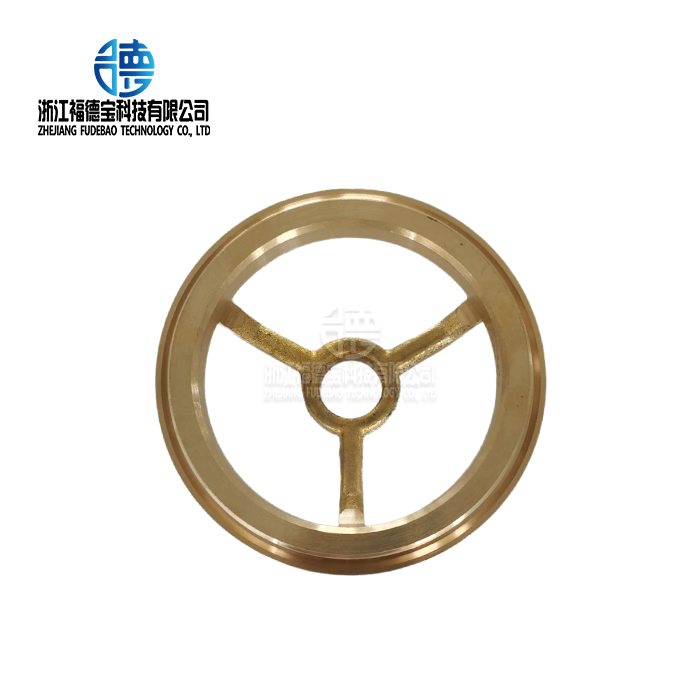
_1756360265131.webp "Aluminum casting chair legs")
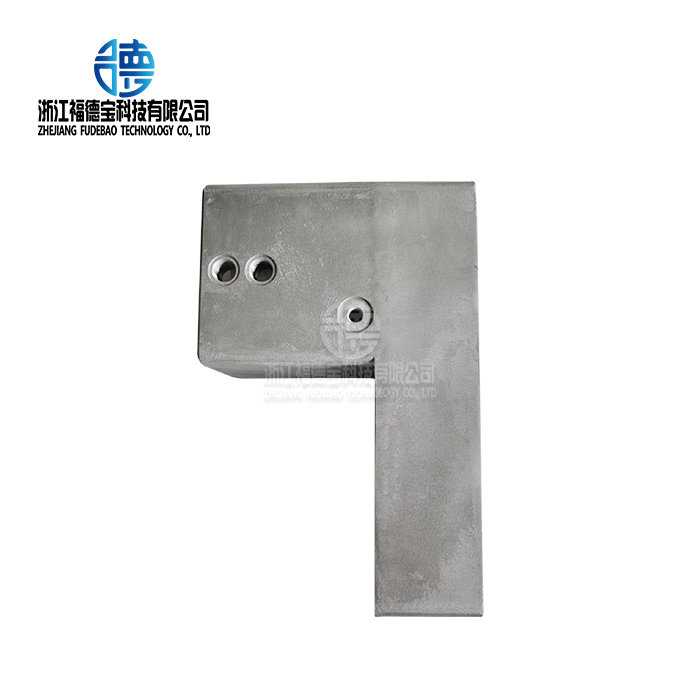
_1756349794241.webp "round belt pulley")
_1756346259673.webp "heavy duty hinges")