
Copper Castings for Electrical Equipment: Applications and Quality Requirements
2026-11-25
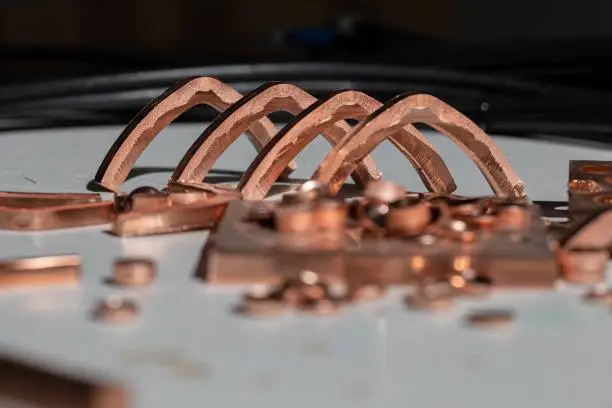
Copper castings for electrical equipment are parts formed by pouring molten copper or copper alloy into a mold, then machining them to final size. They carry current, ground faults, switch circuits, move heat, and hold assemblies together. The right choice depends on conductivity, strength, operating temperature, and inspection needs. High-conductivity copper suits current paths. Chromium copper, brass, and bronze suit parts that need more strength or wear resistance. Quality depends on controlled chemistry, low porosity, accurate machining, and clear test records. In this guide, I explain the materials, applications, methods, and checks buyers should define before placing an order.
If you source parts for switchgear, motors, or renewable energy equipment, the sections below follow the order I use when I review a new drawing.
Choosing Materials and Alloys for Electrical Copper Castings
High-Conductivity Copper for Current Paths
Pure copper sets the electrical baseline. By definition, 100% IACS equals 58 MS/m at 20°C, and copper's thermal conductivity sits near 390 W/(m·K). Cast parts usually fall below wrought copper because porosity, oxides, and trace impurities interrupt the current path. For that reason, terminals, grounding parts, and conductor connectors need controlled purity, oxygen content, and deoxidation practice. A high-conductivity cast grade such as UNS C81100 fits these jobs. Before I accept a conductivity claim, I ask which test method produced it and whether the test sample represents the real part.
Chromium Copper and Zirconium Copper for Strength
Pure copper is soft. When a part must hold contact pressure, resist wear, or run hot, alloys help. Chromium copper and zirconium copper offer higher strength and better performance at elevated temperature, and heat treatment can raise hardness further. The trade-off is conductivity, which drops below that of pure copper. UNS C81500 is a cast chromium copper used where electrical and mechanical needs overlap. Engineers should compare the conductivity lost against the strength gained. For clamps and contact parts under repeated load, that trade can justify the change.
Brass and Bronze When Conductivity Is Not First
Brass and bronze give up some conductivity but gain machinability, corrosion resistance, and bearing performance. Brass machines cleanly, so it suits threaded fittings, housings, and connector bodies. Tin bronze and aluminum bronze resist wear and corrosion, so they fit bushings, sliding parts, and equipment exposed to moisture or salt. Leaded alloys machine well, but you should check lead limits against your customer and regional requirements. If a part carries light current but faces friction or harsh air, brass or bronze is often the practical pick.
Where Copper Castings Work in Electrical Equipment
Connectors, Lugs, Terminals, and Grounding Clamps
These parts form the most common group of electrical copper castings. Each one must keep contact resistance low, hold its shape under torque, and stay stable through heat cycles. Porosity near a contact face can raise resistance and create a hot spot. I recommend defining which surfaces need machining and inspection. Plating, such as tin or silver, is common on contact areas to limit oxidation, so confirm the finish with your electrical team. Consistent bore size also matters, because a lug that varies in dimension can loosen a joint over time.
Switchgear, Circuit Breakers, and Busbar Systems
Switchgear, circuit breakers, disconnectors, and busbar systems place heavier demands on copper castings. Contact arms, terminal pads, and joint blocks carry high current and face repeated switching and thermal cycling. Flat mating surfaces, correct insulation clearances, and sound internal metal all affect performance. A void under a bolted joint can raise local temperature, so radiographic or ultrasonic checks make sense for safety-critical items. A cast shape can also combine a pad, a boss, and a mounting feature in one piece, which cuts assembly steps.
Motors, Generators, Transformers, and Heat Transfer Parts
Motors, generators, and transformers use copper castings for rotor parts, end rings, terminals, and bushings. In thermal-management assemblies, copper's thermal conductivity of roughly 390 W/(m·K) moves heat away from hot spots faster than most casting metals, including aluminum. Heat-transfer housings and cooling components add more demands. Wall thickness, internal passages, sealing faces, and pressure tightness must match the operating environment. Reviewing passage layout and sealing surfaces before tooling begins prevents most leak problems found later in testing.
Casting Methods and Design Rules
Matching Sand, Investment, Centrifugal, and Continuous Casting
Method selection starts with geometry, size, alloy, volume, and tolerance. Sand casting suits larger, complex, or lower-volume parts and keeps tooling simple. Investment casting fits smaller parts with fine detail and near-net-shape needs, which cuts machining. Centrifugal casting works well for rings, sleeves, and tubes, and the spinning mold tends to produce denser metal. Continuous casting yields billets, bars, and semi-finished stock rather than highly integrated shapes. I advise a design-for-manufacturing review that compares casting, forging, and machining before anyone approves tooling, since changing a mold later costs time.
Design Rules That Cut Defects and Machining
Good design lowers defect risk before the first pour. Keep wall thickness as even as possible, avoid abrupt section changes and isolated heavy areas, and add fillets, ribs, cores, and draft angles where the shape allows. Include machining allowance on faces that need finishing. Temperature control matters just as much. Melt, mold, and pouring temperatures influence oxidation, gas pickup, turbulence, and early solidification, and the right values depend on the alloy and process. Copper alloys shrink as they solidify, so gating and risers must feed heavy sections.
Drawing Specifications That Prevent Disputes
Clear drawings save weeks of back-and-forth. List as-cast and machined tolerances separately, and mark critical dimensions, datums, hole locations, flatness, and concentricity. State surface finish, heat treatment or stress relief, hardness, and conductivity targets where they apply. Our machining operations reach accuracy up to ±0.05 mm, so tight features can be finished after casting rather than forced into the mold. Calling out only the features that matter keeps cost down, because every extra tight tolerance adds inspection and machining time.
Quality Requirements and Defect Control
Chemistry, Traceability, and Conductivity Checks
To be sure of the quality of the copper casts, the right metal needs to be scrutinized. People should know what the metal is called, what chemicals are in it, and whether they need to keep track of heat or batches before production starts. This also needs to be made clear, like for copper alloy sand molds, ASTM B584 is the norm that should be used. You can use optical emission spectrometry to check if the amounts of impurities and alloying elements are within the right chemical makeup ranges for making copper casts that you can trust. Electricity flow is another important quality sign, especially for parts that are used for both heat and electricity. Companies that sell goods can tell you the conductivity either as a portion of IACS or as an electrical resistance. The ASTM E1004 eddy-current test is a quick and safe way to see how well a material conducts electricity. But buyers should look at more than one test value. They ought to also study details about holes, rust, and contamination. When everything was said and done, the properties that were measured should match the parts' real working current, temperature, and service needs. You can also use tensile test bars made from each production lot to check mechanical properties such as the range of stretch and tensile strength. A worker who makes copper castings should keep full records of all the materials used, inspection reports, and batches to help them keep an eye on quality. Metal castings must always meet technical standards and work the same way. To make sure of this, they are tested mechanically, chemically, and for conductivity. These steps also lower the chance of poor quality and help you trust a provider enough to work with them for a long time.
Inspection Methods for Surface and Internal Quality
Inspection method should match risk. Dimensional checks, including CMM verification against CAD models, confirm fit. Dye penetrant testing finds surface cracks and laps. Radiographic testing, guided by ASTM E94, reveals internal shrinkage, porosity, and inclusions in pressure-retaining or high-current parts. Ultrasonic testing can examine thicker sections, and hardness and density checks add metallurgical evidence. Not every part needs every test. I suggest a control plan that lists the method, sample size, and acceptance limit for each characteristic, so supplier and buyer read results the same way.
Common Defects and How to Prevent Them
Porosity, shrinkage, and gas defects usually trace back to poor feeding, turbulence, moisture, or contamination. Cracks, cold shuts, misruns, and distortion link to poor filling, fast cooling, thermal stress, or awkward geometry. Oxide films, slag, and sand inclusions drop when the foundry melts cleanly, filters the metal, handles it carefully, vents the mold, and designs gating and risers well. Agree on acceptance and repair rules before production. Weld or braze repairs should require written approval and documented reinspection, because a hidden repair in a current path can change both strength and conductivity.
Comparing Options and Selecting a Supplier
Copper Castings Versus Brass, Forgings, and Aluminum
Compare options by service needs, not metal price alone. Brass gives easier machining and good corrosion resistance. Bronze offers better wear and marine performance. Forged copper has a denser grain structure and suits heavily loaded parts, while casting builds complex shapes in one piece and reduces assembly. Aluminum is much lighter, with a density near 2.7 g/cm³ against about 8.96 g/cm³ for copper, but its electrical and thermal conductivity are lower. Weigh conductivity, strength, corrosion, weight, volume, tooling, and machining together before choosing.
What I Look for in a Casting Supplier
A good supplier shows alloy experience, suitable foundry processes, machining capacity, tooling support, and quality controls. Zhejiang Fudebao Technology Co., Ltd. focuses on aluminum alloy, copper alloy, and stainless steel casting and precision machining for automotive, industrial equipment, and machinery customers worldwide. Our factory covers melting, casting, finishing, and surface treatment. High-speed machining centers and CNC lathes support one-stop delivery from blank to finished part, with accuracy up to ±0.05 mm. Buyers should also ask about traceability, calibration, inspection plans, nonconformance handling, packaging, and lead times.
A Practical Buying Checklist
Here is the short sequence I follow before sending an RFQ. Define the part function, alloy or conductivity target, current load, temperature range, mechanical load, corrosion exposure, service life, casting method, machining, finish, and packaging. Then verify the supplier's geometry capability, wall thickness limits, tolerances, volume capacity, sample capability, and engineering support. Before approval, agree on drawings, control plans, defect limits, and test methods. After delivery, track defect rates, corrective actions, delivery performance, and batch consistency. Validate the choice with samples that show conductivity, dimensions, internal soundness, and assembly fit before regular production begins.
Conclusion
Copper castings perform best in electrical equipment when material, method, design, inspection, and supplier capability match the operating conditions. High-conductivity copper suits current paths and heat transfer, while chromium copper, zirconium copper, brass, and bronze fit parts that need strength, wear resistance, corrosion resistance, or easier machining. Applications range from lugs and terminals to switchgear, motor parts, and cooling housings, each with different porosity and tolerance limits. Sand, investment, centrifugal, and continuous casting suit different shapes and volumes, and clear drawings reduce defects. Chemistry checks, conductivity testing, nondestructive testing, and agreed repair rules protect quality. Comparing alternatives such as forgings or aluminum should follow service needs. Buyers who define these points before production reduce risk and judge suppliers on total quality, traceability, and consistent delivery.
FAQ
What electrical parts use copper castings?
Common parts include connectors, cable lugs, terminals, grounding clamps, switchgear components, busbar joints, motor parts, and heat-transfer housings.
Which alloy should I choose?
Choose high-conductivity copper for current paths. Choose chromium copper or zirconium copper when strength and heat resistance matter. Choose brass or bronze when wear, corrosion, or machinability matter more.
How do foundries control porosity?
Clean melting, filtration, dry molds, good venting, and proper gating and risering reduce porosity. Radiographic testing then verifies internal soundness on critical parts.
What should an RFQ include?
Send drawings, 3D models, alloy requirements, annual volume, critical characteristics, testing standards, and delivery needs. The best solution depends on geometry, current load, temperature, and environment.
How do I judge a supplier?
Review alloy experience, machining capacity, traceability, inspection plans, and delivery record, not just the first quotation.
Request Custom Copper Castings From Fudebao Technology
Fudebao Technology supports electrical equipment makers that need copper castings with precise machining. As a copper castings supplier, we cover melting, casting, finishing, and surface treatment, with machining accuracy up to ±0.05 mm and one-stop delivery from blank to finished part. Send your drawings, 3D models, alloy needs, and annual volume to hank.shen@fdbcasting.com, or visit fdbcasting.com for details. Our engineers will review your requirements and recommend a practical route.
References
1. ASM Handbook, Volume 15: Casting, ASM International, 2008
2. Copper and Copper Alloys, ASM Specialty Handbook, ASM International, 2001
3. Complete Casting Handbook, John Campbell, 2015
4. ASTM B584, Standard Specification for Copper Alloy Sand Castings for General Applications, ASTM International, 2014
5. ASTM E1004, Standard Test Method for Determining Electrical Conductivity Using the Electromagnetic (Eddy-Current) Method, ASTM International, 2017
6. ASTM E94, Standard Guide for Radiographic Examination Using Industrial Radiographic Film, ASTM International, 2017



YOU MAY LIKE