Copper Casting vs Brass Casting: What Are the Key Differences?
2026-06-24
When it comes to performance, the main difference between copper casting and brass casting is the metal that is used. Pure copper casting has excellent electrical and thermal conductivity, making it perfect for electrical infrastructure and heat dissipation. On the other hand, brass, which is an alloy of copper and zinc, is easier to machine, stronger, and cheaper, making it the best choice for automotive fittings, valve bodies, and industrial hardware. When procurement workers understand these differences, they can choose materials that meet the needs of specific applications while also staying within price and within the limits of what can be manufactured.
Understanding Copper Casting and Brass Casting: A General Overview
Material Composition and Alloy Fundamentals
Copper base casting uses pure copper or copper-dominant alloys with few other metals added. For high-conductivity uses, the copper content is usually kept above 99%, but aluminum, nickel, or tin can be added to make special bronzes. This high level of purity in the metal gives cast copper parts their unique reddish color and great electrical qualities, with conductivity values hitting 100% IACS (International Annealed Copper Standard) in deoxidized grades.
In brass casting, on the other hand, copper and zinc are mixed in different amounts to make a family of metals that range in color from bright gold to pale yellow, depending on how much zinc is present. About 65% of standard yellow brass is copper and 35% is zinc. Red brass versions raise the copper level to about 85%. Adding zinc changes the material's behavior in a basic way during both casting and service. It makes the material more fluid during filling, lowers its cost, and makes it easier to machine, but it also makes it less electrically conductive.
Casting Process Selection
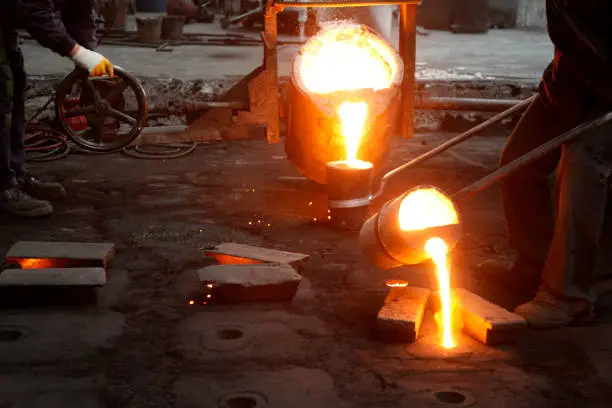
Sand casting is still the most common way to work with both materials because it can handle complicated shapes and internal holes by using molds that can be thrown away. Foundries can use this method to make prototypes to medium-sized production runs of valve bodies, pump housings, and equipment frames. Sand models are very useful when design changes need to be made often or when the cost of tools needs to be kept to a minimum.
Investment casting, which is also sometimes called "lost-wax casting," is used for tasks that need tight standards and a smooth surface. We use this method when our clients need electrical connections with complicated shapes or building elements that are meant to look nice but don't need a lot of post-casting machining. The process gives dimensions that are accurate to within ±0.005 inches on important features, but it costs more per unit and only makes economic sense for complicated, low-volume parts.
Centrifugal casting is a special way to make circular parts like cylinder liners, bushings, and bearing rings. While the material is solidifying, rotational forces push flaws toward the inner circle. These can then be machined away, leaving useful zones with thick, high-integrity material. Because they clean themselves, centrifugal ways are great for big machinery that needs to be immune to wear.
Industrial Performance Characteristics
Copper casts are useful because of their superior heat and electrical conductivity. Copper bus bars and switchgear parts in power distribution systems cut down on resistance losses, which means less wasted energy and heat. It is the standard in difficult thermal management applications to use heat exchangers made of copper alloys because they move heat energy more efficiently than brass options.
Copper casting has useful benefits in making that make it very popular in industry. The material cuts neatly and doesn't wear down tools very quickly, which saves money in high-volume production settings. When the right metal types are used, copper parts don't dezincify in most water systems, and their high strength-to-weight ratio makes them good for structural uses in car and machine parts. Because some metal mixtures don't spark, they have to be used in dangerous places where there is a chance of an explosion.
Key Differences Between Copper Casting and Brass Casting
Composition Impact on Casting Quality
Copper's mechanical clarity makes the casting process more difficult in some ways. Because pure copper melts at about 1984°F (1085°C), it needs to be heated carefully and with special furnace tools. More importantly, copper easily takes hydrogen when it melts, which can cause gas porosity flaws if nitrogen or argon purging is not done correctly. We keep this under control by using strict melting rules and deoxidizers, such as phosphorus, to bind dissolved gases before they leave holes when the material hardens.
Because they melt at lower temperatures—usually between 1652°F and 1724°F (900°C and 940°C), depending on how much zinc they contain—brass metals use less energy and last longer in crucibles. The zinc component, on the other hand, raises worries about instability. When zinc is melted, the pressure of its gas rises a lot, which causes composition drift and the production of fumes that need to be vented properly. Because brass tends to evaporate, foundries must carefully watch the pour temperatures and melt holding times to make sure that the alloy's chemistry stays the same from batch to batch.
Cooling Behavior and Common Defects
Copper's high thermal conductivity lets heat leave quickly during solidification. This makes fine grain structures but also raises the risk of shrinking flaws if the riser design isn't right. Because the material tends to hot tear (cracks form during the final stages of solidification), the casting geometry needs to be very careful to avoid sharp changes and make sure that the section width is the same as much as possible.
Because they don't transfer heat as well, brass metals solidify more slowly. This gives you more options for processing them, but it could also make the grain structures rougher. During slow cooling, the zinc-rich phases can separate, making places with different mechanical qualities. For directional solidification to happen, the casting must be properly gated so that it freezes gradually from thin sections toward the feeding steps. This keeps the formation of shrinkage holes or porosity groups to a minimum.
Mechanical and Thermal Performance Comparison
When the copper is annealed, its tensile strengths range from 30,000 to 40,000 psi, and its stretch values are around 45%, which means it is very flexible. This softness can be a problem in wear situations, but it lets copper parts handle shock loads without breaking easily. The material's high electrical conductivity—often more than 90% IACS even when cast—makes it unusable in current-carrying tasks where resistance losses need to be kept to a minimum.
Castings made of brass are much stronger. Yellow brass has tensile strengths between 50,000 and 70,000 psi, and some manganese bronzes have strengths over 100,000 psi. Because it is stronger, brass can be used for load-bearing parts in industrial and car tools, as well as structural brackets and gears. The trade-off shows up in electrical performance: brass's conductivity usually falls between 20% and 40% IACS, which is fine for low-current uses but not for power transfer or high-frequency systems.
Comparative Analysis: Copper Casting vs Brass Casting for B2B Procurement
Cost Structure Considerations
The biggest difference in cost between these metals is the price of the raw materials. Copper is a global product, and its prices change with the market. The costs of the base metal are clearly reflected in pure copper casting. Depending on the makeup and market conditions, brass metals that contain cheaper zinc can save you anywhere from 15% to 30% on materials. This cost benefit grows when a lot of parts are being made, because material costs are higher than total part costs.
The costs of production, on the other hand, reveal a more complicated tale. Copper's higher melting point means that more energy is needed to melt it, and the materials used for the crucible need to be more sturdy. The steps needed for degassing add to the cycle time and process steps. On the other hand, brass's better machinability can greatly lower the costs of additional operations. Brass is better than copper for CNC parts that need to be machined a lot because it makes continuous chips that break neatly. This means that tools last longer and cycle times are shorter. Copper, on the other hand, makes stringy chips that make automatic manufacturing harder.
Supply Chain and Lead Time Factors
Because brass is used so often in the water, hardware, and car industries, casting suppliers usually have a larger production capacity. Because of this well-established infrastructure, wait times are often faster, especially for basic parts made from popular alloy grades. Higher first-pass yield rates are made possible by the material's ability to be flexible during casting. This lowers the chance of delivery delays caused by quality holds.
Copper casting needs more specialized forging skills, especially for uses that need high-purity grades and strict electrical testing. Because there are fewer suppliers, wait times can be longer during times of high demand. This is why early contact with suppliers is so important for planning a project. But well-known copper casting companies like Fudebao Technology have built integrated supply chains that work best for precise copper alloy parts. These chains offer reliable shipping when partnerships are set up correctly.
Application Suitability Across Industries
Applications in the electrical and energy sectors almost always choose copper casting for parts where conductivity is important for performance. Copper is used in bus bar systems, transformer parts, and structures for green energy because it can carry large amounts of current without getting too hot. In these situations, brass options would need much bigger cross-sections to work just as well electrically, so there would be no cost saves from using brass.
Brass castings are perfect for parts that handle fluids, housings for bearings, and synchronizer rings in the automotive and industrial gear industries. The material meets the cost and performance needs of tier-1 car providers because it is strong, doesn't rust, and can be machined easily. Brass valve bodies have been used in air systems, gearbox parts, and fuel system fittings for millions of service cycles and have been shown to be reliable.
Regulatory and Environmental Compliance
Copper and brass casting markets have been changed by laws that say drinkable water must not contain lead. Traditional leaded brass metals are prized for being very easy to work with, but they are limited by laws such as AB1953 in California and changes to the federal Safe Drinking Water Act. These days, options use bismuth or selenium to get similar cutting properties while staying below lead content limits of less than 0.25% weighted average. Because lead-free brass is harder to work with than lead-based brasses, this change has evened out some of copper's competitive drawbacks.
Recycled material is another thing to think about when buying something. Copper and brass are both very easy to recycle, and scrap material can be used again without losing any of its quality. Copper has a higher intrinsic value, which makes it easier to collect and recycle. On the other hand, reusing brass needs to be done carefully so that different metal families don't get mixed up. Procurement teams can help companies meet their environmental goals and technical performance standards by working with suppliers who use closed-loop material management and verify recovered content.
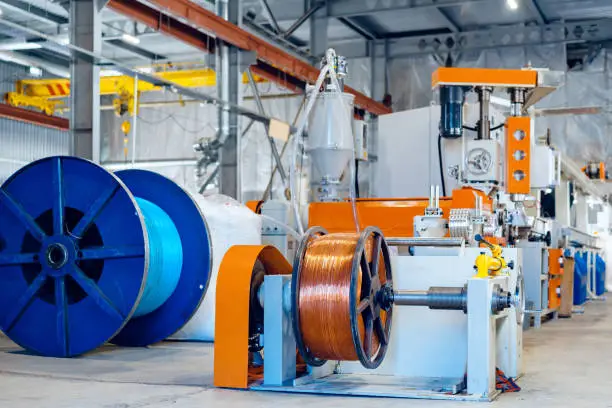
Selecting the Best Casting Method for Copper and Brass: Practical Guidance
Process-Specific Performance Characteristics
Sand casting gives you the most physical freedom because it can handle internal passageways, complicated splitting lines, and different wall thicknesses that are hard for other methods to handle. Surface finish varies from 250 to 500 microinches Ra based on the size of the sand grains and the binder systems used. Functional areas usually need to be machined. Dimensional tolerances can get as tight as ±0.015 inches for precision casting and proper pattern equipment care, but they can go as low as ±0.030 inches for general features.
When you invest in casting, the surface quality is usually 125 microinches Ra or better, which means that you don't have to do any extra finishing on non-critical areas. The process is great at keeping tolerances as tight as ±0.005 inches and making things that can't be done with sand, like thin walls, fine details, and smooth internal curves. These benefits come at higher piece-part costs. Investment casting is most cost-effective for complex shapes where the higher casting costs are balanced by the fact that no milling is needed.
Centrifugal casting makes the densest material by using G-forces to squeeze the metal structure together and push flaws deeper into the metal. This makes parts that are very good at keeping pressure inside and having good mechanical qualities. These parts are especially useful in hydraulic pump parts and pressure vessel uses. The fact that the process can only be used for rotationally symmetrical parts limits its uses, but when mathematics allows, centrifugal casting produces better metals.
Supplier Evaluation Criteria
Different industries have different certification needs, but ISO 9001 quality management systems are the standard for major production partnerships. Tier-1 providers to the automotive industry should check that they are IATF 16949 certified. This shows that the supplier can handle control plans, failure mode effects analysis, and the approval processes for production parts. When sellers in the electrical sector keep up with their ISO 14001 environmental systems and RoHS compliance paperwork, it's good for buyers.
Assessing production ability is more than just looking at numbers. We look at equipment variety. Having more than one casting line stops single-point breakdowns that could mess up your supply chain. Having finishing tools like CNC machining centers, coordinate measure machines, and surface treatment systems all in one place lets you be responsible for the whole process, from the raw casting to the finished part. Fudebao Technology has a wide range of equipment, including high-speed machining centers, CNC lathes, low-pressure casting machines, and die casting equipment. This allows us to fully control the process from melting to final review.
During difficult development times, suppliers are often set apart by their technical help skills. Software for simulating casting, metals labs, and skilled application engineers can all help improve designs so they can be made before spending money on tools. Suppliers who offer design for manufacturing reviews can find possible flaw modes, suggest changes to the gates, or suggest metal replacements that increase the yield of the casting while still meeting performance standards. The development cycle time is cut down by working together, and expensive design changes are avoided as much as possible.
Troubleshooting and Quality Control in Copper vs Brass Castings
Common Defect Profiles and Root Causes
The most common quality problem in copper casting is porosity, which is usually caused by hydrogen that was dissolved coming out of solution as the metal hardens. Gas porosity shows up as round holes spread out in the structure of the casting, mostly in the heavy parts that cool more slowly. To stop this from happening, you need to control the melt atmosphere, use neutral gas protection, and add deoxidizing elements. In important situations, advanced foundries use vacuum-assisted pouring or pressure injection to get close to theoretical density.
Shrinkage problems happen when there isn't enough feeding during solidification, leaving uneven holes where spots of liquid freeze without getting more from the risers. Because brass casts can freeze at a wider range of temperatures, they are more likely to crack when section changes create hot spots. We can now use casting modeling software to figure out where the parts will shrink during the planning phase. This helps us place risers and chills in a way that controls the solidification process.
Surface flaws like cold shuts, misruns, and inclusions are often caused by how the filling temperature is managed and how the gates are designed. Because copper is very hot, it needs to be poured quickly so that it doesn't solidify too quickly. Brass, on the other hand, has a lower viscosity, which lets it be filled more slowly, which prevents turbulence and air trapping. Filtering systems inside gate networks catch oxide films and slag particles before they get into mold holes. This makes the quality of the surface on important faces a lot better.
Quality Assurance Best Practices
The rules for dimension checking should match the needs of the picture and the importance of the function. Coordinate measuring tools make it possible to measure complex shapes over and over again. They do this by collecting statistical process control data that shows problems before they become too big or too small. Critical dimensions are inspected 100% of the time, while non-critical features may be able to get sampling plans if the process has been shown to be capable.
Mechanical testing, such as tension testing, hardness studies, and, if necessary, impact testing, makes sure that the casting metal meets the requirements. By pouring test bars along with production casts, you can check the properties of the material without damaging the finished parts. Separately cast test bars go through the same standard heat treatment as production parts, which makes sure that the properties are the same.
Non-destructive testing methods find problems inside a part without breaking it. Radiographic analysis shows holes, shrinkage, and inclusions in important structural parts, especially those that will be used in aircraft or defense. Ultrasonic testing can go through simpler shapes more quickly and find breaks in the material by looking at how the waves bounce. Penetrant testing is great for checking polished surfaces one last time because it shows flaws that break the surface of non-magnetic materials.
Conclusion
The choice of whether to use copper casting or brass has a big impact on the performance of parts, the cost of production, and the way the supply chain works across all industrial manufacturing sectors. Copper is the best conductor of electricity and heat, so it is used to distribute power and control heat. Brass metals, on the other hand, are stronger, easier to machine, and less expensive for structural and fluid-handling parts. To be successful in procurement, you need to know how the makeup of the alloy affects the control of the casting process, the profile of defects, and the qualities of the finished part.
The choice framework includes more than just comparing materials; it also includes choosing a casting method, figuring out how good a seller is, and making sure quality control is strict. Partnerships with experienced makers that offer a full range of services, from helping with the choice of alloys to precision machining and final testing, lower the risk of development and speed up the time it takes to get products to market.
FAQ
Which material provides better corrosion resistance in marine environments?
When used in salt water, copper-aluminum bronze alloys work much better than regular brass. Brass metals that contain zinc lose their zinc when they are exposed to chloride, but aluminum bronzes make protective oxide layers that keep them from rusting even when they are flowing quickly. These special copper metals are used instead of brass in naval blades, pump impellers, and underwater valve parts.
How does melting temperature influence production costs and lead times?
Because brass has a lower melting point, less energy is used during production, and furnace refractories last longer, which lowers running costs. Different temperatures also change the tools that are needed and the time it takes to make something. But for well-known suppliers whose copper casting processes are perfected, these factors become less important when predicting wait times. Instead, design complexity and volume come into play.
Can I source both copper and brass castings from a single supplier?
Manufacturers that can cast a variety of alloys can support more than one family, which can save you money on purchases by letting you handle your suppliers more centrally and possibly taking advantage of big discounts. Fudebao Technology has separate heating and processing systems for copper, brass, and aluminum metals. This lets us suggest the best materials for each job and make sure that the quality of all the different types of parts in your assembly is the same.
Partner with Fudebao Technology for Precision Copper Casting Solutions
To find high-quality copper casting parts, you need a manufacturing partner with a track record of metallurgy knowledge and combined production skills. Zhejiang Fudebao Technology Co., Ltd. is an expert in precision CNC cutting and casting in copper alloy, aluminum alloy, and stainless steel. They work with automakers, industrial equipment makers, and electricity infrastructure projects all over North America and Europe. We have full control over the whole process at our plant, from melting to surface treatment. We keep tolerances to ±0.05mm and meet the standards for PPAP paperwork. Our engineering team works together on design optimization, alloy choice, and quality assurance processes, whether you need a sample or a lot of them. Get in touch with our copper casting manufacturer experts at hank.shen@fdbcasting.com to talk about your unique needs and get full technical offers based on decades of casting experience.
References
Davis, J.R. (2001). Copper and Copper Alloys: ASM Specialty Handbook. ASM International, Materials Park, Ohio.
American Foundry Society (2018). Casting Design and Performance: Principles and Practice in Non-Ferrous Metals. Des Plaines, Illinois.
Beeley, P.R. (2001). Foundry Technology, 2nd Edition. Butterworth-Heinemann, Oxford.
Copper Development Association (2019). Standards Handbook: Cast Copper and Copper Alloy Products. New York.
ASTM International (2020). ASTM B584: Standard Specification for Copper Alloy Sand Castings for General Applications. West Conshohocken, Pennsylvania.
Campbell, J. (2015). Complete Casting Handbook: Metal Casting Processes, Metallurgy, Techniques and Design, 2nd Edition. Butterworth-Heinemann, Oxford.



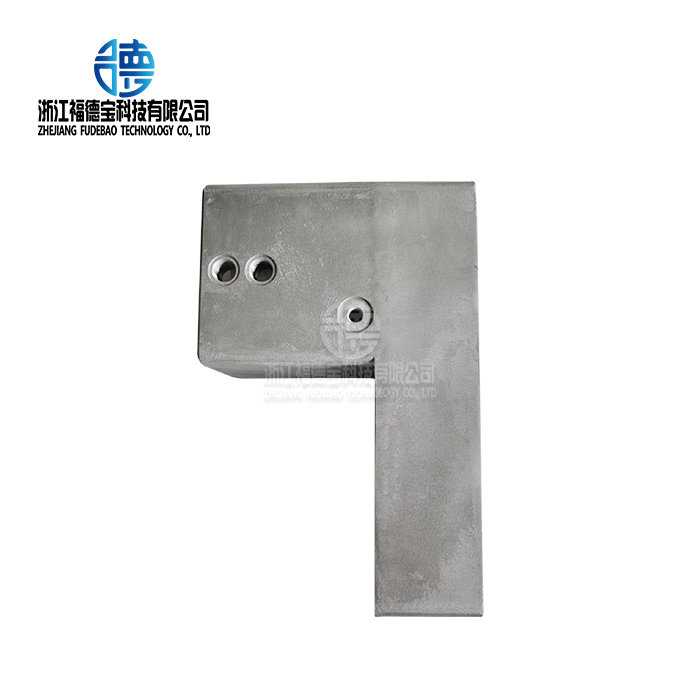
_1756352400994.webp "chassis enclosure")
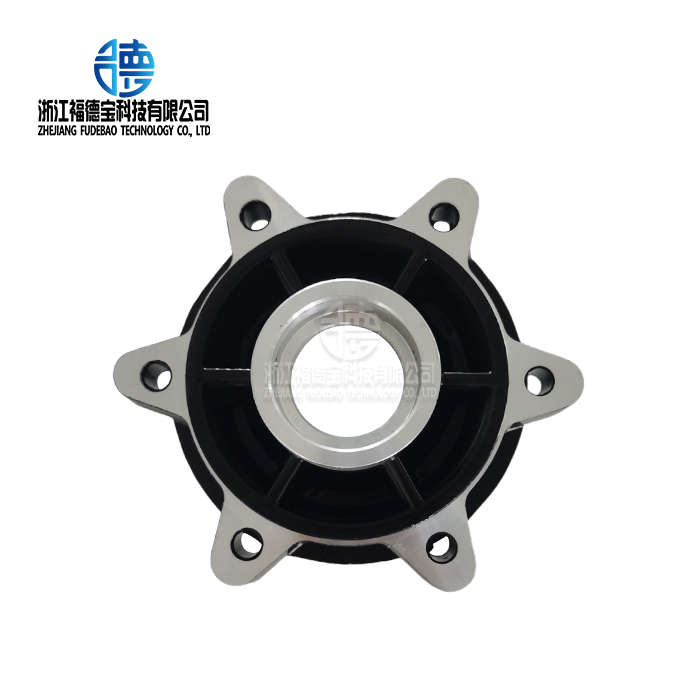
_1756344684491.webp "Explosion-proof lamp housing aluminum casting")