
Copper Casting Applications: Industrial Metal Parts
2026-03-23
Copper casting represents a sophisticated metallurgical manufacturing process where molten copper and its alloys are transformed into precision-engineered industrial components. This advanced technique enables the production of complex geometries with exceptional thermal and electrical conductivity properties that are unattainable through traditional machining methods. Industrial applications span across automotive transmission housings, electrical infrastructure components, marine propulsion systems, and aerospace heat dissipation elements. The process addresses critical manufacturing challenges including the need for corrosion-resistant components in harsh environments, high-conductivity electrical parts, and wear-resistant mechanical elements that maintain structural integrity under extreme operational conditions.
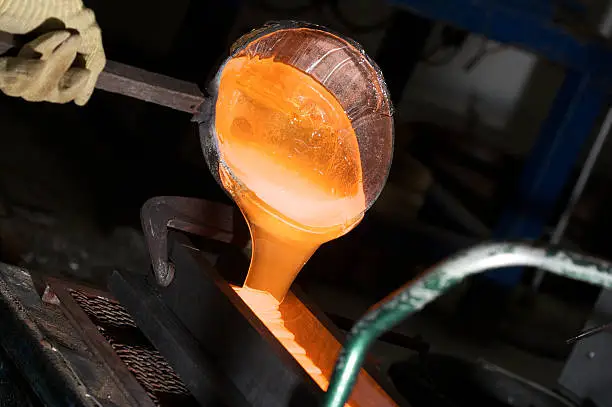
Understanding Copper Casting and Its Industrial Applications
Copper casting is based on a number of complex methods that are used to meet the needs of various industries. Sand casting is still the most flexible way. Molds made of silica can be used to make big parts like blades for boats and valve bodies for factories. Investment casting, which is also called "lost-wax casting," makes electrical connections and precise mechanical parts with a very smooth surface and exact measurements.
Primary Copper Casting Techniques
Sand casting is the most common way to make a lot of things when ±0.5mm in size differences are okay. This method works great for making pump housings, gear parts, and structure parts that weigh anywhere from 5 kg to several tons. The process can be used with different kinds of copper alloys, like tin bronzes, aluminum bronzes, and brass mixtures.
Investment casting has very accurate measurements, with errors as small as 0.1 mm. This makes it perfect for making electrical connections, instrument parts, and decorative hardware for buildings. The method makes it possible to make complicated internal holes and undercuts that would be too expensive to machine otherwise.
Continuous casting is used for high-volume tasks that need cross-sectional shapes that stay the same. This method makes billets and bars that are then used to make bushings for cars, electrical wires, and parts for boats.
Industrial Benefits and Material Properties
Copper metals have very good thermal conductivity (200 to 400 W/m·K), which means they are much better at getting rid of heat than steel and aluminum. This quality is very important for cooling systems for car engines, heat exchanges in factories, and parts that control the temperature of electronics.
High-purity copper castings have an electrical conductivity of 85 to 100% IACS (International Annealed Copper Standard). This makes them essential for power transfer equipment, electrical switchgear, and infrastructure for green energy. Copper surfaces are useful because they kill germs, which makes them useful for medical equipment housings and food handling machines.
Copper alloys have different levels of corrosion protection, but in marine settings, they always do better than steel and aluminum. Nickel-aluminum bronzes can be exposed to seawater for decades without breaking down much, while normal bronzes can handle atmospheric rust in industrial settings.
Copper Casting Process Steps and Quality Considerations
To get consistent quality and accurate measurements, the copper casting method needs exact control over a number of factors. When buying workers know these steps, they can evaluate the skills of suppliers and set reasonable quality standards.
Critical Process Parameters
Making a design and putting together the core are the first steps in preparing a mold. This sets the stage for accurate measurements. For sand mixes to have the right green strength and avoid surface flaws, they need to have a certain amount of clay (6–8%) and water (3–5%). Investment casting uses clay shells that are made by dipping them many times, which makes the surfaces smooth and the features clear.
The temperatures at which metals melt are between 1083°C for pure copper and 950°C for brass mixtures. Controlling the atmosphere stops oxidation, and degassing gets rid of the released hydrogen that makes the material porous. Electromagnetic stirring makes sure that the alloy's makeup stays the same throughout the melting process.
Pouring methods have a big effect on the quality of the casting. For example, controlled fill rates stop noise and cold shuts. Gating systems made for certain metal keep flaws from happening during shrinkage and make sure that all the holes are filled. Cooling rates change the structure and mechanical qualities of grains, so it's important to keep an eye on the temperature.
Quality Assurance and Defect Prevention
Porosity, shrinking, and inclusion development are all common casting flaws in copper casting that need different ways to be avoided. Porosity happens when gases get caught or when there isn't enough degassing, and shrinking happens when there isn't enough feeding during solidification. When casting restrictions stop the body from naturally contracting, hot tears happen.
Visual checking, dimensional proof, and non-destructive tests are all types of quality control methods. Ultrasonic checking finds holes and other irregularities inside a substance, while X-ray radiography finds cracks and holes caused by shrinking. In hydraulic uses, leak-tight performance is ensured by pressure testing.
The surface finish standards range from "as-cast" conditions (Ra 12.5µm) to machined surfaces (Ra 1.6µm), based on the needs of the application. Shot blasting gets rid of scale and makes the surface more even, while grinding gets close specs and smooth finishes.
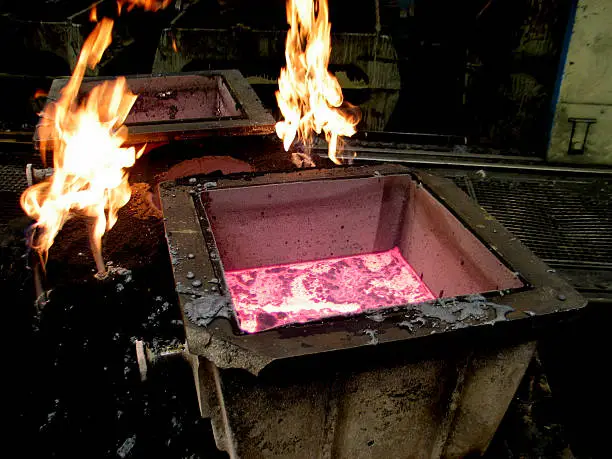
Comparing Copper Casting with Other Metal Casting Methods
Before choosing a material, it's important to look at its performance, how much it costs to make, and what the application needs. Copper casting offers unique advantages while presenting certain limitations compared to alternative materials and processes.
Performance Comparison Matrix
Copper alloys are different from other casting materials because they conduct heat 3–4 times better than aluminum and 15–20 times better than steel. This advantage is very important for heat exchangers, computer cooling systems, and thermal control parts that need to move heat quickly.
Different materials have very different levels of corrosion protection, with copper alloys performing better in naval and industrial settings. Stainless steel is very good at resisting rust in air, but copper-nickel metals work better in salt water. Aluminum is cheaper than copper and has good rust resistance, but it doesn't have copper's biofouling resistance.
When it comes to mechanical qualities, steel casts have a higher tensile strength (400–800 MPa) than copper alloys (200–600 MPa). But copper metals are very good at resisting wear and being tough when hit. This is especially important for parts of machinery that spin and structural elements that are loaded and unloaded over and over again.
Cost-Benefit Analysis
Copper casting is usually two to three times more expensive than metal and steel because it costs more to make. On the other hand, copper usually has lower lifetime costs because it lasts longer, needs less upkeep, and performs better. This idea is shown in marine uses, where copper-nickel blades last 20 to 30 years while steel ones only last 5 to 10 years.
Different materials have different production prices that are affected by how complicated the process is. Copper is very fluid, so it can be used to cast thin parts and detailed features with few flaws. For example, steel needs higher filling temperatures and special tools, while aluminum needs careful control of the atmosphere to keep it from oxidizing.
Procurement Guide: Purchasing Copper Casting Services
To make good procurement plans, you need to know a lot about the technical specifications, quality systems, and skills of your suppliers. With this information, you can make smart choices that match the needs for cost, quality, and service.
Supplier Evaluation Criteria
Technical skills include the ability to melt, knowledge of alloys, and methods for quality control. Suppliers should show that they have experience with the copper metals you need for your projects, such as tin bronzes for durability, aluminum bronzes to prevent rust, and high-conductivity coppers for electrical parts.
Quality badges give you an objective way to judge a supplier's skills. ISO 9001 sets the bar for quality management, and ASTM and ASME certifications show that a company follows the rules set by its business. AS9100 certification is needed for aerospace uses, while IATF 16949 compliance is needed for car use.
When figuring out production capacity, you have to look at things like kiln size, casting envelope limits, and annual output. Knowing these factors helps match the skills of the seller with the needs of the project while making sure there is enough room for future growth.
Specification Development and Procurement Best Practices
Here are the most important parts of complete copper casting specifications:
- Material Requirements: List the alloy's make-up, its mechanical qualities, and the standards for acceptance based on ASTM or a similar one
- Dimensional Tolerances: Set important measurements with the right tolerance levels, usually IT12–IT14 for as-cast surfaces and IT8–IT10 for machined features
- Surface Finish: Set standards for as-cast and machined surfaces, such as the number of defects that are allowed and how they should look
- Testing Requirements: Require the right checking methods, such as measuring, certifying materials, and performing tests
These parts of the specification make sure that needs are communicated clearly and allow approved suppliers to bid competitively.
Cost factors include more than just the piece price; they also include the costs of tooling, development, and approval. For investment casting, you need to buy expensive wax models and ceramic tools. Sand casting, on the other hand, uses designs that can be used again and again and costs less to start. Due to tooling depreciation and setup charges, volume forecasts have a big effect on unit costs.
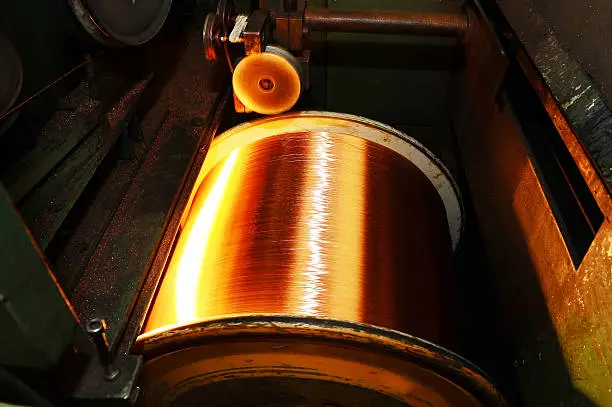
Case Studies and Industry Insights: Copper Casting in Action
Real-world applications demonstrate the practical benefits and performance advantages of copper casting across diverse industrial sectors. These examples can help procurement workers make better choices about which materials and processes to use.
Automotive Industry Applications
A big car gearbox maker switched from steel synchronizer rings to castings made of copper, which cut weight by 40% and improved shift quality. The better thermal conductivity of the copper alloy made it easier for heat to escape during contact, which increased the life of the part by 60%. The casting process got rid of the need for extra cutting, which cut costs by 25% even though materials cost more.
Aluminum bronzes are also used successfully to hide electromagnetic fields and keep temperatures in check in the motor housings of electric vehicles. The casting method makes it possible to combine mounting and cooling ducts, which simplifies assembly and increases stability in high-temperature environments.
Industrial Equipment Success Stories
A company that makes pumps for the chemical processing business switched from making rotor parts out of steel to casting them in bronze. The change got rid of problems with galvanic rust and shortened the time between upkeep checks from three times a year to once a year. Because bronze is easier to work with, tolerances could be made smaller and hydraulic efficiency could be raised.
Marine power systems consistently show that copper casting has benefits, such as longer service life and fewer repair needs. A business shipping company said that bronze blades needed to be serviced 300% less often than steel ones, and that they used a lot less fuel because biofouling didn't build up as much.
Emerging Trends and Future Outlook
Using additive manufacturing together is becoming more popular. 3D-printed models make it possible to make quick prototypes and small batches. This technology speeds up development and makes it possible to make patterns with complicated shapes that weren't possible before.
Better strength-to-weight ratios and better corrosion protection are the main goals of advanced alloy research. For military and security uses, new copper-beryllium formulations have tensile strengths that are similar to steel while still being very good at conducting electricity.
Conclusion
Copper casting continues to serve as an essential manufacturing process for industrial metal parts requiring superior thermal conductivity, corrosion resistance, and dimensional precision. The technology enables production of complex components that would be economically unfeasible through machining while delivering performance characteristics unattainable with alternative materials. Modern casting techniques achieve dimensional tolerances within ±0.1mm while maintaining excellent surface finish and metallurgical integrity. As industries demand higher performance and longer service life from critical components, copper casting remains a preferred solution for applications ranging from automotive transmissions to marine propulsion systems and electrical infrastructure.
FAQ
What temperature is required for copper casting operations?
Pure copper melts at 1083°C, but copper alloys need temperatures between 950°C and 1150°C, based on what they are made of. Lower temperatures (900–950°C) are needed for brass alloys to melt, while higher temperatures (1050–1100°C) are needed for aluminum bronzes. Temperature control within ±10°C makes sure that the fluid is at its best and stops rusting from happening while pouring.
How does copper casting compare to bronze casting in terms of durability?
Due to alloying elements like tin, aluminum, or nickel, bronze castings usually have better mechanical qualities and wear protection than pure copper. Tensile strengths of 300–500 MPa are reached by tin bronzes, but only 200–300 MPa are reached by pure copper. Pure copper, on the other hand, is better at conducting electricity and heat. The choice of material relies on the needs of the product, weighing the needs for mechanical strength against those for electrical conductivity.
What quality certifications should I look for when sourcing copper casting suppliers?
Some important certifications are ISO 9001 for quality management, ASTM compliance for material standards, and needs specific to the business, like AS9100 for aircraft or IATF 16949 for car use. Suppliers should also show that their electrical parts meet national standards and that their pressure tank parts are ASME-certified.
Can copper castings achieve the same dimensional accuracy as machined parts?
When it comes to important measurements, investment casting can get as accurate as ±0.1mm, which is similar to how accurate machined parts are. Most of the time, sand casting gives limits of ±0.5mm, which are fine for most commercial uses. Using both casting and selective machining together saves money and gets the accuracy needed on important areas and features.
What are the main advantages of copper casting over forging for industrial components?
Casting makes it possible to make parts with complicated internal cavities, undercuts, and complex shapes that can't be made with forging. The process works with different wall widths and built-in features, which makes building easier. Casting gets rid of the problems caused by directional grain structure and makes low-volume production more cost-effective than forging, which needs expensive tools.
Partner with Fudebao Technology for Superior Copper Casting Solutions
Fudebao Technology stands ready to transform your industrial component requirements through precision copper casting and advanced manufacturing capabilities. Our comprehensive facility houses state-of-the-art equipment including high-speed machining centers, CNC lathes, and specialized casting systems that deliver tolerances up to ±0.05mm. We serve as trusted copper casting suppliers to automotive OEMs, industrial equipment manufacturers, and aerospace companies worldwide. Connect with our technical team at hank.shen@fdbcasting.com to discuss your specific requirements and discover how our integrated casting-to-finishing capabilities can optimize your supply chain while ensuring exceptional quality standards.
References
Davis, J.R. "Copper and Copper Alloys: ASM Specialty Handbook." ASM International Materials Engineering Society, 2021.
Campbell, John. "Complete Casting Handbook: Metal Casting Processes, Metallurgy, Techniques and Design." Butterworth-Heinemann Technical Publications, 2022.
American Foundry Society. "Copper Base Alloys Casting Guidelines and Quality Standards." AFS Technical Research Division, 2023.
Beeley, Peter R. "Foundry Technology and Industrial Applications of Metal Casting." Elsevier Science & Technology, 2021.
International Copper Association. "Industrial Applications of Copper Castings in Modern Manufacturing." ICA Technical Bulletin Series, 2023.
Zhang, Wei-Ming. "Advanced Metallurgy and Quality Control in Non-Ferrous Metal Casting." Journal of Materials Processing Technology, 2022.



_1756347888208.webp "New energy motor shell")
_1756349957728.webp "metric v belt pulley")
_1756349862928.webp "belts pulleys")
_1756348489473.webp "Automobile intake valve")
_1756346613780.webp "Aluminum tent base Casting")