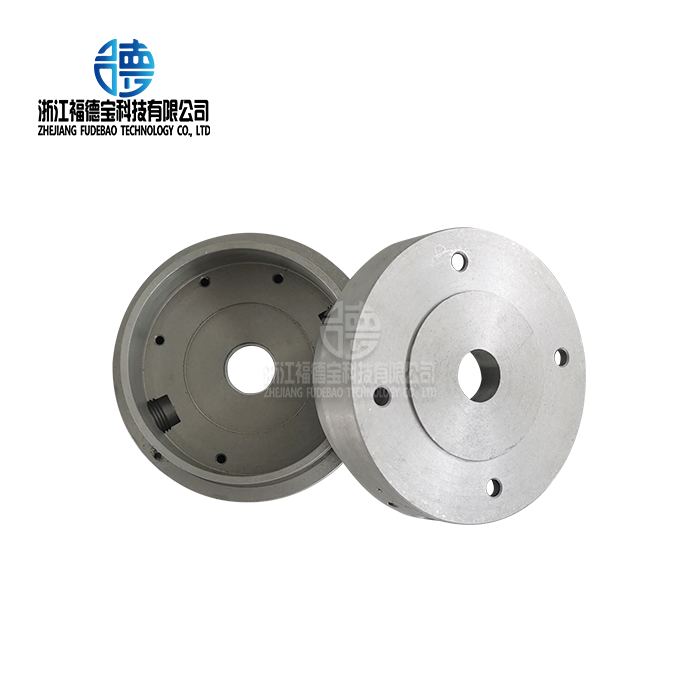
Can Aluminum Die Casting Be Annodized?
2026-05-18
Yes, aluminum die casting can be anodized. However, the method is more difficult than anodizing worked or extruded aluminum. Die casting metals like A380 or ADC12 usually have a high silicon content, usually between 7.5% and 11.5%. This gives them a grayish, uneven look instead of the bright, even finish that you see on worked aluminum. While anodizing aluminum die cast parts doesn't make them look perfect, it does make them much more resistant to rust and better at withstanding wear. This makes it a useful surface treatment for industrial uses where reliability is more important than looks.

Understanding Aluminum Die Casting and Anodizing
In aluminum die casting, liquid aluminum metal is poured into precise steel molds at pressures higher than 10,000 psi. This makes it possible to make complex, nearly net-shaped parts quickly. This high-pressure die casting (HPDC) method fixes some of the biggest problems in manufacturing. It gets rid of the need for expensive welding by making complex geometries as single units, it cuts the weight of parts by about 40% compared to steel equivalents, and it allows mass production with ±0.05mm tolerances in size. Common metals like A380, A383, and ADC12 rule the industry because they are very fluid when poured and have good mechanical qualities when they harden.
Common Alloys and Their Anodizing Compatibility
The type of metal used directly affects how well die-cast aluminum reacts to anodizing. A380 is made up of about 8.5% silicon and 3.5% copper, which makes it easier to cast but less attractive when anodized. During the electrochemical process, the silicon particles don't get oxidized, so dark spots show up in the anodic layer. It is better to use alloys with less silicon, like A356, for semi-solid or squeeze casting because they work better for anodizing but not as well for casting. Copper levels above 1% also make the anodized surface darker and make it less resistant to rust in saltwater.
When deciding which metal to use, procurement workers have to weigh the cost of casting against the quality of the finish they need. Standard high-silicon metals and anodizing are a great choice when safety is more important than looks, like in engine brackets for cars or pump housings in factories. For uses that need high-end looks, different ways of making things are usually needed, like casting or cutting from billet stock.
The Anodizing Process Explained
Controlled oxidation in an electrolytic bath, usually with sulfuric acid amounts between 15% and 20%, changes the surface of aluminum during anodizing. The aluminum part is the anode in an electrical circuit. Oxygen ions stick to the surface and make an aluminum oxide layer with holes in it. This oxide layer grows inward from the original surface instead of adding thickness, taking up about half of the depth of the aluminum. Thicknesses of coatings made by Type II anodizing range from 0.0002" to 0.001", and for high wear protection, Type III hard anodizing makes coatings thicker than 0.002".
Anodizing creates pores that can be colored with organic or inorganic pigments before sealing. However, in aluminum die casting, the silicon content makes color uniformity difficult. Sealing closes the pores by hydrating them in hot water or chemical solutions, which traps the dyes and improves corrosion protection. Anodized coatings that are properly sealed last a very long time—1,000 hours or more in neutral salt spray testing according to ASTM B117.
Comparing Die Casting to Other Aluminum Manufacturing Methods
Understanding the differences between die casting, sand casting, permanent mold casting, and forging helps explain why anodizing compatibility varies. Sand casting and low-pressure permanent mold processes use alloys with lower silicon content, usually A356 or A319, which leads to cleaner anodizing with fewer visible flaws. These methods work best for lower production volumes where longer cycle times are acceptable for better surface finish. Forged aluminum parts, which are machined from wrought billet, give the best anodizing results because they have a homogeneous grain structure and few alloying elements.
Die casting works best when making more than 5,000 units a year of complex parts with features like thin ribs, integrated bosses, or internal passages. The process gives up some surface finish options but offers unmatched geometric flexibility and production speed. Engineering teams must decide if the functional benefits of anodizing—primarily corrosion protection and surface hardness—justify the process, even though high-silicon alloys have some cosmetic limitations.
Challenges and Solutions in Anodizing Aluminum Die Castings
Surface flaws are the main problem with consistently anodizing aluminum die casting. Porosity, trapped gas voids, and microstructural irregularities from rapid solidification make weak spots in the anodic layer, which causes discoloration and poor coating adhesion. To solve these problems, you need to improve the casting process and prepare the surface before anodizing.
Common Surface Defects and Their Impact
There are two types of porosity: gas porosity, which is caused by trapped air or hydrogen during injection, and shrinkage porosity, which is caused by not enough feed during solidification. Both of these defects create surface pits that go through the anodic layer, revealing the raw aluminum substrate. These exposed areas corrode more quickly, leaving behind cosmetic flaws and possible weak spots in the structure. Surface roughness from die wear or poor venting also makes anodizing irregularities stand out more, since the oxide layer follows the surface topography and looks darker in valleys.
Another problem that only happens in die casting is silicon segregation. When the metal cools quickly, silicon particles gather in certain areas, leaving visible streaks after anodizing. The silicon stays metallic gray, while the aluminum oxide around it looks lighter. This makes a spotted look that isn't acceptable for consumer-facing parts but is fine for industrial parts where function is more important than form.
Pre-Treatment Protocols for Optimal Results
Before anodizing, mechanical surface preparation like media blasting or vibratory finishing gets rid of loose oxide scale and makes the surface texture uniform. Vibratory finishing with ceramic media closes small surface holes and smooths out sharp edges. Media blasting with glass beads or aluminum oxide makes the surface rougher in a controlled way that helps the anodic layer stick better, but the blast pressure must stay below 60 psi to protect the surface.
Alkaline cleaning of aluminum die casting gets rid of oils, lubricants, and organic contamination from casting and machining. Soaking parts in sodium hydroxide or commercial alkaline cleaners at temperatures between 140°F and 160°F dissolves organic residues and makes the surface chemically active. This step comes before acid etching or desmutting, where parts are soaked in nitric acid or sulfuric acid solutions to get rid of smut, which is the dark residue of silicon, copper, and other alloying elements that sticks to the surface during alkaline cleaning.
De-smutting is especially important for die-cast aluminum because it has a lot of silicon in it. If the smut isn't removed completely, the anodic layer forms unevenly, trapping dark particles and making it hard for things to stick together. The best desmutting solutions keep the nitric acid concentration between 30% and 50% by volume, and the immersion time can be anywhere from 30 seconds to 3 minutes, depending on the alloy composition and surface condition before the process.
Design Recommendations for Anodizable Die Castings
A lot of what affects the uniformity of anodizing is the shape of the component. Sharp external corners receive more current, which makes the oxide layers thicker and darker. Internal corners and recessed areas receive less current, which makes the coatings thinner and lighter in color. Making parts with large radii—at least 0.5 mm on external corners and 1.0 mm on internal corners—encourages even current distribution and consistent coating thickness.
Wall thickness uniformity is important because different parts of the part solidify at different rates, causing microstructural variation that shows up as color variation after anodizing. To keep these effects to a minimum, keep the wall thickness within 20% of the whole component. If thickness variation is unavoidable, orienting the part during anodizing so that thicker parts face the cathode can help partially make up for differences in current distribution.
Tooling and process parameter optimization during the casting stage stops problems with the anodizing process later on. Lowering the injection speed in important cosmetic areas reduces turbulence and the porosity that comes with it. Enough venting keeps gas from getting trapped, and the best gate location ensures that the mold fills completely without solidifying too soon. Die temperature control between 400°F and 500°F balances casting productivity against surface quality, with lower temperatures producing finer grain structure and less porosity at the cost of longer cycle times.
Comparing Aluminum Die Casting Anodizing with Other Finishing Methods
To choose the best surface finish, you need to look at how it performs, how it looks, and the total cost of ownership over the lifecycle of the part. aluminum die casting anodizing mainly competes with painting, powder coating, and chemical conversion coatings, and each has its own benefits depending on the needs of the application.
Anodizing Versus Painting and Powder Coating
Anodizing makes an oxide layer that is part of the base metal and can't peel or flake. Paint and powder coating, on the other hand, put on external layers that can come off when hit or heated and cooled. Because of this, anodizing is better for parts that will be handled a lot or that will be exposed to chemicals that break down organic coatings. Anodized aluminum also keeps its electrical conductivity through the coating, which is important for uses that need controlled grounding or EMI shielding.
Compared to anodized die cast aluminum, powder coating has more color options and better color uniformity. The coating thickness of powder—usually 2 to 4 mils—easily hides surface flaws like porosity and silicon streaking that can be seen through anodizing. Powder coating is better for consumer goods where looks are important, while anodizing is better for industrial uses that need long-term durability and chemical resistance. Painting is similar to powder coating in terms of looks, but it is worse at scratch resistance and environmental durability.
Anodizing usually costs more per part than powder coating because of the need to handle chemicals and the limited number of parts that can be processed at once. However, the difference in price becomes smaller when you consider that anodized parts last 15 to 20 years in corrosive environments, while powder coated parts only last 5 to 7 years. When figuring out the total cost of ownership, you shouldn't just look at the initial finishing costs; you should also consider how often the parts need to be replaced, how much the warranty covers, and how much it will cost for field service.
Surface Quality Comparison Across Casting Methods
Anodized die castings have different surface characteristics than anodized sand castings, permanent mold castings, or forged parts because of differences in their microstructure. Sand castings tend to have rougher as-cast surfaces that need to be more aggressively machined or blasted before they can be anodized. However, their lower silicon content makes the oxide layers brighter and more uniform. Permanent mold and low-pressure castings offer an intermediate surface quality, balancing die casting's ability to produce fine details with better anodizing response because they have less silicon alloying.
Forged and machined aluminum parts and aluminum die casting anodize very evenly because they have a homogeneous grain structure and few holes. These parts are very expensive, usually 200% to 400% more than die casting costs for complicated shapes. This means that they are only economically viable when the investment is worth it for the better look or performance. Aerospace structural parts and high-end consumer electronics are common forging uses where anodizing looks are very important.
Zinc die castings can't be anodized well, so the only surface treatments that can be used are chromate conversion coating, painting, or powder coating. This limitation can affect the choice of material when anodizing's benefits for protecting against corrosion are greater than zinc's lower cost and better casting detail reproduction.
Cost and Lead Time Considerations
Anodizing lead times are usually 5 to 10 business days for commercial job shops that use sulfuric acid Type II processing, and 10 to 15 days for Type III hard anodizing or when color matching needs extra care. These times include pre-cleaning, anodizing, dyeing, and sealing. Rush service is available depending on how full the shop is, and there are extra fees of 25% to 50% for faster processing.
There are minimum batch charges that make anodizing less cost-effective for prototypes of less than 25 to 50 pieces. Many anodizers set minimum order charges equal to processing 100 to 200 square feet of surface area, which makes small complex parts more expensive per piece than larger components. Combining orders to get enough racking density can lower costs and sometimes qualify for volume discounts of up to 15% to 25% on large production runs.
Anodizing should be followed by a quality inspection that checks the coating thickness using eddy current testing according to ASTM B244, the look according to standards agreed upon by the customer, and the resistance to corrosion through salt spray testing when required by the specifications. These quality gates add two to three days to the total lead time but are necessary to keep products from breaking down in harsh service environments.
Selecting the Right Aluminum Die Casting and Anodizing Supplier
A supplier capability assessment checks to see if a manufacturing partner can consistently deliver aluminum die casting parts that meet both the casting dimensions and surface finish requirements. Procurement teams can lower supply chain risks by looking at technical capabilities, quality systems, and responsiveness indicators.
Essential Certifications and Quality Systems
For example, ISO 9001 certification shows that a quality management system is in place, and ISO 14001 certification shows that a company is environmentally friendly, which is important for companies that have to report on sustainability. Suppliers to the automotive industry should keep their IATF 16949 certification, which requires them to follow protocols for advanced product quality planning (APQP), production part approval processes (PPAP), and measurement system analysis (MSA). For aerospace applications, AS9100 or NADCAP certification is needed, especially for non-destructive testing (NDT) and special processing operations like anodizing.
Documentation and process control show how mature a quality system is. Leading suppliers use statistical process control (SPC) on important dimensions, making sure that capability indices (Cpk) are higher than 1.33 for dimensional characteristics and 1.67 for safety-critical features. They also do regular measurement system gauge repeatability and reproducibility (GR&R) studies, usually achieving measurement uncertainty below 10% of tolerance bandwidth. Suppliers who give customers access to real-time quality data through customer portals show transparency, which boosts trust in their manufacturing consistency.
Traceability systems are very important for regulated industries that need to certify materials and make sure processes work. Full traceability connects heat lots of raw materials through casting, machining, and surface finishing operations to records of the final inspection. This lets quality investigations happen quickly and meets regulatory needs for medical devices, aerospace parts, and some automotive safety systems.
Evaluating Technical Capabilities
Modern die casting cells with vacuum-assist systems get rid of porosity by removing air from the die cavity before metal injection. This makes denser castings that anodize with fewer cosmetic flaws. Using cavity pressure sensors and infrared temperature imaging for real-time process monitoring allows closed-loop control that keeps filling patterns consistent across production runs.
It depends on the supplier's machining capabilities, including aluminum die casting, to see if they can deliver fully finished parts or if they need to send them to a partner facility for additional work. Having CNC machining centers, coordinate measuring machines (CMM), and automated inspection systems in-house allows for single-source responsibility and tighter tolerance control. When evaluating machining capability, make sure that the equipment specifications match the needs of the parts. For example, parts that need ±0.025mm tolerances need machines with positioning accuracy of ±0.005mm or better, which is usually achieved through high-precision horizontal machining centers with thermal compensation.
Anodizing capabilities vary a lot between suppliers. Some die casters outsource all surface finishing, which can lead to quality issues and longer lead times. Manufacturers that have their own anodizing lines offer better process control and accountability. When comparing anodizing capabilities, check the tank sizes to make sure they can accommodate your part sizes with the right racks, make sure they regularly process your specific aluminum alloys, and make sure their dye inventory matches your color needs if applicable.
Assessing Supplier Responsiveness and Service
A supplier's prototyping services show how willing they are to help with engineering issues and build new relationships with customers. Fast-responsive suppliers give design-for-manufacturability (DFM) feedback within 48 hours of receiving CAD files, pointing out possible casting flaws, machining issues, or anodizing concerns before investing in tools. They also offer rapid prototyping through soft tooling or other methods like CNC machining, sending sample parts within 2 to 3 weeks for evaluation.
Minimum order quantity (MOQ) rules affect how flexible you can be when sourcing, especially when a new product is first released and demand isn't clear. Suppliers who enforce rigid MOQs based on full production runs put buyers at risk of having too much inventory, while suppliers who offer flexible order quantities in exchange for small price premiums allow demand-responsive supply chains. Making MOQ terms clear when choosing a supplier helps avoid misunderstandings that can strain relationships during production ramp-up phases.
Professional suppliers are clear about lead times, while suppliers who are having trouble with their own planning systems don't. Reliable partners give committed delivery dates instead of estimates, keep delivery performance above 95%, and communicate proactively when schedule risks arise. They also publish standard lead times for different order types, such as 6 to 8 weeks for new tooling, 4 to 6 weeks for initial production orders, and 2 to 4 weeks for repeat production. Online quoting tools that generate instant pricing and lead times for repeat orders streamline procurement workflows and lower administrative overhead.
Conclusion
In conclusion, anodizing aluminum die casting improves their corrosion resistance, surface hardness, and lengthens their service life, but the results are not the same as anodized wrought aluminum because of the alloy composition. To make this work, procurement teams need to know the limitations of the alloy, follow the right pre-treatment protocols, and choose suppliers that can do both casting and finishing. When evaluating anodizing, they should weigh the initial processing costs against the long-term value of fewer replacements and less warranty exposure. The surface treatment is best for industrial applications where durability is more important than appearance. It makes it possible to find cost-effective solutions for automotive, industrial equipment, electrical systems, and aerospace assemblies that need lightweight, color-resistant hardware.
FAQ
1. Which aluminum alloys anodize most effectively?
Standard die casting alloys like A380 or ADC12 don't anodize as well as A356 and A357 alloys because they contain more silicon. High-pressure die casting alloys, on the other hand, have silicon that doesn't anodize, which results in a dark, mottled finish. Applications that care more about appearance than cost should choose low-silicon alloys processed through permanent mold or semi-solid casting methods, even though these methods cost more and take longer to make.
2. What surface preparation steps optimize anodizing results?
As part of a good preparation process, alkaline cleaning is used to get rid of organic contamination, and then nitric acid or sulfuric acid desmutting is used to get rid of silicon and copper smut from the surface. Vibrational deburring or media blasting is used for mechanical finishing, which makes the texture uniform and fills in small holes. Rinsing well between steps stops cross-contamination that leads to coating flaws.
3. Does anodizing change aluminum mechanical properties?
Anodizing doesn't change the shape much—usually less than half of the coating thickness—and it doesn't have a big effect on mechanical properties like tensile strength or fatigue resistance. The anodic oxide layer is brittle, so parts that need to be flexible should be aware of the possibility of surface microcracking when they are deformed very much. Type III hard anodizing may slightly lower fatigue strength in highly stressed situations by weakening the surface.
Partner with Fudebao Technology for Superior Die Cast Components
Zhejiang Fudebao Technology can do a lot of different things, like casting aluminum die casting alloys, precise CNC machining, and advanced surface treatments like anodizing. They work with demanding industries like aerospace and automotive. Their vertically integrated facility has high-speed machining centers, CNC lathes, low-pressure casting machines, and die casting equipment that can handle everything from the raw material to the finished product. They can keep the dimensions accurate to within 0.05mm, which is perfect for making precise parts for cars, medical equipment housings, and industrial machinery parts.
Our engineering team helps with design-for-manufacturability during the early stages of development, looking for ways to improve casting geometry for better anodizing results while still meeting cost and structural performance goals. We work with common die casting alloys like A380 and ADC12, as well as custom formulations. Our established anodizing protocols maximize corrosion resistance and surface hardness, even when the alloy itself has some limitations. Quality management systems that are in line with ISO 9001 standards make sure that output is consistent across production runs, with the help of thorough inspection protocols and the ability to track materials.
If you need to find an aluminum die casting supplier to make a new product or improve an existing supply chain, Fudebao Technology can help. We offer clear communication, flexible order quantities, and lead time commitments backed by proven on-time delivery performance. Our customer portal gives you real-time access to order status, quality documentation, and shipment tracking. Email us at hank.shen@fdbcasting.com or visit fdbcasting.com to talk about your specific needs and find out how our capabilities can help you reach your procurement goals.
References
1. American Society for Testing and Materials. (2021). ASTM B244-21: Standard Test Method for Measurement of Thickness of Anodic Coatings on Aluminum and of Other Nonconductive Coatings on Nonmagnetic Basis Metals with Eddy-Current Instruments. West Conshohocken, PA: ASTM International.
2. North American Die Casting Association. (2020). Product Specification Standards for Die Castings Produced by the Semi-Solid and Squeeze Casting Processes. Arlington Heights, IL: NADCA.
3. Sheasby, P.G., & Pinner, R. (2019). The Surface Treatment and Finishing of Aluminum and Its Alloys, 6th Edition. Materials Park, OH: ASM International.
4. United States Department of Defense. (2018). MIL-A-8625F: Military Specification - Anodic Coatings for Aluminum and Aluminum Alloys. Washington, DC: Defense Standardization Program Office.
5. Kaufman, J.G., & Rooy, E.L. (2022). Aluminum Alloy Castings: Properties, Processes, and Applications. Materials Park, OH: ASM International.
6. Wernick, S., Pinner, R., & Sheasby, P.G. (2017). The Surface Treatment and Finishing of Aluminium and Its Alloys, Volume 1: Finishing. Teddington, UK: Finishing Publications Ltd.



YOU MAY LIKE
_1756361494985.webp "sliding block copper castings")
_1756352340434.webp "Aluminum chassis cover")
_1756349862928.webp "belts pulleys")
_1756349696500.webp "Pulley aluminum casting")