
Advanced Die-Cast Aluminum Casting for Industrial Production
2026-07-30
Advanced die-cast aluminum casting represents a transformative manufacturing approach that enables industrial producers to achieve exceptional precision, durability, and cost-efficiency in component production. Utilizing high-pressure injection of molten aluminum alloys into hardened steel molds, this process creates complex geometries with tight tolerances while maintaining superior mechanical properties. Industries ranging from automotive to aerospace rely on die-cast aluminum for its remarkable strength-to-weight ratio, excellent thermal management capabilities, and consistent dimensional accuracy. The technology has evolved significantly, now incorporating vacuum-assisted systems and real-time quality monitoring to produce components that meet the demanding standards of modern industrial applications.

Understanding Die-Cast Aluminum and Its Industrial Advantages
What Makes Die-Cast Aluminum Distinct?
High-Pressure Die Casting (HPDC) is a process that makes precision-engineered parts by forcing liquid aluminum alloys into steel dies that can be used again and again. The pressure can reach 30,000 psi. Unlike sand casting or machining, this method combines several features into a single net-shaped part. These features include mounting bosses, cooling fins, and structural ribs. Common metals like A380, A383, and ADC12 have different performance qualities that meet the needs of different industries. The process starts with choosing the right metal for the job. Next, the temperature is carefully controlled during the melting and injection stages to make sure the material flows well and has few holes.
Core Industrial Benefits
Die-cast aluminum has many benefits that go beyond its basic ability to make things. The tensile strength of the parts made this way is about 47 ksi, and their mass is about 2.71 g/cm³. This means that the parts are very strong without being too heavy. When thermal conductivity reaches 96 W/m-K, housings become active cooling systems, and in many cases, extra heat disposal parts are not needed. Aluminum alloys' natural resistance to corrosion makes them last a long time in harsh settings, and their ability to block electromagnetic interference keeps delicate technology safe. Tolerances must stay within ±0.002 inch/inch according to NADCA guidelines. This is very important for automated assembly processes where the speed of production depends on being able to switch out parts.
Process Parameters and Alloy Selection
Controlling the temperature during die casting has a direct effect on the quality of the end part. Melted aluminum usually goes into molds between 1,200°F and 1,300°F, and die temperatures are kept between 400°F and 600°F to keep fill characteristics and cycle time in balance. Injection speeds depend on how complicated the part is. For example, thin-wall sections need faster fills to keep them from solidifying too soon. The choice of alloy depends on the needs of the application. For example, A380 has balanced castability and mechanical qualities that make it good for general industrial use, while ADC12 is better at resisting rust for outdoor use. Copper content affects strength but decreases ductility, so it's important to carefully test against expected stress patterns. Modern foundries use optical emission spectroscopy to check the composition of the alloy and make sure that the levels of iron, copper, and zinc stay within the limits that stop the casting from becoming brittle or having flaws.
Comparing Die-Cast Aluminum with Alternative Materials
Material Performance Analysis
The choice of material has a big impact on how well a part works, how much it costs to make, and how long it lasts. Die-cast aluminum stands out because it has a number of qualities that are hard to find in other materials. Zinc casts have a better finish on the outside and better standards, but they are not strong enough for structural use and cost more to make. Magnesium alloys are even lighter, but they are hard to keep from rusting and need special care when they are being processed because they can catch fire. Steel is the strongest material available, but it is also very heavy and hard to work with, which raises the costs of both the material and the work that needs to be done on it. Engineering plastics don't rust and are lighter than metal parts, but they can't match metal parts when it comes to heat transfer, electromagnetic protection, or high-temperature performance.
Cost and Lifecycle Considerations
Production costs change a lot depending on how much is needed and how complicated the parts are. When you want to die-cast aluminum, you have to spend a lot of money on tools up front. For example, hardened steel molds are very expensive. But after 1,000 to 2,000 units, this cost becomes more cost-effective because the cost of each piece drops a lot compared to CNC machining or other ways of manufacturing. Dies made of H13 steel usually last between 50,000 and 100,000 shots before they need to be fixed up. This spreads the cost of the tools over many production runs. Other materials, such as injection-molded plastics, lower the cost of making tools, but they don't work as well in terms of heat and structure. When doing a lifecycle study, you need to think about how long each part will last. For example, properly handled aluminum castings can last for 15-20 years in car applications, while plastic alternatives that are heated and cooled or put under mechanical stress need to be replaced more often.
Application-Specific Material Selection
For some uses, the properties of die-cast aluminum are necessary. Automotive inverter housings need to get rid of heat, block electromagnetic waves, and support the structure all at the same time. Aluminum alloys are the only materials that can do all of these things well. Die casting makes it possible for telecommunications equipment that is used outside to be resistant to rust and have cooling fins built in. Aluminum's conductivity is used for grounding in industrial motor housings, and precision-cast sealing surfaces keep the explosion-proof integrity of the housings. When procurement teams understand these application-specific needs, they can make material choices based on performance factors instead of just starting with cost. They know that choosing the right material lowers the total cost of ownership by increasing service life and lowering warranty claims.
Procurement Strategies for Industrial Die-Cast Aluminum Components
Supplier Evaluation Framework
To find good die-cast aluminum partners, you need to do more than just look at prices. Credibility is based on certification systems. For example, ISO 9001 shows that a company has good quality management systems, and IATF 16949 shows that a company works with cars. PPAP documentation is necessary for tier-1 car suppliers to make sure that makers can check the accuracy of dimensions, the make-up of materials, and the process's ability to work before production starts. Look at the features of the facility's equipment and make a note of the vacuum-assisted die-casting machines for uses that need to be sensitive to porosity, and the coordinate measuring machines for checking measurements. Client references from similar industries can tell you a lot about how reliable the delivery is, how good the technical support is, and how quickly the company can solve problems when production is tough.
Lead Times and Order Considerations
Production schedules are very different depending on the stage of the project. After the plan is approved, tooling development usually takes 8 to 12 weeks, which includes making the mold, testing samples, and making any necessary changes. Initial production runs add two to four weeks as the process parameters settle down and quality checks are finished. The minimum order numbers show how long it will take for the tools to pay for themselves. For complicated shapes, they usually range from 500 to 1,000 pieces. Prototyping services make it possible to test the fit and function of a design before investing in a die. CNC-machined samples or 3D-printed mockups are used for this. Setting up clear lines of communication for changes to specifications is very important, since making changes after the tooling is finished costs a lot of time and money and throws off launch plans.
Quality Assurance and Testing Protocols
Strong quality control systems tell the difference between suppliers who are reliable and those who aren't. X-ray inspection can find internal porosity that can't be seen by looking at the surface. This is very important for making sure that pressure-tight housings work in hydraulic or pneumatic applications. Pressure decay leak testing makes sure that the seals on IP-rated casings that keep electronics safe from dirt and dust are still good. Coordinate measuring tools check complicated geometries against GD&T standards. This makes sure that parts meet the requirements for assembly without having to be fitted by hand. Using optical emission spectroscopy to check the material ensures that the metal makeup meets the requirements. This stops changes in mechanical properties that would hurt performance. Cross-hatch adhesion testing according to ASTM D3359 and salt spray exposure according to ASTM B117 are used to confirm surface treatments. These tests are usually done for 500 to 1,000 hours to mimic years of exposure to the environment and prove that coatings will last.
Advanced Techniques and Solutions in Die-Cast Aluminum Production
Technological Innovations in Die-Casting
Automation and precision engineering are used together in modern die-cast aluminum operations to improve consistency and cut down on defects. Vacuum-assisted systems remove air from mold holes before injection. This makes critical parts much less porous and allows for thinner wall designs without affecting the strength of the structure. When robotics is used for extraction and cutting, human error is eliminated, cycle times are sped up, and operators are safer. Real-time process monitoring keeps an eye on injection pressure, temperature profiles, and cycle timing. It sends out alerts when parameters move out of the expected range, stopping defects from spreading. During solidification, squeeze pin technology applies localised pressure to thick parts. This makes up for volumetric shrinkage and gets rid of interior gaps. All of these new ideas improve the quality of casting beyond what was possible before. This means that parts that meet aircraft standards can be made in larger quantities than were possible with lower-precision methods.
Case Studies in Industrial Applications
Real-world examples show how advanced die casting can be used to solve problems in manufacturing. An automotive tier-1 supplier that makes inverter housings for electric vehicles uses vacuum-assisted casting with built-in cooling channels. This made the parts 30% more resistant to heat than machined options while also cutting their weight by 15%. The combined design got rid of 12 fasteners per assembly, which sped up production and made the product more reliable over time by cutting down on leak lines. In place of welded sheet metal assemblies, a maker of telecom equipment changed the design of base station casings to use die-cast aluminum with intricate interior ribs. It cut the number of steps needed to make something from 14 to 3, sped up the process by 40%, and made the IP67 sealing more consistent to the point where there were almost no field failures. An industrial lighting company used die casting to make LED lights that wouldn't explode. They also added heat sink geometry that increased the lives of LED drivers from 30,000 hours to 50,000 hours by better managing heat.
Emerging Trends and Future Directions
Die-casting technology is always changing to meet the needs of new and different applications. By working with aluminum at temperatures where solid and liquid phases coexist, semi-solid metal casting techniques improve its mechanical properties. This is done by reducing porosity and increasing ductility. Additive manufacturing changes the design of dies, which makes conformal cooling channels possible. These channels help handle heat better during production cycles and improve the accuracy of the surface finish. To meet sustainability requirements while keeping mechanical qualities, alloy research works on recycled material that doesn't hurt performance. Simulation software estimates fill patterns, thermal gradients, and possible defect sites before the actual tooling is made. This shortens the time it takes to build and saves money by avoiding costly trial-and-error rounds. These trends set die casting up to meet the needs of the next generation of electrification, lightweighting, and circular economy projects that are changing the way factories make things.
Decision Support for Choosing Die-Cast Aluminum Solutions
Evaluation Framework for Procurement
Systematic assessment frameworks make it easier to choose a supplier and decide what materials to use, and for die-cast aluminum, baseline standards include tensile strength, yield strength, elongation, and hardness, matching application stress analysis, while cost analysis considers tooling amortization, MOQ, and volume discounts, and supplier evaluation examines industry experience, technical support, and design collaboration willingness. Baseline standards for mechanical performance say that numbers for tensile strength, yield strength, elongation, and hardness must match the application stress analysis. Cost analysis looks at more than just the price per piece. It also looks at the cost of tools, the minimum order quantity, and how bulk discounts work across different demand cycles. Assessment of supplier knowledge looks at experience in the industry, technical support skills, and the supplier's desire to work with the design team during the development process. Certification compliance verification makes sure that the product meets industry standards (like ASTM B85 for composition and ASTM B117 for corrosion resistance) as well as customer-specific standards (like PPAP for automotive or AS9100 for aerospace). Logistics costs and lead times can vary depending on where you are. This means that you have to weigh the benefits of lower prices abroad against the need for quick domestic suppliers and worries about protecting intellectual property.
Aligning Procurement with Operational Requirements
For die-cast aluminum to work well, choices about purchases need to be in line with overall operational plans. Accurate demand forecasting figures out the best amount to order so that inventory costs are balanced against the benefits of volume pricing. Supply chain resilience planning finds chances to get key parts from two different sources, which lowers the risk of disruptions caused by relying on just one supplier. Scalability testing makes sure that the suppliers you choose can handle more work without affecting lead times or quality standards as your business grows. Long-term partnership development focuses on open communication, working together to solve problems, and investing in ongoing growth projects that lower costs and boost performance over the course of multiple years of the relationship. When these strategic factors are taken into account, procurement changes from a one-time transaction to a partnership that creates value and improves the company's competitive position.
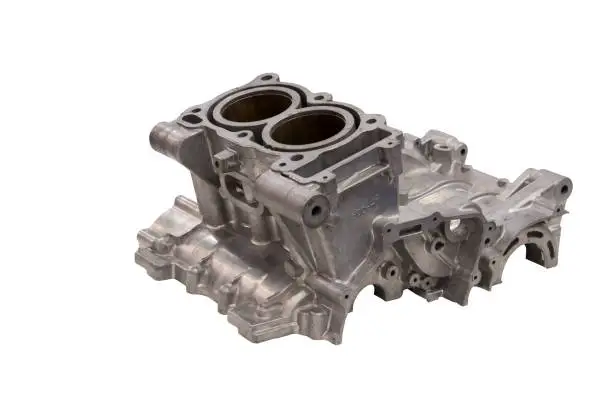
Why Advanced Die-Casting Remains the Preferred Choice
Die-cast aluminum is still the most popular way to make large numbers of industrial parts because it has a unique set of properties. The process makes complex geometries that can't be made any other way, and it keeps the dimensions consistent, which is important for automated assembly. The qualities of a material balance its strength, weight, temperature performance, and resistance to corrosion in a way that is hard to achieve with other materials. There are clear economic benefits at output levels common in making cars, industrial tools, and electronics. Supplier communities offer well-known knowledge, tried-and-true quality systems, and constant new ideas that lower the technical risk of making new products. Because of these factors coming together, engineering teams that need to balance performance needs, production costs, and time-to-market pressures in competitive industrial sectors usually choose die-cast aluminum.
Conclusion
Advanced die-cast aluminum casting is one of the most important technologies used in industry. It makes precise parts that meet high-performance standards in electrical, aerospace, automobile, and industrial gear. The process blends design flexibility, material performance, and output costs in a way that is hard for other methods to match. To do good procurement, you need to know the technical specs, evaluate suppliers' skills in a structured way, and make sure that the materials you choose are in line with long-term practical needs. As manufacturing moves toward goals like using less energy, making products lighter, and being more environmentally friendly, die-casting technology changes to keep up. It incorporates automation, better metals, and process improvements that make it easier to use in more situations while keeping costs low.
FAQ
What lead times should buyers expect for die-cast aluminum components?
Usually, wait times are split into two parts: tooling development takes 8–12 weeks from the time the design is finalised, and production runs take an extra 2–4 weeks, based on the complexity of the parts and the number of orders. Rush services can shorten wait times, but they usually cost more. Using CNC cutting or 3D printing to make a prototype lets you test the plan while the tools are being made, which speeds up the whole project.
How do alloy choices impact component durability?
The composition of an alloy has a direct effect on its mechanical properties and its resistance to environmental damage. Die-cast aluminum alloys like A380 are good for general industrial use because they have a good mix of strength and castability, while ADC12 is better for outdoor use because it resists rust better. A higher copper content makes something stronger but less flexible, so it needs to be tested against expected stress patterns. According to ASTM B85, material certificates that prove composition make sure that certain qualities are met.
Which certifications verify supplier credibility?
IATF 16949 shows that the automotive industry is capable, while ISO 9001 shows basic quality management systems. AS9100 approval shows that quality standards have been met in aircraft. The ability to record using PPAP is very important for car users because it ensures accurate measurements and process control. Third-party audit reports and customer references are more proof that a manufacturer is skilled and reliable.
Partner with a Trusted Die-Cast Aluminum Manufacturer
Zhejiang Fudebao Technology is ready to turn your needs for parts into precisely engineered die-cast aluminum solutions. Our wide range of services includes melting, casting, CNC machining, and surface treatment, all in one integrated facility. This makes it easier to coordinate and speeds up delivery times. With high-speed machining centers, CNC lathes, and modern die-casting machines, we can keep tolerances to ±0.05mm and work on projects from the pilot stage all the way through full production. Before you commit to making a mold, our engineering team works directly with your design specialists to improve performance, lower costs, and make the casting easier. We work with automotive original equipment manufacturers, industrial equipment makers, and electrical system suppliers all over the world. We are experts in PPAP documentation, AS9100 compliance, and strict quality control methods. To talk your requirements, request in-depth capability presentations, or set up site tours that highlight our die-cast aluminum production excellence, please contact our technical team at hank.shen@fdbcasting.com. Our full range of precision casting and machining services is designed for tough industrial uses. Visit fdbcasting.com to learn more.
References
1. American Foundry Society (2022). "Die Casting Process Fundamentals and Quality Control Standards." AFS Technical Publication Series.
2. North American Die Casting Association (2021). "Product Specification Standards for Die Castings: Dimensional Tolerances and Quality Guidelines." NADCA Standards Manual.
3. ASM International (2023). "Aluminum Alloy Casting: Properties, Processes, and Applications." ASM Handbook Volume 15: Casting.
4. Society of Automotive Engineers (2022). "Material and Process Requirements for Automotive Die-Cast Components." SAE International Technical Papers.
5. Zhang, H., & Liu, M. (2023). "Advanced Die-Casting Technologies for Lightweight Automotive Structures." Journal of Materials Processing Technology, 315, 117-134.
6. International Journal of Metalcasting (2023). "Vacuum-Assisted Die Casting: Process Optimization and Mechanical Property Enhancement." Vol. 17, Issue 2, pp. 892-908.



YOU MAY LIKE