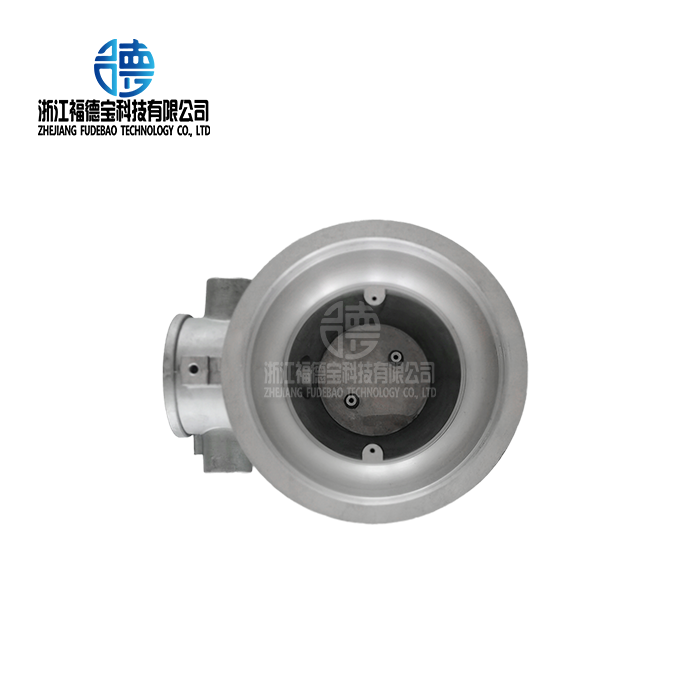
A Comprehensive Review of Sand Casting Copper and Aluminum Mechanical Properties
2026-07-06
Over 60% of all metal casts made worldwide are made using sand casting, which is still one of the most reliable metalworking techniques available to makers. For engineering teams to successfully complete a project, they need to know how sand casting affects the mechanical features of copper and metal parts. This flexible method uses bonded sand mixes, like green sand with clay binders and chemically-bonded resin systems, to make molds that can be used more than once and can handle complex shapes while keeping costs low for small to medium production amounts.Unlike fixed mold methods, sand casting can make parts that range from small, light brackets to huge, heavy housings that weigh several tons. This makes it an essential part of powertrains for cars, industrial equipment, and electrical infrastructure.
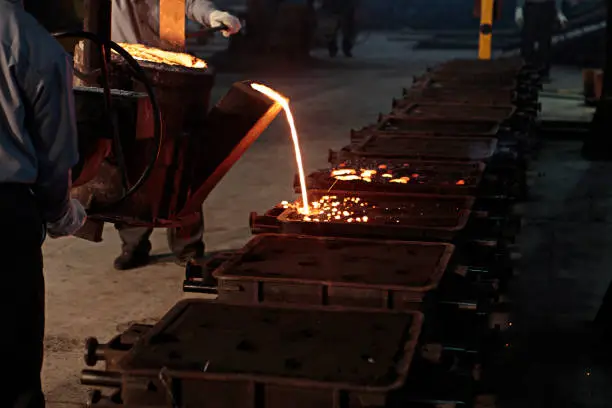
Understanding Sand Casting and Its Relevance to Copper and Aluminum
Molten metal fills holes made in models made of sand in the process of sand casting, which is a fundamental industrial technique. The first step is to make a pattern. Next, the mold is prepared using carefully made sand mixes that can withstand high temperatures (often over 1600°C) without melting onto the metal.
Core Sand Casting Variants for Non-Ferrous Metals
For green sand casting, clay agents that react with water are mixed with silica sand to make models that are very easy to break when they cool. This feature stops hot tearing in aluminum alloys that solidify quickly and shrink a lot. It works especially well for making car brackets and housings because the investment is worth it when a lot of them are made, and the standard dimensional limits around ISO 8062 CT10-CT13 grades are kept.
Chemical binders, like furan or phenolic resins, are used in resin-bonded sand systems. These resins harden at room temperature or through catalytic processes. When compared to green sand, these no-bake molds give better surface finishes between 6.3 and 12.5 Ra microns and better control over the dimensions. Resin sand is often used by companies that make electrical equipment for motor housings and electrical cases where precise mating surfaces cut down on the need for further cutting.
Material-Specific Advantages in Foundry Operations
Copper alloys work really well with sand casting because the porous mold lets gases escape while the metal hardens, lowering the risk of porosity. This property helps bronze pump housings and brass valve bodies get the thick microstructures they need to handle high-pressure fluids. The thermal insulation qualities of sand are especially helpful for aluminum castings because they slow down the cooling process and promote regular grain structures that improve mechanical performance. This managed solidification is used to give parts like gearbox housings and compressor bodies the strength and wear resistance needed in heavy machinery.
Mechanical Properties of Copper and Aluminum in Sand Casting
Choosing between copper and aluminum metals depends on certain mechanical needs that are directly affected by sand casting methods through chemical factors.
Copper Alloy Performance Characteristics
Tensile strengths for copper-based casts range from 200 MPa for pure copper to over 450 MPa for high-strength aluminum bronzes. Grain size distribution is greatly influenced by sand casting factors, especially pouring temperature and cooling rate, which are directly related to Brinell hardness values between 60 and 120 HB. Copper metals are naturally flexible, and can stretch by 15 to 30 percent. This makes sand-cast parts perfect for industrial gear that needs to absorb shock.
Copper's most important quality in the energy field is its resistance to corrosion. Sand-cast bronze parts that are in marine settings or go through chemical processing stay strong, while ferrous metals would break down in months. The casting process keeps the protective oxide layer that copper naturally forms. This makes pump cases and valve bodies that are exposed to acidic fluids last longer.
Aluminum Alloy Structural Benefits
Aluminum castings have amazing strength-to-weight ratios. For example, popular foundry metals like A356 can reach tensile strengths of up to 280 MPa while still having densities of only 2.7 g/cm³, which is about a third of what copper is. Because of this, sand casting with aluminum alloys can't be replaced in car uses where lowering weight directly lowers fuel efficiency without lowering safety margins in structural parts.
Aluminum metals have a thermal conductivity of 150–200 W/m·K, which makes sand-cast aluminum housings the best way to get rid of heat from electrical motors. The casting process can handle complicated internal shapes with built-in cooling fins and pathways that make the most of the surface area for heat transfer through convection. By controlling the solidification process in sand molds, the fatigue resistance qualities get better. This is because slower cooling lets stress release happen, which improves the performance of cyclic loading in car engine brackets and aircraft mounting fixtures.
Comparative Material Selection Framework
When procurement teams compare performance to cost, they find that copper metals work best in harsh environments that need better corrosion protection and electrical conductivity. When weight reduction, thermal control, and cost savings all come together, aluminum metals are the best choice. For parts with complicated internal features or big casting covers, sand casting works well with both materials.
Common Challenges and Solutions in Sand Casting Copper and Aluminum
Even though it can be used for many things, sand casting has some technical issues that need to be dealt with. Skilled foundries do this by regularly improving the process and following quality control rules.
Porosity Prevention Strategies
Gas porosity is the most common flaw in aluminum castings that happens when hydrogen that was dissolved in the liquid metal solidifies. We control this in a number of ways. For example, keeping the sand permeability values between 80 and 120 units makes sure that there is enough air flow, and before pouring, rotating degassing with argon or nitrogen lowers the amount of hydrogen in the aluminum to less than 0.15 ml/100 g. When designing a mold, it's important to put risers strategically and use directional solidification tracks to keep gas bubbles away from important parts. This keeps the mechanical integrity of load-bearing areas.
Shrinkage Control Techniques
Copper and aluminum metals shrink when they cool—aluminum by about 6% volumetric shrinkage—which could leave gaps if they are not handled properly. Pattern makers make up for shrinkage by adding extra space to the sizes of the tools, and foundry engineers set up feeds to keep molten metal going to heavy parts as they harden. In this case, resin sand systems are especially helpful because their higher hot strength keeps the mold space solid during the important solidification phase, when shrinkage pressures are at their highest.
Surface Quality Optimization
For green sand, the surface roughness of sand casting is usually between 12.5 and 25 Ra microns. With resin systems, it gets better to 6.3 to 12.5 Ra. To get better finishing, you need to carefully choose the sand grain size. For aluminum, the grain fineness number should be between 50 and 70 AFS, and for copper metals, it should be a little bigger. Graphite or zircon-based mold coatings improve surface features even more by making the transitions between metal and sand smooth. This lowers the need for later machining margins and raises the accuracy of the dimensions.
Statistical Process Control is used by advanced foundries to keep an eye on important factors like the pouring temperature (within a 10°C range), the hardness of the mold, and the metal's chemistry in order to reduce flaws. Ultrasonic testing and x-ray inspection find internal flaws before they are machined, which keeps expensive rejects at the final inspection steps. Leading facilities have cut their scrap rates below 3% thanks to these quality assurance measures. This shows that sand casting can produce consistent results as long as the right controls are kept in place.
Selecting Sand Casting for Your Copper and Aluminum Parts: A Decision Support Guide
When choosing a manufacturing method, you have to weigh a lot of things that affect the total cost of ownership and the dependability of performance over the span of a component.
Process Comparison for Informed Decision-Making
When compared to die casting, where hardened steel models can cost six figures, sand casting requires much less money for equipment. Pattern costs for sand casting usually pay for themselves in 500 to 2,000 pieces, which means the process is cost-effective for making prototypes and mid-volume production runs that are popular in making industrial equipment. Pattern manufacturing has lead times of two to six weeks, which lets you get into the market faster than fixed mold options.
The main thing to think about when making a trade-off is the dimension limits. Die casting has smaller tolerances, about ±0.1mm. Sand casting, on the other hand, usually has tolerances of ±0.5 to 1.0mm, but this depends on the size and complexity of the casting. For parts that need to fit together perfectly, a mix of sand casting and CNC cutting is used. This keeps the cost benefits while still meeting the needs of the function. Engineering teams set machining margins of 2 to 5 mm on important areas to make sure that enough stock is removed without too much material being wasted.
Volume-Based Economic Analysis
Process choice is largely determined by the amount of production. When the number of pieces made each year is less than 5,000, sand casting is the most cost-effective option because die casting's lower cost per piece can't cover the cost of depreciating the tools. Industrial machinery makers who make 200 to 800 pump housings a year find that sand casting gives them the best value, especially when they need to make changes to the design during the product development cycle. Being able to quickly change patterns without having to throw away expensive dies gives you strategy freedom that rigid tools can't match.
Supplier Capability Assessment Criteria
Finding manufacturing partners means looking at how sophisticated the equipment is and how well the quality control systems work. Leading sand casting facilities have spectrometers for checking alloys in real time, coordinate measuring machines for checking dimensions, and non-destructive testing tools like ultrasound and X-ray inspection. ISO 9001 certification is the basic level of quality management. However, car suppliers also need to show that they are compliant with IATF 16949, which shows that they know how to handle the production part approval process.
Enhancing Procurement with Trusted Sand Casting Partners
Partner selection is an important part of buying because it affects the results of a project just as much as the technical specs.
Essential Manufacturer Qualifications
Reliable casting providers keep up-to-date certifications that show they follow an organized approach to quality. ISO 9001 certifies basic quality management systems, and ISO 14001 certifies environmental care promises that are becoming more and more important to companies' sustainability goals. Automotive tier-1 providers need to be certified to IATF 16949, and aerospace uses need to be certified to AS9100 and have full paperwork that shows how the raw materials were used to make the final part.
Project portfolios show how much experience a seller has with related businesses and parts. Manufacturers that work with car powertrains know how to make engine brackets that can handle the high and low temperatures that they are exposed to. Manufacturers that work with green energy show that they know how to make metals that don't rust in offshore applications. Technical skills should cover the whole manufacturing process, including designing patterns, casting, heat treatment, cutting, and finishing the surface. This way, there is only one person or company responsible for the whole process, which makes managing the supply chain easier.
Effective Technical Communication Strategies
When you ask good questions, you get detailed answers that let you give accurate quotes and avoid costly misunderstandings. Engineering plans should include tolerances for sizes, standards for surface finish, and features that are essential to the function and need extra care. To make sure that chemical makeup and mechanical property needs are clear, material specifications must refer to well-known standards like ASTM B26 for aluminum alloys or ASTM B584 for copper alloys.
Forecasts of production volumes over three years help providers decide how to best spend in tools and suggest ways to improve the process. At thresholds of 100, 500, and 2,000 annual pieces, quantity break price usually shows up. This lets procurement teams model cost situations across demand forecasts. Capacity planning is affected by delivery schedules; lead times of 6–10 weeks for first orders and 4–6 weeks for repeat production allow for realistic project timelines.
Sustainability Considerations in Modern Foundries
As time has gone on, environmental duty has gone from being a nice-to-have to a competitive difference. Modern foundries use closed-loop sand recovery systems that reuse more than 95% of molded materials. This makes a huge difference in the amount of trash that ends up in landfills. Compared to regular equipment, melting furnaces with renewable burners use 30 to 40 percent less natural gas. This lowers both operating costs and carbon emissions.
Reusing cold water and removing particulate matter are examples of water treatment systems that care for the environment and follow stricter rules for release. Manufacturers that want to get LEED recognition or run carbon-neutral businesses choose providers with well-documented sustainability programs. They use environmental performance along with quality and delivery as a sourcing factor.
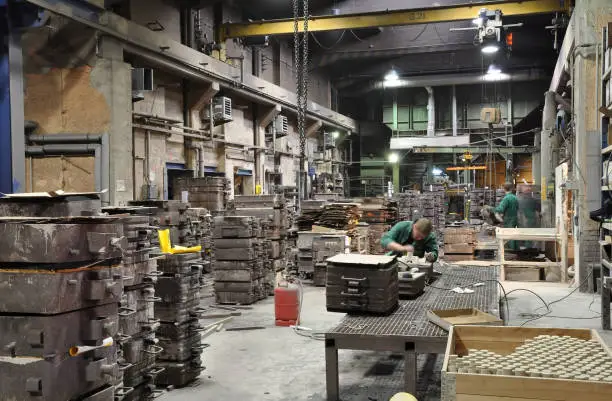
Conclusion
For the production of copper and metal parts used in a wide range of industrial uses, sand casting is still an essential process. When buying teams know about differences in material properties, process limits, and suppliers' abilities, they can make smart choices that balance performance needs with budgetary limits. Because the method is naturally flexible, it can handle complex designs and changes in volume in a way that rigid manufacturing processes can't, especially for medium-sized production runs and big part shapes. If you want to be successful, you need to work with foundries that have a lot of knowledge, strong quality systems, and can consistently give results that meet or exceed your needs over long-term supply relationships.
FAQ
What factors most significantly influence mechanical properties in sand-cast copper and aluminum parts?
The final mechanical properties depend on the alloy's makeup, the temperature at which it is poured, the rate at which it cools, and the form of the mold. Because sand molds cool more slowly than die casting, the grain structures get bigger, which changes how strong and flexible the metal is. Optical emission spectrometry checks the chemical makeup to make sure that the tensile strength and hardness meet the requirements. Heat treatment methods, such as T6 for aluminum, can boost strength by 40–60% compared to the as-cast state.
How does sand casting compare to investment casting for aerospace-grade aluminum components?
Investment casting has a better surface finish and tighter tolerances that are good for aircraft parts with a near-net form, but each piece costs a lot more. For bigger structural parts like housings and frames, where localized machining provides the required accuracy, sand casting is the more cost-effective option. Depending on the shape of the part, both methods are needed in aerospace. Sand casting is chosen for parts that weigh more than 10 kg, where investment casting is too expensive.
What are typical lead times and minimum order quantities for copper and aluminum sand castings?
The first pattern development takes anywhere from two to six weeks, based on how complicated it is. Then, the first item production, which includes quality testing, takes another four to six weeks. Based on the foundry's ability, repeat orders are sent out every 4 to 8 weeks. Minimum order numbers depend on the complexity and weight of the casting. For example, small parts may need a minimum of 50 to 100 pieces, while 10 to 25 pieces of a large building are enough to make it cost-effective due to higher unit values and setup amortization.
Partner with Fudebao Technology for Superior Sand Casting Solutions
Zhejiang Fudebao Technology is a world-class sand casting company that makes precision-engineered copper and metal parts for clients in the energy, industrial equipment, and automobile industries. Our one-stop shop does everything from melting alloys to CNC cutting and surface treatment. The finished parts we make have tolerances of just 0.05 mm, so they don't need any extra work.
We make sure that every casting meets ASTM material standards and measurement requirements by using modern spectrometers, coordinate measuring machines, and full NDT capabilities. Send an email to hank.shen@fdbcasting.com to talk to our engineering team about your unique application needs and get thorough technical proposals backed by ISO 9001 and IATF 16949 certifications. You can look at our project portfolio at fdbcasting.com and learn why top OEMs choose Fudebao Technology as their go-to sand casting provider for mission-critical parts.
References
1. Campbell, J. (2015). Complete Casting Handbook: Metal Casting Processes, Metallurgy, Techniques and Design. Butterworth-Heinemann, Oxford, UK.
2. American Foundry Society. (2018). Sand Casting Manual: Fundamentals of Sand Casting for Ferrous and Non-Ferrous Metals. American Foundry Society, Schaumburg, Illinois.
3. Davis, J.R. (2001). Aluminum and Aluminum Alloys: ASM Specialty Handbook. ASM International, Materials Park, Ohio.
4. Beeley, P.R. (2001). Foundry Technology, Second Edition. Butterworth-Heinemann, Oxford, UK.
5. Stefanescu, D.M. (2019). Science and Engineering of Casting Solidification, Third Edition. Springer International Publishing, Cham, Switzerland.
6. Zhang, L. and Liao, D. (2017). Mechanical Properties and Microstructural Characteristics of Sand-Cast Aluminum and Copper Alloys. Journal of Materials Processing Technology, Volume 238, pp. 156-167.



YOU MAY LIKE
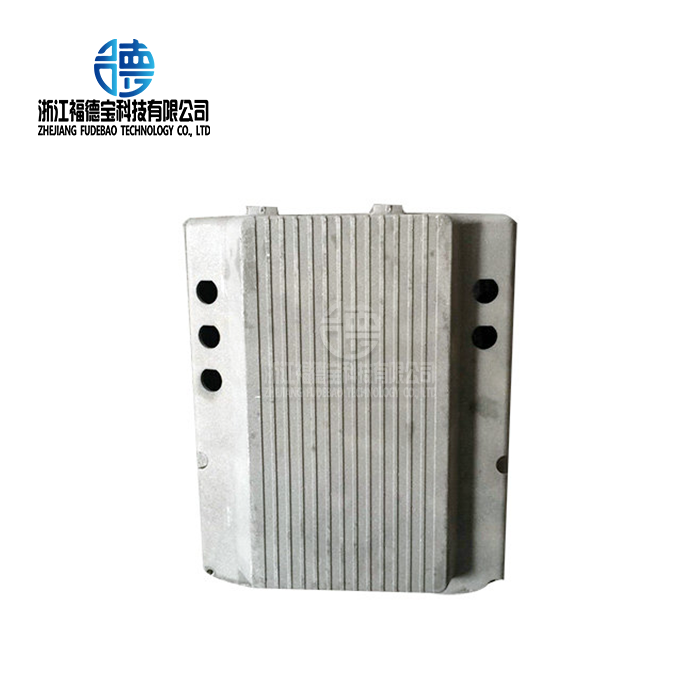
_1756350092126.webp "radiator cover")
_1756349957728.webp "metric v belt pulley")
_1756344684491.webp "Explosion-proof lamp housing aluminum casting")