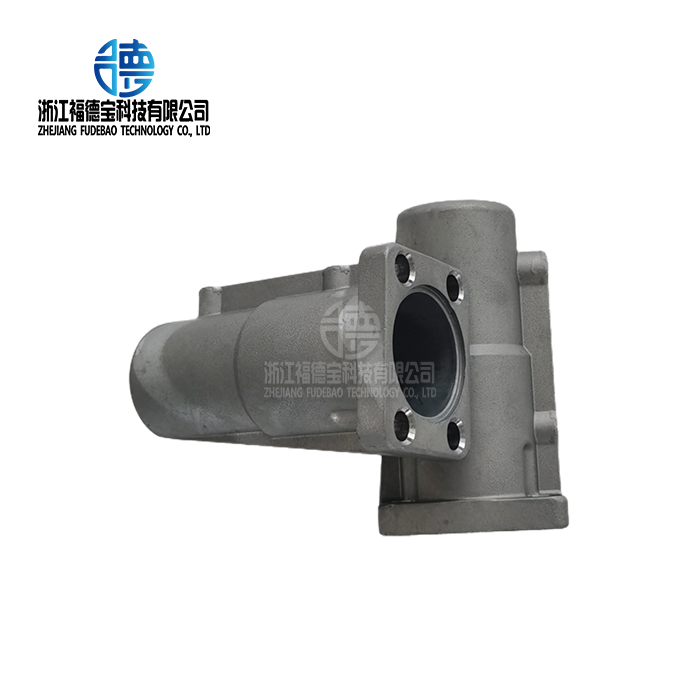
What are the Latest Innovations in Aluminum Die Casting Technology?
2026-04-24
Cutting edge improvements in aluminum die casting are causing a huge change in the way precision metal manufacturing is done. To get around the problems that used to slow down manufacturing, new technologies like smart automation, digital modeling, and improved alloy development have been developed. Modern High-Pressure Die Casting (HPDC) uses IoT for real-time tracking, vacuum-assisted systems to reduce porosity, and integrated cooling channels that make measurements much more accurate while cutting cycle times. These big steps forward in technology have made it possible for companies to make complicated, nearly net-shaped parts with tolerances as tight as ±0.05mm. These parts are used in high-performance industrial equipment, rocket structural elements, and car powertrains.
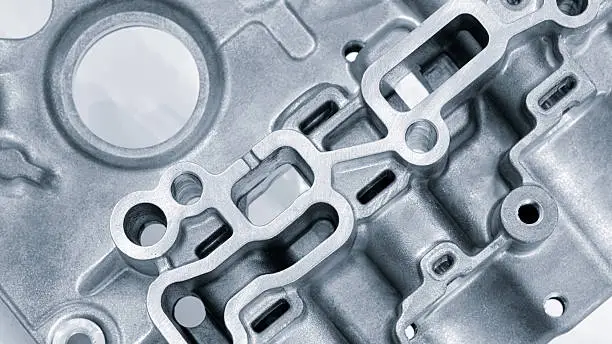
Understanding the Limitations of Traditional Aluminum Die Casting Methods
When using traditional aluminum die casting methods, manufacturing engineers and buying heads often run into problems that won't go away. Traditional methods have problems with quality that affects both how well they work and how reliable the parts they make are.
Common Quality Issues in Conventional Casting
Porosity is still one of the most annoying flaws in the old way of die making. Gas entrapment during the injection phase creates internal gaps that weaken the structure. This is especially a problem for safety-critical parts in cars like suspension braces and gearbox housings. Surface flaws like cold shuts, flow marks, and cracking often need a lot of extra work to be done on top of the primary finishing. This adds to the cost of labor and makes wait times longer.
Another big problem is getting the measurements right. Standard tools and process controls don't always keep limits the same across production runs. This leads to high failure rates that put a strain on budgets for quality assurance. When trying to get the stability needed for mass production, these differences are especially annoying for automotive tier-1 suppliers who work with PPAP paperwork standards.
Prototyping and Tooling Constraints
Mold creation used to be a straight line process that took a lot of time. This doesn't work with today's shortened product development cycles. Making steel tools can take 8 to 12 weeks before the first test run, which can cause delays for OEM project leaders who are trying to meet tight start dates. A big investment up front in hard tools also makes low-volume or pilot production impossible from an economic point of view. For initial proof steps, procurement teams are forced to use more expensive machining options.
These restrictions affect the whole supply chain, which delays time-to-market and raises running costs. When it comes to managing relationships with suppliers, quality teams are always fighting over failure rates, and distributors who have to deal with variable parts have a hard time keeping inventory trust. When these problems with standard methods are added together, they push the business to adopt new technologies.
Breakthrough Technologies Driving Aluminum Die Casting Forward
A revolution in technology is happening in the production sector that is changing the way we do metal casting in basic ways. These new ideas directly fix the problems that have been a problem with old ways of doing things, while also making it easier to plan complicated things and making things more quickly.
Advanced Mold Design and Materials
Today's tools for aluminum die casting are much more advanced than the ones used for traditional steel hole cutting. When cooling pathways in a casting follow the shape of the casting instead of going in straight lines, this new method called conformal cooling changes everything. With this design approach, thermal differences inside the mold are lessened, which prevents warping and increases the stability of the shape. This leads to faster solidification with lower interior stresses, which is very important for complicated shapes like EV battery housings that need to be both light and strong.
Innovative mold materials now have high-thermal-conductivity inserts placed in key areas. These inserts speed up the removal of heat from thick parts while keeping thin-wall areas cool. Tool steels with better wear resistance make molds last a lot longer, which means that they don't have to be shut down for expensive upkeep as often. When engineering managers look at a supplier's skills, they should give more weight to partners who can show they know how to use these advanced tools technologies. This is because these technologies directly lead to lower costs per unit over the lifetime of a production.
Automation and Smart Manufacturing Integration
By using ideas from Industry 4.0 in die casting factories, production tracking has changed from being reactive to being proactive. IoT sensors built into casting cells constantly check important factors like melt temperature, injection speed, and hole fill patterns. This real-time data flows into analytics platforms driven by AI that find process drift before it leads to flaws.
Predictive maintenance algorithms look at patterns of sound and changes in hydraulic pressure to service equipment during planned downtime instead of when it breaks down unexpectedly. Mechanical engineers who are in charge of production can use dashboards to see quality ratings instantly across various tools. This lets them improve the process based on data. Material handling can also be automated. Robotic trim systems and vision-guided checking make less work for humans and better accuracy.
High-Performance Alloy Development
Recent progress in material science has greatly increased the performance range of casting metals. New aluminum die casting alloys carefully balance the amounts of silicon, copper, and magnesium to get better strength-to-weight ratios while still being easy to cast. Power equipment makers now use alloys that were made to work at high temperatures and need parts that can handle repeated heat cycles without deforming too much.
Manufacturers of electrical enclosures who work in harsh naval or industrial settings can solve their problems with corrosion-resistant compositions. When put together with metals that are not the same, these advanced alloys make oxide layers that are more solid and show better resistance to galvanic interaction. When strategic sourcing teams look at material specs, they should work with sources who have the metallurgical knowledge to match the qualities of an alloy with the needs of a particular application.
Digital Simulation and Twin Technologies
Virtual modeling has grown into an important tool for improving casting processes before investing in real tools. Computational fluid dynamics software models the flow of molten metal through the die opening, finding areas where there might be turbulence that could cause surface flaws or holes. Engineers can digitally try different gating system setups and choose the best one that balances fill time with metal quality.
With digital twin technology, a virtual copy of the aluminum die casting process is made and kept up to date with sensor data from the real world. This parallel model lets you try "what-if" scenarios without stopping production. For aerospace engineers who need process proof and traceability, digital twins are a great way to show that a process works and keep detailed records for certification checks. Being able to predict where defects will appear and find the best settings cuts down on trial-and-error rounds, which shortens development times by a large amount.
The Impact of Innovations on Quality, Cost, and Lead Times
Putting a number on the business value of new technology helps procurement pros make strong cases for working with suppliers and investing in capital. The changes affect three important areas of performance that have a direct effect on how well a company ranks in the market.
Enhanced Product Quality and Precision
Dimensional limits that could only be reached with precision machining processes in the past can now be reached with modern casting methods. By removing air from the hole right before injection, vacuum-assisted die casting lowers gas trapping. This makes parts that pass X-ray inspections with rates higher than 98%. This amount of internal soundness is necessary for parts that hold pressure, like pump housings and hydraulic pipes used in factories.
The clarity of the surface finish has also gotten a lot better. In many cases, as-cast surfaces can now achieve Ra values below 1.6 microns. This finish quality gets rid of or greatly cuts down on the need for extra cutting, which saves material and cuts down on processing steps. Tougher requirements for bore concentricity and flatness help automotive providers who supply engine parts by making installation easier and lowering guarantee issues further down the line.
Cost Efficiency Across Production Lifecycle
Innovation is good for the economy in many more ways than just lowering the cost of output. Better process control has led to a big drop in the amount of scrap. Some sites show rejection rates below 2%, compared to the normal range of 5–8% in the past. Through better thermal management and shorter cycle times, less energy is used per casting. This directly lowers running costs at a time when electricity costs are going up.
Tooling that lasts a long time is another big cost benefit. Better heat control and advanced coatings keep dies from cracking and wearing away, which increases tool life from 100,000 shots to over 200,000 shots in high-volume uses. This longer longevity spreads the cost of the tools over more parts, cutting the cost of the tools per unit. Instead of just looking at piece price, technical buying teams that are figuring out the total cost of ownership should use these lifecycle economics to help them choose a provider.
Accelerated Time-to-Market Through Agile Manufacturing
Manufacturers can now make working cast samples in days instead of weeks thanks to rapid prototyping. Using metal sample dies for soft tooling lets you test your design with materials that will be used in production before you commit to hard tooling. This freedom is very helpful for industrial equipment OEMs that are making custom solutions and don't know how many units will be needed.
Flexible production systems can handle changes in batch size without having to pay a lot to set up, which supports the move toward mass customization. A company can make 500 units of one configuration and then 1,000 units of a different configuration without having to wait a long time for the switch. This flexibility helps buying teams adapt to changes in the market and in what customers want without having to worry about goods going out of date or needing too much buffer stock.
Selecting the Right Aluminum Die Casting Partner for Innovative Solutions
Choosing a partner for aluminum die casting can affect the standard of a product, the reliability of the supply chain, and a company's ability to compete in the long run. To evaluate possible providers, you need to look at more than just their prices. You also need to look at their technological skills and willingness to work with you.
Critical Evaluation Criteria for Supplier Selection
Process skill is the most important factor for evaluation. Suppliers should show that they use statistical process control and that their recorded Cpk values for key dimensions are higher than 1.33. To understand how quality is built into production rather than being checked after the fact, ask for process flow diagrams that show how real-time tracking and automatic inspection work together. Quality leaders should make sure that any possible partners have at least current ISO 9001 certification. For car suppliers, IATF 16949 certification is required, and for aerospace partners, AS9100 or Nadcap certification is required.
Strategic partners are different from transactional sellers because they can provide engineering assistance. Suppliers who give Design for Manufacturability (DFM) research during the quotation phase add value by letting you know about possible casting problems before you commit to making the tools. Being able to simulate mold flow and give thorough analysis reports shows that you are technically advanced, which lowers the risk of growth. Mechanical engineers should talk to possible partners early on in the design process so that they can use their process knowledge to improve the shape of the part.
Benchmarking Against Industry Leaders
The best makers have set performance standards that are used to judge suppliers. Horizontal machining centers, multi-axis CNC lathes, and automatic inspection systems are all signs that a facility is dedicated to accuracy and speed. Having both standard HPDC machines and low-pressure casting equipment shows that the process can be changed to fit the needs of each component, rather than forcing all work to go through the same way.
Some of the most advanced providers have finishing processes like powder coating, anodizing, and precise machining built right into their facilities. This vertical integration gets rid of the problems with transportation and quality handoffs that come with supply chains with more than one provider. Sourcing leaders who are in charge of global sourcing should check to see if possible partners offer full services, from engineering support to delivery of finished parts, so that there is only one source of responsibility.
Custom and Low-Volume Production Capabilities
Procurement flexibility is very important during the product development and market launch stages because it lets you meet project-specific needs without having to place huge minimum order numbers. Suppliers that spend in fast testing and soft tooling show that they care about their customers and understand how current product development processes work. When qualifying a provider, technical buyers should ask about wait times for prototypes and the ability to change the size of batches.
When manufacturers work with a lot of different businesses, they can share thoughts that can lead to new ideas. A partner with experience in the car, industrial equipment, and electrical sectors knows that each has different performance goals and can offer creative solutions based on similar uses. This wide range of experience is especially helpful when facing new design problems or joining new market segments where the company may not have a lot of experience.
Conclusion
The aluminum die casting business is at a turning point in technology where new ideas can directly give them a competitive edge. Modern mold design, smart robotics, better materials, and digital optimization tools have completely changed what is possible in precision metal production. These innovations make a real difference in the performance areas that mean most to engineering managers, sourcing leaders, and quality teams: the quality of the parts, the cost of production, and the speed of development.
Selecting manufacturing partners who have accepted these new ideas, your company will be able to take advantage of chances to make products lighter, get tighter tolerances, and launch products faster. When casting skills meet digital manufacturing skills, it opens up options that were not possible just a few years ago. This creates new design frontiers in areas like aerospace, automobile, industrial, and electrical uses.
FAQ
How do vacuum-assisted die casting systems reduce porosity?
Vacuum-assisted methods remove air from the die hole right before metal is injected, making an area with a pressure usually less than 100 mbar. As the mold fills with liquid aluminum, this release keeps gas from getting trapped, which greatly reduces the formation of pores. This technology is especially useful for thick-section casts and parts that need to be welded or put under pressure for testing, since internal gaps would hurt performance. Many structural parts for cars now use vacuum-assisted casting to make sure they are internally strong enough to meet crash safety standards.
What tolerance levels can modern aluminum die casting achieve?
These days, die casting usually keeps tolerances of ±0.1mm for general sizes, and important features get ±0.05mm through machining processes that are part of the casting process. When the right process controls and tooling upkeep methods are used, linear measurements are very repeatable across production runs. For many features, these precision levels are close to what can be done with standard machining. This means that cast parts can work in systems with few extra steps. Advanced process control also helps with geometric limits for smoothness and perpendicularity.
Can die casting accommodate low-volume production economically?
The cost of die casting has gone down a lot thanks to improvements in modern production methods. When compared to fully hardened production dies, soft tooling with aluminum or pre-hardened steel molds lowers the original investment by 40–60%. This means that runs as small as 500–1,000 pieces can be made cheaply. With rapid tooling production methods, wait times can be cut down to two to four weeks. Because of these features, die casting can compete with machining for short-term production during the launch process of a new product or for specialized industry equipment that is only bought a few times a year.
Partner With Fudebao Technology for Advanced Die Casting Solutions
Zhejiang Fudebao Technology has established itself as a leading aluminum die casting company by continuously investing in the most advanced production equipment and tech know-how. Our factory has high-speed machine centers, precise CNC lathes, and both low-pressure and high-pressure die casting tools. This means that we can make anything, from melting the metal to treating the surface. We offer complete services, from casting blanks to finished parts, with tolerances of up to 0.05 mm. These are high standards that meet the needs of automobile precision parts, industrial machinery parts, and electrical equipment housings. Our engineering team does full DFM analysis and mold flow modeling to help you get the best designs before you commit to making the tools. This lowers the risk of development and speeds up the time it takes to get the product to market. Get in touch with us at hank.shen@fdbcasting.com to talk about how our advanced skills can help your next project with reliable, high-quality casts.
References
North American Die Casting Association (NADCAP). "Product Specification Standards for Die Castings: Aluminum Alloys." NADCA Standards Publication, 2022.
Campbell, J. "Complete Casting Handbook: Metal Casting Processes, Metallurgy, Techniques and Design." Butterworth-Heinemann, 2021.
ASM International Handbook Committee. "Casting: ASM Handbook Volume 15." ASM International Materials Park, 2022.
Society of Automotive Engineers. "Aluminum Casting Alloys: Properties, Processes, and Applications." SAE Technical Paper Series, 2023.
Kaufman, J.G. and Rooy, E.L. "Aluminum Alloy Castings: Properties, Processes, and Applications." ASM International, 2021.
International Journal of Metalcasting. "Advances in High-Pressure Die Casting Technology and Process Optimization." Springer Publishing, Volume 17, 2023.



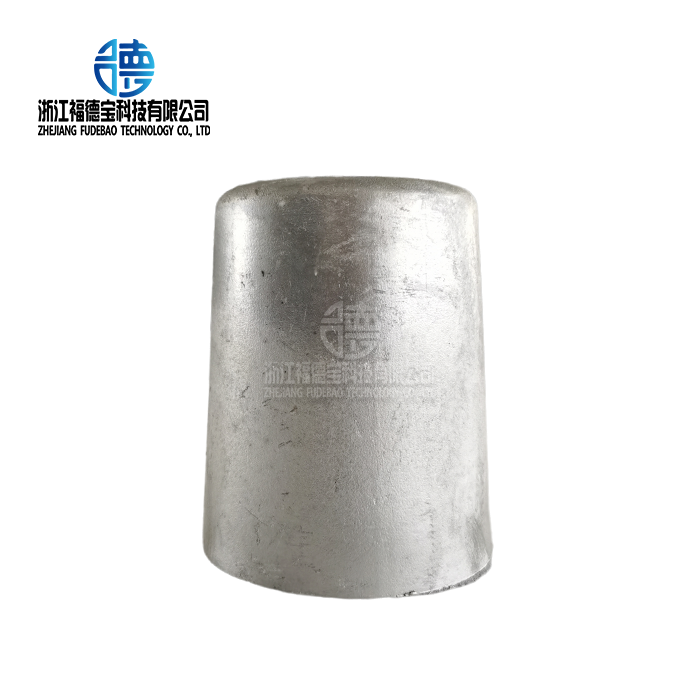
_1756348543350.webp "Automotive Turbine Casting")
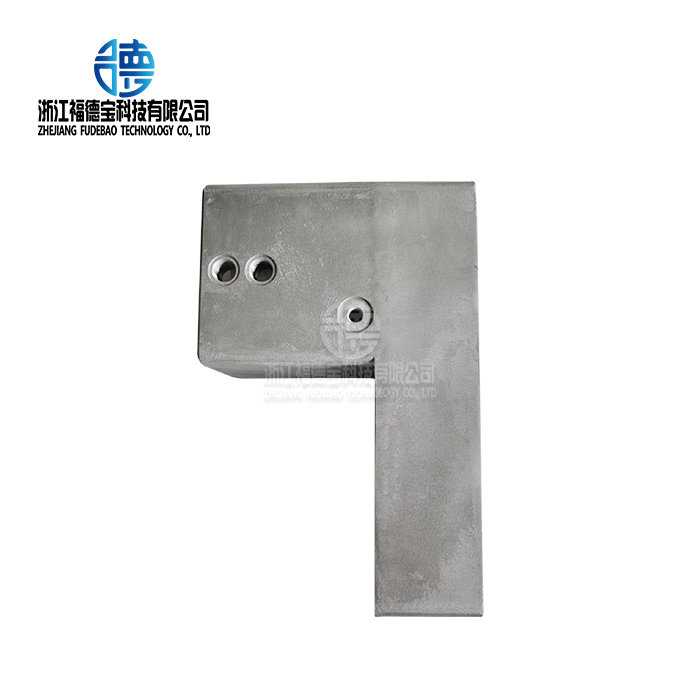
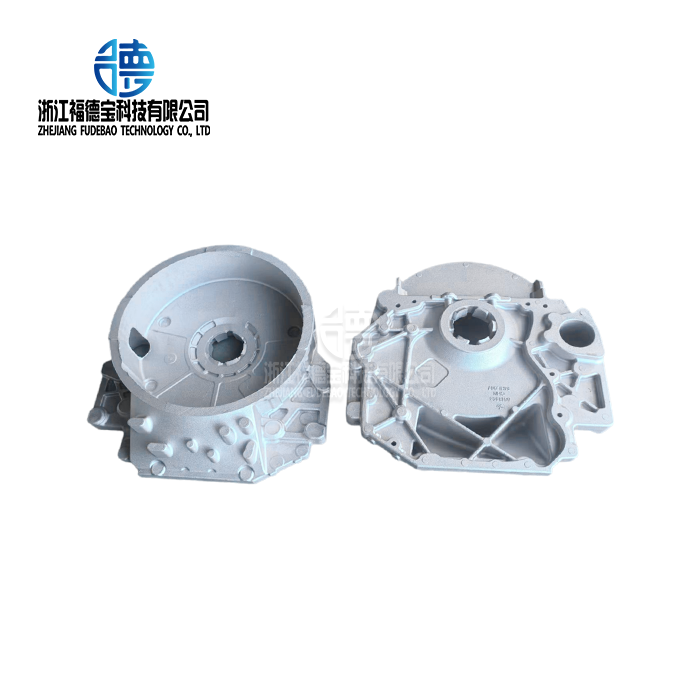
_1756348780785.webp "porting turbo compressor housing")
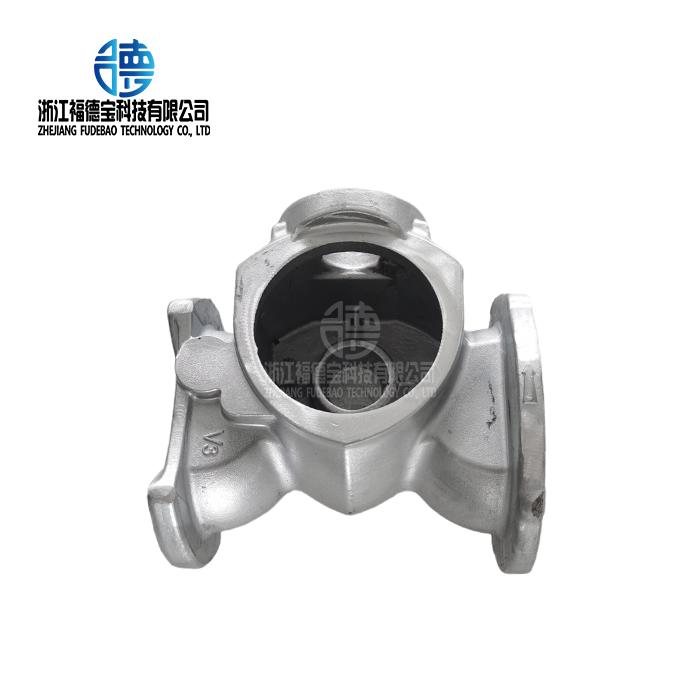
_1756346259673.webp "heavy duty hinges")