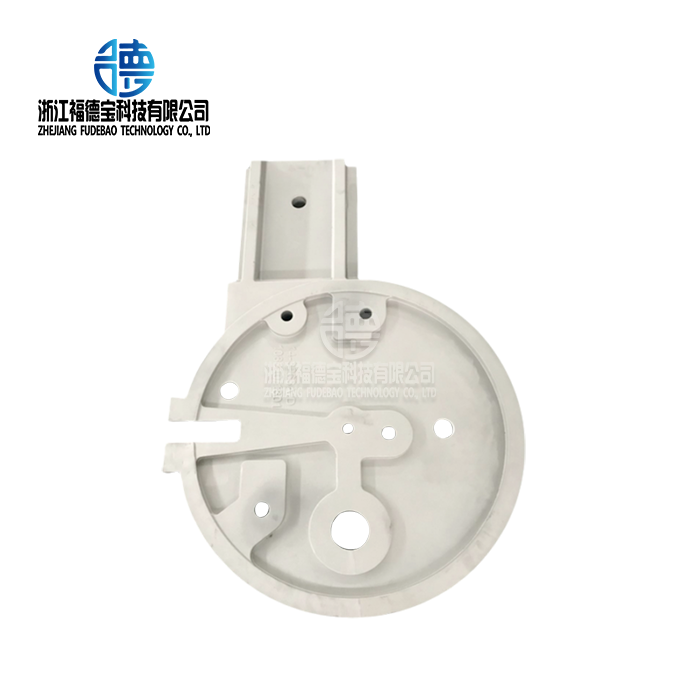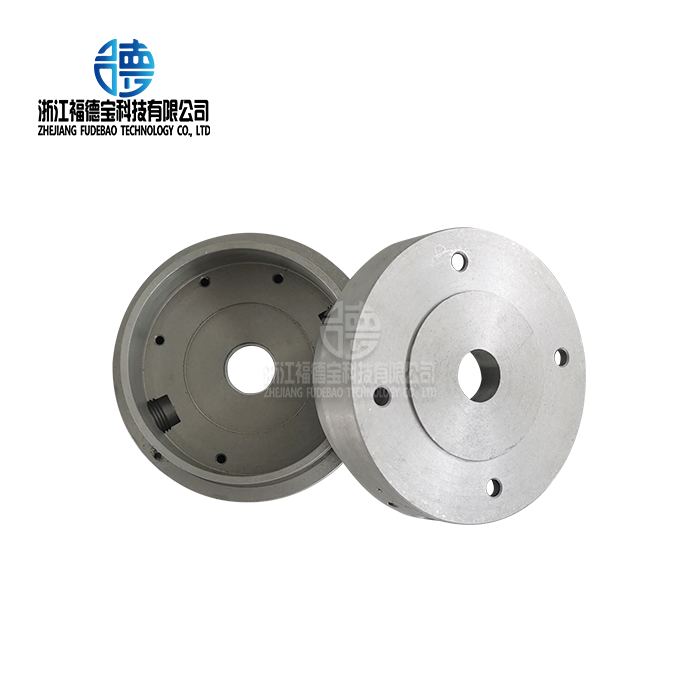
Is Low-Pressure Die Casting a Good Fit for Thin Wall Parts?
2026-04-21
When precision in measurements and structural soundness are more important than speed of production, low pressure casting is a great way to make thin wall parts. This controlled casting method keeps the flow of metal steady under controlled air pressure (usually 0.02–0.1 MPa). This lets molten aluminum alloys fill complex spaces with thin walls without turbulence. The counter-gravity filling system cuts down on oxide inclusions and gas trapping, making it possible to make parts with walls as thin as 2.5 mm that are still mechanically reliable. High-pressure die casting makes walls that are about 1.5 mm thinner, but low pressure casting is better because it can be heat treated and has better internal soundness. This makes it the best choice for safety-critical thin wall components in aerospace, automotive, and industrial settings where failure is not an option.
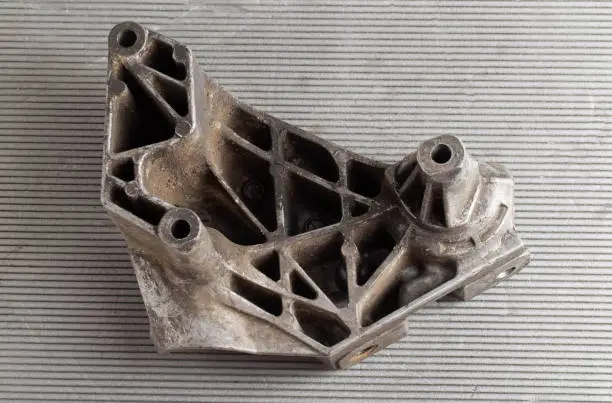
Understanding Low-Pressure Die Casting and Its Relevance to Thin Wall Parts
The manufacturing scene is always changing, and engineers are always looking for safe ways to make parts that are both light and strong. Low pressure casting is a precise way to shape metal that works well for making thin wall components, which are harder to make in other ways.
The Fundamentals of the Low Pressure Process
With this method of making things, a riser tube links a pressurized holding furnace directly to the mold body. Under carefully controlled air pressure, molten metal—mostly mixtures of aluminum or magnesium—rises against gravity and into the mold. This counter-gravity filling method stops metal turbulence during hollow filling, while gravity pouring only uses hydraulic head. Most of the time, the managed pressure is between 20 and 100 kPa, which is a lot less than high-pressure die casting methods, which work at several thousand kPa.
This process's laminar flow makes sure that liquid material doesn't splash or fall while the mold is being filled. This steady progress gets rid of a key failure point: the formation of an oxide film. When metal tumbles while it is being poured, it forms oxide layers that get stuck in the formed structure and weaken its mechanical properties. This risk is kept to a minimum by the managed nature of low pressure casting.
Distinguishing Features Compared to Alternative Methods
For gravity casting to work, the molten metal has to naturally run into molds that are placed above the dumping bowl. Even though they are cheap, gravity methods have trouble with thin wall sections because the metal often hardens before it fills long, thin passageways all the way through. Another method that depends on gravity is sand casting, but it usually can't get the wall thickness accuracy needed for current thin wall applications.
In high-pressure die casting, metal is injected at very high speeds. This makes it possible to have very thin walls, but it also creates turbulence that traps gases inside the casting. These gas pockets stop heat treatment from happening because trapped gases grow and cause surface blistering when parts go through solution and aging processes. Low pressure casting systems don't have this problem because the filling dynamics aren't as rough, so they can fully fix with T6 heat.
Investment casting can make complicated geometries and surfaces with great finishes, but it takes a long time to make things and is expensive for middle to high volume production. Because low pressure casting uses a fixed mold, it strikes a good mix between quality, cycle time, and cost-effectiveness.
The Thin Wall Challenge
There are a lot of engineering problems that come up with thin wall components that need careful process control. As wall thickness goes down, the ratio of surface area to volume goes up by a lot, which makes heat loss faster during filling. When molten metal cools too quickly, it can leave gaps or cold shuts where two metal fronts meet but don't fuse properly.
When you look at small parts, surface quality is more important because any flaws take up a bigger chunk of the whole wall thickness. A 0.3mm surface flaw in a 5mm wall piece isn't a big deal, but the same flaw in a 2.5mm wall makes the structure much less strong.
Normal feeding methods are also challenged by parts with thin walls. Metal gets smaller as it hardens. To make up for this shrinking in thick parts, feeders or risers add more molten material. It only takes a short amount of time for thin walls to harden quickly from both sides toward the center. This problem is solved by the kept pressure feature of low pressure casting, which keeps the metal column in the riser tube under constant pressure during solidification. This lets the furnace pool below keep feeding the metal column.
Key Advantages of Low-Pressure Die Casting for Thin Wall Components
When purchasing teams and engineering managers look at different ways to make things for thin walls, they need strong proof that those ways improve performance. Low pressure casting has many benefits that have a direct effect on the quality of the parts and the cost of the project.
Superior Internal Soundness and Mechanical Properties
The managed processes of filling make the microstructure thick, even, and with few holes. When compared to gravity-cast alternatives, x-ray tests done according to ASTM E155 guidelines always show cleaner internal structures. This means that the material is mechanically better, with higher tensile strength, better yield strength, and better stretch characteristics.
Because there is no turbulence during cavity filling, oxide particles that could cause cracks to start during cycle loading are not created. This metallurgical stability is very helpful for parts that are exposed to dynamic stresses, like suspension parts in cars or motor housings in electric cars. Controlled cooling creates a fine grain structure that makes wear resistance even better. This makes the material last longer in tough situations.
Another important benefit is that it can be treated with heat. Components can go through full solution heat treatment and fake age (T6 treatment) without blistering because low pressure casting reduces the amount of gas trapped. Because of this, aluminum alloys like A356 can reach their full strength potential, usually reaching tensile strengths of more than 280 MPa and elongation values of more than 8%, which meets strict car and aircraft requirements.
Dimensional Accuracy and Surface Finish
Parts with thin walls are often used in systems that need to fit and work perfectly with very tight tolerances. Low pressure casting usually meets ISO 8062 accuracy grades CT6 to CT7, which means that essential features stay within ±0.3mm of their original size. This level of accuracy cuts down on the need for extra machining, which lowers the total cost of production.
The permanent mold construction, typically fabricated from H13 tool steel, provides excellent dimensional stability across production runs. Molds can be used between 30,000 and 50,000 times if they are properly maintained. This makes sure that the shape of the parts stays the same over long production runs. Regularly using refractory coats saves the mold surface, makes it easier to release parts, and keeps the quality of the surface.
The surface finish that comes straight from the casting process usually has a Ra value of 3.2 to 6.3 µm and is good enough for many uses without any extra finishing steps. Electrical housings, motor parts, and structural brackets can often meet both aesthetic and functional needs with little post-casting work. This speeds up production and cuts down on wait times.
Material Efficiency and Economic Benefits
Because there are no big feeding steps in low pressure casting, the material yield often goes over 90%. Once the pressure is released, the liquid metal that is still in the riser tube runs back into the holding furnace to be used again. This is very different from gravity casting methods, which need big feeds that have to be taken apart and melted again, which usually only leads to 50–60% returns.
Lowering the amount of waste means lower costs for raw materials per part and lower energy use for remelting trash. The environmental benefits are in line with companies' efforts to be more environmentally friendly, and they also save money. When applied to thousands or millions of parts, these improvements give companies big benefits in the market.
Using sand cores lets you make complex internal shapes without having to buy expensive fixed tools for each internal feature. With resin-bonded sand cores or cold box cores, you can make hollow parts, cooling tunnels, or undercuts that you couldn't do with fixed molds alone. This gives makers the freedom to improve the usefulness of parts without having to spend a lot of money on tools.
Comparison with Competing Processes
Sand casting isn't accurate enough or has a good enough finish for most thin wall uses. Because sand molds are porous, gases can pass through them, and the thermal features of sand mean that it can't take in heat quickly enough to keep thin parts from solidifying too soon.
Investment molding produces fine details and smooth surfaces, but it takes a lot of work: making the design, building the shell, removing the wax, and firing the shell. The economics of the process support small batches of very complicated parts over the middle to high volumes that are common in the industry and car sectors.
Centrifugal casting is good for making cylinders like pipes and sleeves, but it can't make thin wall parts with complex forms like housings with mounting bosses, brackets with built-in support ribs, or motor end shields with precise bearing pockets.
Permanent mold gravity casting uses similar tools to low pressure casting ways, but it can't make walls that are as thin or as sound inside. The simple gravity fill makes more swirling and doesn't feed as well while it's solidifying.
Design Guidelines and Process Optimization for Thin Wall Low-Pressure Casting
For thin wall production to go well, design experts and low pressure casting specialists need to work together. Sticking to tried-and-true design principles and putting in place strict process limits leads to the best quality the first time and the most efficient production.
Optimal Wall Thickness Parameters
In low pressure casting, the thinnest wall that can be used is usually between 2.5 mm and 3 mm. This depends on how far the metal has to run and the material that is used. With its great fluidity and solidification properties, A356 aluminum alloy works consistently at these thicknesses in parts that are properly made.
It is more important to have uniform wall thickness than to have exact minimum numbers. Sudden changes in thickness cause hot spots in certain areas that firm last, concentrating the shrinking porosity. Gradual changes—with thicknesses that don't change by more than 3 mm every 25 mm—allow solidification to move toward food sources.
Keeping the wall width the same all the way through the component makes managing heat easier and lowers the risk of defects. When the design calls for different thicknesses, engineers should put the thicker parts closest to the gate so that they can be fed while the solidifies. The thin ends that are farthest from the gate harden first, becoming self-feeding and no longer need to be fed from the outside.
Mold Design Elements
The form and location of the gates have a big effect on how the filling works in thin wall components. Gates should be placed so that the filling process is smooth and gradual, with as little turbulence as possible and enough metal motion to keep it from solidifying too soon. For parts with long, thin sections, it may take more than one gate to make sure that the whole space is filled before the metal front hardens.
Venting lets stored air escape while melted metal fills the space. Back-pressure from not enough releasing slows down filling, raises the risk of cold shuts, and can trap air pockets that turn into holes in the finished casting. Vent channels are usually cut along the lines of separation and at high places in the hollow where air naturally builds up.
Thermal management in mold design includes placing cooling ducts and, if needed, heating elements in specific areas in a way that makes sense. Keeping the mold at the right temperature—usually between 250°C and 300°C for aluminum alloys—ensures that the metal flows easily during filling while also controlling how fast it solidifies. Selective mold heating in thin sections keeps the metal open for longer, while better cooling in heavier parts helps them solidify in a direction toward the gate.
Process Control Parameters
In thin wall uses, filling speed has a direct effect on the quality of the casting. Too much speed causes turbulence and the formation of oxides, while not enough speed lets solidification happen too early. How fast the air pressure rises in the holding furnace is controlled by the pressure-rise curve. This curve shows how fast the metal moves at the gate. PID control loops are used in modern low pressure casting machines to change the pressure in real time and keep the gate velocity steady during the fill cycle.
Holding pressure during solidification makes sure that the material keeps flowing, which makes up for its shrinking. Sometimes it's between 0.05 and 0.08 MPa, and this pressure has to be kept up until the casting is completely solid. Too much holding pressure loses machine time without improving quality, and too much pressure release too soon causes shrinkage porosity.
Mold temperature profiling includes keeping an eye on and adjusting temps in several places on the mold. Throughout the mold, thermocouples are put in strategic places to give feedback to the heating and cooling systems. This keeps the temperature gradients at their best. Simulation software is used by advanced foundries to model how heat behaves and find the best ways to control mold temperatures before production starts.
Defect Prevention Strategies
The most common type of flaw in thin wall casts is porosity. When air or hydrogen is caught or absorbed by melted aluminum, gas porosity happens. When melted metal is properly degassed before casting and low pressure casting systems are filled without any turbulence, the amount of gas present is kept to a minimum. Shrinkage porosity is mostly found in areas that harden last without enough feeds, which can be fixed by putting the gates in the right place and keeping the holding pressure steady.
When two metal fronts meet without enough heat to bond them together fully, this is called a cold shut. Most of the time, these flaws show up in thin parts that are farthest from gates or where flow from multiple gates meets. By adjusting the metal's temperature, speed of filling, and gate design, cold shut creation can be avoided.
Flow lines can be seen on the surface where oxide films form on the moving metal front. Keeping the metal at the right temperature and controlling the filling speed to keep the front of the metal hot stops oxide skin formation. When compared to gravity methods, low pressure casting naturally has less severe flow lines because it uses laminar flow.
Surface flaws, such as metal penetrating or sticking to mold surfaces, are caused by mold coats that aren't good enough or metal that is too hot. By using high-quality refractory coats regularly and keeping a close eye on the metal temperature, these problems can be avoided and mold life can be increased.
Conclusion
Low pressure casting is a good way to make thin walled parts that need to be accurate in size, strong on the inside, and able to be heated. The controlled counter-gravity filling process keeps flaws to a minimum and lets walls be as thin as 2.5 mm in production settings. When compared to gravity methods, low pressure casting gives better quality. When compared to high-pressure die casting, it can be heated and has better internal stability. To make implementation work, you need to pay close attention to design rules, process optimization, and choosing the right source. Because it uses tried-and-true technology, is always getting better, and works with skilled manufacturers, low pressure casting is a good choice for demanding thin wall applications in the electrical, aircraft, automobile, and industrial fields. As technology improves and environmental concerns grow, this way of making things keeps changing to meet new challenges while keeping its main benefits of quality, speed, and design freedom.
FAQ
What minimum wall thickness can be reliably achieved in low pressure casting?
For low pressure casting, the minimum wall thickness is usually between 2.5 mm and 3 mm. This depends on a number of factors, such as the type of metal used, the flow distance, and the shape of the part. A356 aluminum alloy is commonly used because it is easy to cast and has good mechanical qualities. It works consistently at these thicknesses when the process settings are set up correctly. How thick a wall can be also depends on how far the liquid metal has to travel—longer flow lines need slightly thicker walls to keep the metal from solidifying too soon. High-pressure die casting can make walls about 1.5 mm smaller, but low pressure casting methods offer better internal soundness and heat treatability, which make the slight rise in thickness worth it in safety- and structure-critical situations.
Can low pressure casting accommodate complex internal geometries?
With the help of sand cores, low pressure casting can easily handle parts with complex internal features. The process works at a low pressure (about 0.02-0.1 MPa, or about 1 bar), so normal resin-bonded sand cores or cold box cores can be used without worrying about them getting crushed during metal injection. With this feature, it's possible to make complicated internal passages, hollow sections, and undercuts that would not be possible with fixed molds alone. This benefit is shown by the fact that automotive cylinder heads have complex cooling pathways inside them that are made possible by carefully designed core systems. Low pressure casting differs from easier permanent mold gravity methods due to its mix of permanent mold precision for external areas and replaceable cores for internal features.
How does low pressure casting compare economically to alternative processes?
When doing an economic analysis, you need to look at the total costs of the project, not just the prices of each piece. For low pressure casting, the cost of the tools is in the middle of investment casting (lower cost of tools but higher cost per piece) and high-pressure die casting (higher cost of tools but lower cost per piece at very high numbers). In low pressure casting systems, where material yields are higher than 90%, the cost of raw materials is lower than in gravity methods, where returns are usually between 50 and 60%. When you have a good surface finish, tight tolerances, and soundness inside, you often don't need to do as many extra tasks, which lowers the total cost of making. When making between a few thousand and a few hundred thousand pieces a year, low pressure casting methods are usually better. However, the exact break-even analysis relies on the complexity of the parts, the quality standards, and the competitive market conditions in each area.
Partner with Fudebao Technology for Your Thin Wall Casting Requirements
Selecting the right low pressure casting supplier determines project success. Zhejiang Fudebao Technology serves as a trusted manufacturer with comprehensive capabilities spanning aluminum alloy, copper alloy, and stainless steel casting combined with precision CNC machining. Our facility houses advanced equipment including high-speed machining centers, CNC lathes, low pressure casting machines, and die casting systems, supporting complete production from melting through finishing and surface treatment. We deliver integrated solutions from blank castings to finished components with precision tolerances reaching ±0.05mm. Our expertise serves automotive, industrial equipment, aerospace, and electrical sectors across global markets. The team at Fudebao Technology brings deep process knowledge to collaborative partnerships, offering design optimization guidance and quality assurance that meets stringent international standards. Contact hank.shen@fdbcasting.com to discuss your thin wall casting project requirements and discover how our manufacturing capabilities can support your engineering objectives.
References
Campbell, J. (2015). "Complete Casting Handbook: Metal Casting Processes, Metallurgy, Techniques and Design." Butterworth-Heinemann Publishing, Oxford.
American Foundry Society (2018). "Low Pressure Permanent Mold Casting: Process Fundamentals and Applications." AFS Technical Publication, Des Plaines, Illinois.
Kaufman, J.G. and Rooy, E.L. (2004). "Aluminum Alloy Castings: Properties, Processes, and Applications." ASM International, Materials Park, Ohio.
ASTM International (2020). "ASTM E155-15: Standard Reference Radiographs for Inspection of Aluminum and Magnesium Castings." West Conshohocken, Pennsylvania.
Bonollo, F., Urban, J., Bonatto, B., and Botter, M. (2005). "Gravity and Low Pressure Die Casting of Aluminium Alloys: A Technical and Economical Benchmark." La Metallurgia Italiana, Volume 97, Issue 6.
Zhao, H. and Belov, N.A. (2017). "Advanced Manufacturing Processes for Thin Wall Light Alloy Components in Transportation Industries." Journal of Materials Processing Technology, Volume 242, Elsevier Science Publishers.



_1756346371362.webp "separator housing")
_1756352472762.webp "steel threaded plug")
_1756348489473.webp "Automobile intake valve")