
Copper Processing Solutions for Custom OEM Component Production
2026-11-09
Copper processing for custom OEM components means turning refined copper or copper alloy into finished parts through casting, CNC machining, forming, joining, and surface treatment. The best route depends on part shape, volume, tolerance, and electrical or thermal needs. CNC machining suits prototypes and complex low-volume parts. Casting suits shapes that would waste material if cut from solid stock. Material grade, inspection records, and a clear quotation matter as much as the process itself. In this guide, I explain how to choose a method, set quality limits, compare quotes, and qualify a supplier.
Why Copper Processing Matters in OEM Component Production
Because it changes everything else, this is the first thing I do.
Properties That Make Copper Useful
Copper is useful in OEM parts because it has many good qualities. Pure copper is the only material used to set the IACS's permeability. It lets about 390 W/(m·K) of heat pass through it. It's also simple to shape and doesn't rust. Because of these traits, motor parts, heat exchangers, busbars, terminals, and connectors all work well. It moves energy 61% of the time, even though it weighs 2.70 g/cm³ less than copper (8.96 g/cm³). Copper is often better than other materials at moving heat or power in small spaces. I often think about this trade-off before I suggest a writing piece.
What B2B Buyers Expect from a Processing Partner
In the US, people don't just look at how much a copper unit costs. Teams in charge of engineering and buying things need to be able to keep track of materials, make sure measurements stay the same, review drawings, make sure batches aren't too big or too small, check them correctly, pack them up so they're ready to ship, and make sure orders happen on time. This paperwork is just as important as the part itself if you miss a tolerance on a connector housing. The line might end if you do that. In the RFQ, people who want to buy should write down these needs right away. If a seller answers them clearly before giving a price, it's likely that the shop floor is also well-run. After that habit, it takes less time to do work again, but sampling takes longer.
Industries That Use Custom Copper Components
Different industries require different metal materials and manufacturing solutions to meet their specific operational requirements. Automotive and transportation companies typically look for housings, brackets, and electrical components with precise dimensions, complete PPAP documentation, and reliable long-term performance. In these applications, copper processing plays an important role in producing conductive components and customized metal parts that meet demanding quality standards. Buyers in the industrial machinery sector need pumps, compressors, and gearbox components that can withstand high temperatures while maintaining dimensional accuracy and mechanical stability. Power generation and electrical equipment manufacturers prioritize materials with excellent electrical conductivity, corrosion resistance, and precise machining capabilities for motor components, heat dissipation systems, and electrical connections. Appropriate copper processing methods help manufacturers achieve the required material properties and component specifications for these applications. Meanwhile, defense and aerospace engineers place particular emphasis on material traceability, inspection procedures, and strict certification requirements. Understanding these industry-specific requirements makes it easier to evaluate suppliers, compare quotations, and select the most suitable manufacturing solutions. Whether the project involves electrical connectors, industrial machinery, or precision-engineered components, choosing a supplier with reliable copper processing capabilities can help ensure consistent quality, better production efficiency, and long-term product performance.
Copper Processing Methods and Core Steps
Next, I make a path from the raw metal to a ready-to-use OEM part.
From Ore to Semi-Finished Stock
Getting copper ready for use comes first upstream. A miner changes the rock, and a processor changes it even more. High-purity cathodes are made through electrolytic processes. The cathodes are then cut into billets, slabs, or bars by crushers. To make sheets, tubes, bars, and wire, the next steps are hot and cold rolling, drawing, extrusion, heating, slicing, and cutting. A lot of OEM manufacturers don't work with ore; instead, they buy forms that are almost finished or have already been changed. This is why it's important to have mill certificates, heat or lot numbers, and information about the temper. The buyer can track each finished item all the way back to the raw material it came from and make sure the stock matches the plan.
Core Steps from Drawing Review to Packaging
In a controlled job, everything is always done the same way. The team starts by going over the CAD files, the specs, the finish, and any standards like REACH, ASTM, EN, DIN, RoHS, or RoHS. They then pick the type of copper metal and the way to do it. It might be cast, cut, shaped, or a mix of these. Some examples of secondary work are heating, cutting, bending, soldering, brazing, plating, and welding. In the last step, the first item is approved, and it is inspected during and after production. There are also material certificates, practical tests, tracking, and safe export packing. Most likely, you'll waste time, money, or have shipments turned down later if you skip any step.
Main Processing Solutions for OEM Parts
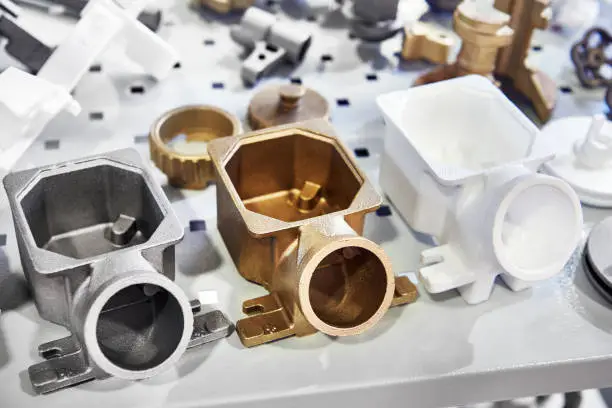
Several lines make copper parts to order. Molds and parts with strange forms can be cut with CNC. When making forms that go on forever, it often costs less per piece to roll, press, and make a lot of the same thing. You can use it to make heat exchangers, HVAC systems, and fluid systems. You can also use it to make busbars and grounding parts. Cast parts are almost net-shaped and have holes in them that would not be used if they were cut from a solid block. It is possible to finish parts by soldering, plating, polishing, or welding them. Fudebao Technology's main jobs are to fine-tune parts, cast them in copper alloys, and finish the outside of finished items.
Choosing the Right Method, Material, and Design
The steps are simple, and there are three options that mainly determine the result.
How to Choose the Best Copper Processing Method
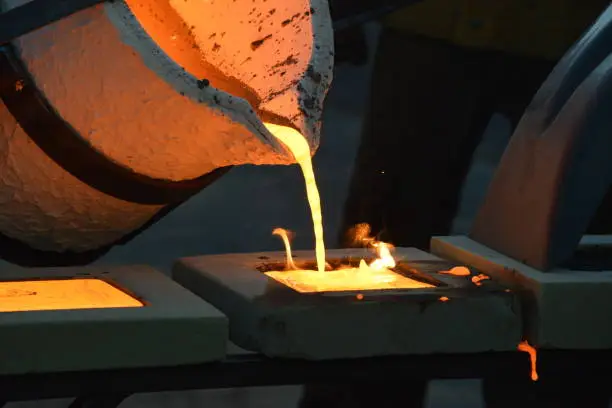
When selecting the most suitable metal manufacturing solution, buyers should consider component geometry, dimensions, production volume, and total landed cost. Different copper processing methods offer different advantages depending on the complexity of the part and the required production quantity. CNC machining is often suitable for small production runs and components with complex geometries or tight dimensional tolerances. Once the necessary tooling has been developed, stamping and forming processes can support faster, more consistent mass production, particularly for tubes, bars, and channels. For larger components or more complicated shapes, casting may be a more economical and practical option. Cold rolling, compared with hot rolling, generally provides better control over material thickness and improved surface quality. When comparing copper, aluminum, and brass, buyers should evaluate electrical conductivity, density, mechanical strength, joining characteristics, corrosion resistance, and machinability. These properties directly influence material selection and the appropriate copper processing techniques. A small trial batch can sometimes provide more useful information than a lengthy spreadsheet because it allows buyers to evaluate actual manufacturing performance, product quality, and processing costs. Testing different materials and production methods also helps manufacturers understand how each metal behaves under specific operating conditions. Ultimately, choosing the right copper processing approach requires balancing technical performance, production efficiency, and overall purchasing costs.
Copper Material Selection for OEM Components
Most jobs in heat and electricity use pure grades like C101, C102, and C110. Copper makes up 99.9% of C110, a tough pitch copper. Things made of brass or bronze are easy to work with and don't rust or break down as quickly. Heat can make casts of aluminum bronze that are stronger than 800 MPa. Wires and springs work well with beryllium copper. A strong choice is titanium copper, which doesn't have beryllium. Copper, chromium, and zirconium are metals that are strong and good at moving heat. Care must be taken to deoxidize castings made of pure copper so that there are as few gas holes as possible. You should think about more than just the grade's conductivity. You should also think about what it will be used for and where it will be used. Find out about the mills that made it and the chemicals that were used.
Practical Design Guidelines for Better Results
Making little changes to the plan can help you save time and money. Don't put things in CNC parts that are deep or hard to get to. Instead, make sure the datums and clamping surfaces are stable and add the right shapes to the inside. Make sure to check the pieces of sheet metal for thickness, temper, bend radius, grain direction, and springback. For tube systems, the wall width, the bend radius, the joint clearance, and the leak checks all need to be checked in. For parts to be cast, they need a draft, walls that are all the same thickness, and room for lines to stretch and break. When the job calls for them, tight specs should show up. Before you buy tools, you should also make sure that the work will be worth the money.
Quality Control and Cost Evaluation
You need to know where the good parts end in order to set fair prices.
Tolerances and Surface Finish
Keep traits that are general separate from dimensions that are useful. If you only use one number for tolerances, it will cost more and not help. This is because limits change based on the method, wall thickness, feature size, volume, and the ability to check. The most important parts for surface finish are the ones that mate, seal, and make electrical contacts. How the cutting is done, the coolant, the tools, and how worn out they are are what matter. Fudebao Technology can machine parts that are accurate to within 0.05 mm, which is good for parts that need to be very precise, like car parts. Still, I tell buyers to mark the parts that need that level of control so that the shop can plan its inspections and fixtures around them.
Inspection Methods and Standards
The risk and the safety checks should match up. A CMM, an optical check, a micrometer, a roughness tester, a hardness and conductivity tester, a coating thickness gage, or a pressure or leak tester are some of the tools that you could use. At the price stage, make sure that any rules and standards set by the customer are met. These could be ASTM, EN, DIN, ISO, RoHS, or REACH. ASTM B584 talks about both cast parts and general-use sand molds made of copper alloy. For each lot, ask for an inspection report and a certificate of materials. It will help your quality team finish checks faster and figure out where any problems came from if you keep clear records.
Copper Processing Cost and Quotation Evaluation
Prices change based on the amount of raw materials used, the time it takes to shape or make the material, the amount of work that goes into it, the tools that are used, the programming, the fittings, the secondary operations, the surface treatment, the inspection, the packing, the shipping, and the number of orders. A lot of the time, the price of a CNC machine includes the material, the machine rate, the setup time, the run time, and the consumables. It tells you the grade and temper, how many things you need to order, the limits, the finish, how much the tools cost, how long you have to wait, the Incoterms, and how they will be packed. Don't just look at the unit cost when you want to compare prices. It's possible for a low piece cost to hide other costs, such as freight, repair, or delays. Providers should write down what they think will happen.
Supplier Evaluation and Procurement Workflow
Even if you have a good plan, you should still work with the right person.
How to Evaluate a Copper Processing Supplier
When evaluating a potential supplier, buyers should consider the company's export experience, technical support capabilities, quality management procedures, production capacity, and communication efficiency. For projects involving copper processing, it is particularly important to understand whether the manufacturer can handle technical requirements throughout the entire production cycle. Find out which manufacturing operations are completed in-house and which are outsourced to external workshops. A reliable supplier should act as a long-term manufacturing partner by reviewing engineering drawings, recommending design modifications for better manufacturability, suggesting suitable materials, developing prototypes, and managing engineering changes. Experienced copper processing manufacturers should also provide verifiable documentation, including qualification certificates, equipment calibration records, inspection reports, and corrective action procedures. In addition, check their material sourcing channels, familiarity with Incoterms, and ability to prepare accurate customs documentation. These factors can help reduce delivery delays and simplify international procurement. Before placing an order, buyers should also evaluate how effectively the supplier handles technical problems and quality complaints. A dependable partner with strong copper processing capabilities should be able to provide consistent support beyond the initial transaction and maintain a stable supply as production volumes and customer requirements change. Choosing a qualified supplier with reliable export and manufacturing experience helps reduce procurement risks and build a sustainable long-term business relationship.
Recommended Procurement Workflow
To start, you need a full RFQ package that includes drawings, 3D files, the type of material you need, the amount of demand each year, the application, quality standards, location, and shipping information. Quotes, tools, supplies, wait time, and the ability to make the product are all things that each supplier needs to look at. The technical skills, quality, price, tools, minimum order quantity (MOQ), delivery, inspection, and communication skills of the candidates should be used to judge them. Make sure the models or first pieces are good before you start making things. Then make plans for how to keep things under control, how to pack, how to handle changes, and what to do if something doesn't quite work. Often check your sources. Nothing bad will happen or put the business at risk because of this order. It also keeps track of what both sides agreed to.
What Fudebao Technology Brings to Your Project
What Zhejiang Fudebao Technology Co., Ltd. does to make things is mostly machine and cast things out of stainless steel, copper alloy, and aluminum alloy. We work with businesses that make cars, boats, and tools and machines for factories. Laser cutters, high-speed routers, low-pressure casting machines, and die casting machines are all in our plant. So, we can give you a finished product, from a blank to one that has been cleaned and treated. We no longer buy American HAAS automatic machine tools and ESS energy storage batteries through middlemen. Instead, we bought them directly from the company. People can see what we cast and machine here at the shop by looking at these details.
Conclusion
When the method is appropriate for the part, copper processing for OEM parts works best. When you need to make a lot of them, forming routes are best for bigger numbers and samples that need to be very precise. Let's talk about the steel's grade now. Pure copper is a good conductor of electricity and heat. Brass, bronze, and titanium copper, on the other hand, give up some of their ability to conduct electricity to be easier to work with, stronger, or less likely to break. There are clear rules for design, key measurements are marked, and testing plans are based on well-known standards. This lets you guess what the quality will be. Cost doesn't have to be read as cost per unit. Toll-free landing cost should be read. When you check out a supplier, you should look at their skills, documents, amount of space, and experience exporting. It's less risky to work on this project because the RFQ and sample acceptance are well planned and link these choices.
FAQ
Which process is best for copper OEM parts?
There isn't just one best way to do something. The best things to make with CNC machining are samples and complicated items that are only made in small amounts. A good way to make complicated near-net shapes is to cast them. If you buy more of something, it might cost less to stamp, cast, or roll it.
What should an RFQ include?
Include sketches, 3D files, the grade and temper of the material, any tolerances, the finish, the annual amount, quality standards, where the goods will be sent, and when they will be delivered. You can get accurate quotes more quickly if you have all the information.
How can I control cost without losing quality?
Just mark the most important ones, pick the grade based on what it will be used for, and see how much it costs to land each one altogether. Do not have to machine and fix things more than once. Instead, make sure the curves and draft angles are correct.
Does pure copper cast easily?
When deoxidizing pure copper, you need to be careful. To cut down on gas holes, phosphorus or boron are often used. How fluid the metal is and how easy it is to cast will depend on how good it is.
Can copper replace aluminum in my design?
Weight might not matter as much if moving heat or electricity is more important. To begin, make sure you know how much each metal can hold. Iron weighs 2.70 g/cm³ and copper 8.96 g/cm³.
Request a Custom Copper Processing Review from Fudebao Technology
Do you need someone to handle copper for OEM parts that are one of a kind? Fudebao Technology can cast and make copper metals with an accuracy of up to ±0.05 mm. They can also send your order from the blank to the finished item, all in the same place. Send your thoughts, the grade level, and the amount you need each year to hank.shen@fdbcasting.com. They're going to check out your work. Please go to fdbcasting.com to learn more.
References
1. ASM Handbook, Volume 2: Properties and Selection: Nonferrous Alloys and Special-Purpose Materials, ASM International, 1990
2. Copper and Copper Alloys (ASM Specialty Handbook), ASM International, 2001
3. Complete Casting Handbook: Metal Casting Processes, Metallurgy, Techniques and Design, Butterworth-Heinemann, 2015
4. Manufacturing Engineering and Technology, Pearson, 2013
5. Standard Specification for Copper Alloy Sand Castings for General Applications (ASTM B584), ASTM International, 2014
6. Fundamentals of Modern Manufacturing: Materials, Processes, and Systems, Wiley, 2019



YOU MAY LIKE