
Copper Castings for Marine and Automotive Components: Supplier Selection Guide
2026-11-18
Before you choose a supplier for copper castings, you should make sure that the alloy, casting method, inspection plan, and delivery capability are all right for the job. Boat parts have to deal with cavitation and salt water. Some car parts have to deal with moving parts, heat, and power load. Before buying something, a person should first describe the work environment, then look at at least two casting methods, then ask for chemistry and test records, and finally compare each quote based on value instead of price per unit. A supplier that is integrated can cut down on handoffs and make buying things safer. To learn how it works, just follow this step-by-step guide.
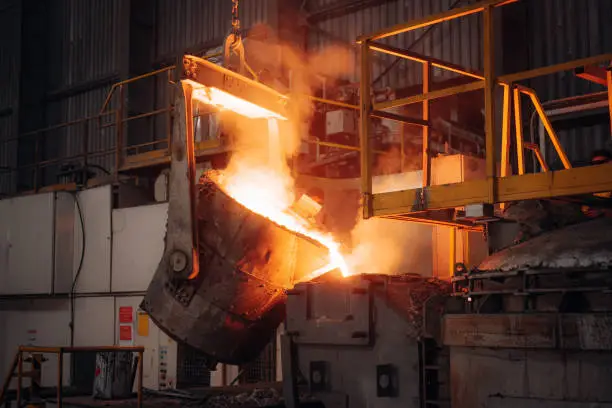
Matching Alloy, Process, and Method to the Component
Selecting the Right Copper Casting Alloy for Marine and Automotive Components
I never start making a part with the name of the metal. I choose what it does instead. Copper-nickel alloys, such as 90/10, are often used for heat exchangers and pipes that go into salt water because they don't rust. Iron-nickel bronze, like UNS C95800, works well for blades, pumps, and valves that need to handle a lot of pressure and bubbles. Silicon brass can be used to make boat nuts and gear. There are types of copper that move electricity through car battery parts, connectors, and busbars with less heat. If you melt copper, it is set to 100% on the IACS scale. It's always true that strength and conductivity are two sides of the same coin. Molds made of brass and lead-tin metal, like C93200, are easy to work with and don't wear out quickly. That's why the seller should talk to you about it ahead of time. Chemistry can also make something flow, shrink, or let air pass through it.
Choosing the Best Casting Process for Geometry and Volume
Because of the cost of the tool, the yield, the annual volume, the shape, the alloy, and the surface finish, you should choose the right process. Sand casting needs more work before it can be used for small amounts, prototypes, big valves, and pump housings. With investment casting, you can make complicated shapes, walls that are very thin, and passages inside that are almost net-shaped. You can make rings, sleeves, and bushings with this method. Bars, rods, and billets that are used to make machined parts are made by continuous casting. When a lot of work needs to be done with steel tools, permanent mold casting can help with accuracy and surface finish. I think that the design should be looked at again soon. The machining allowance, cores, fillets, gating, risers, draft angles, and wall thickness are just some of the things that need to be checked at the same time. Making even a small change to the paper can keep it from shrinking in the future.
Comparing Copper Castings With Forgings and Wrought Products
When you choose whether to cast or use another manufacturing method, it's important to compare the available options honestly. copper castings are a good choice for producing large parts with many small to medium-sized holes and complicated shapes. The casting process can create complex geometries efficiently, making copper castings suitable for components where machining from solid material would create excessive waste. The grains can become smaller when a component is forged, which can help small parts that are exposed to high levels of stress last longer. Wrought copper is available in bars, tubes, and sheets and is widely used when efficient electrical conductivity is required. Bronze and aluminum bronze can provide better durability and resistance to wear in certain applications, while brass is generally easy to machine and form. For small production runs, machining from solid stock may be practical, but hollow or branched parts can generate significant material waste. When comparing copper castings with these alternatives, you should consider the component's weight, shape, conductivity, corrosion risk, production volume, and total manufacturing cost before making a decision. Evaluating these factors helps buyers determine whether copper castings offer the best balance of performance, production efficiency, and overall value.
Preparing a Clear Request for Quotation
Defining Technical Requirements Before Requesting a Quotation
Weeks of back and forth are unnecessary with a clear package. Explain what the part does and where it goes. Make a list of everything that it comes in contact with, such as fuel, vibration, cavitation, impact, thermal cycling, salt spray, and galvanic corrosion. To the list, you need to add the toughness, conductivity, elongation, tensile strength, and yield strength. Mark on the drawing which dimensions are important and which ones are just for looks. Also, write down how the part should be machined, finished, and dealt with. The UNS number of the metal and the standard that controls it can be used to find it. In this case, ASTM B148 covers sand castings made of aluminum and bronze, and ASTM B584 covers general-use sand castings made of copper alloy. When there are clear callouts, you're less likely to mess up.
Documents That Support Traceability and Export
The paper job is just as important as the metal. Look at the materials' certificates to find out what they are made of and how they can be tracked from one batch to the next. You can also look at inspection records and certificates of conformity. Make sure that the drawing change is correct for each quote so that they are all for the same part. Copper metal surfaces that have been machined can get scratched or tarnished while being shipped, so tell people how to pack them right. Labels and export papers should be agreed upon before the first shipment, not after it gets to the port. Some auto programs may also need first-year students to fill out PPAP forms. They should be able to tell you if they can do that. If you write down what you want, your quality team will always be able to use the same rules to decide whether and which parts to accept.
Comparing Supplier Quotes Beyond the Unit Price
A low unit price can hide the true total cost of copper castings. You should ask each supplier to clearly separate the costs for inspection, packaging, freight, duties, and casting when quoting copper castings. Make it clear who owns the tooling and who is responsible for storing, maintaining, repairing, or replacing it. There are also hidden costs associated with copper castings, such as material waste, additional processing, defects that cause delays, excess inventory, and the work required to switch suppliers. You should also ask about lead times for tooling, prototypes, first articles, approval, and full-scale production. Check the minimum order quantities and replenishment capabilities for both small batches and OEM projects. For copper castings, it is only fair to compare supplier quotes when they are based on the same drawings, cost assumptions, specifications, and delivery terms. A detailed and consistent quotation process makes it easier to evaluate the real cost and long-term value of copper castings.
Evaluating a Copper Casting Manufacturer or Supplier
Foundry Capability and Quality Systems
Visit the foundry, even if it's just on the web. Check to see what kinds of alloys are available, how big the furnace is, whether molds and cores can be made, and what the biggest size that can be cast is. To find out what the plant casts every week, read this. For quality control, ISO 9001 is a good starting point. Automotive projects often need IATF 16949 or approvals that are specific to the customer. You can ask about spectrometers for chemistry, mechanical testing, dimensional inspection, ultrasonic or radiographic testing, and testing for pressure. After that, you should suggest the procedures for nonconformance, calibration, traceability, and corrective action. Even though cutting and surface treatment done in-house can make project management easier, each step still needs to be tracked and planned.
Quality Risks and Common Casting Defects
If a casting stays in service, it's because of flaws. Some of the things that can lower pressure resistance, fatigue life, conductivity, and machining output are gas porosity, shrinkage cavities, oxide inclusions, cold shuts, misruns, cracks, distortion, and uneven wall thickness. Some of the most common reasons are contaminated alloys, worn molds, the wrong pouring temperature, bad gating, and solidification that can't be stopped. Find out how the provider stops and finds them. We can use optical emission spectrometry, visual and dimensional checks, dye penetrant testing to look for cracks on the surface, and radiography or ultrasonic tests to look for flaws inside the item. Check to see if a copper alloy is galvanically compatible before putting it in contact with steel, aluminum, coatings, or seawater. This is because mixed metals rust more quickly.
A Practical Supplier Selection Process
Picks are fair because of a simple process. First, sort the parts into groups based on what they do, how dangerous it is to use, where they are in the production process, and how much it would cost to fail. Second, give each provider a score based on six factors: knowledge of the alloy, process ability, control of dimensions, inspection, certifications, lead time, cost, capacity, and communication. Third, send all applicants the same drawings, forecasts, tolerances, and delivery terms. Fourth, give your approval to a prototype or first item that checks the chemistry, size, quality of the surface, mechanical properties, and soundness inside. The last thing that needs to be done is to write down the acceptance rules, steps for making changes to the engineering, packaging, warranty, corrective action, and review meetings in the supply agreement. It is better to score a marine pump housing more precisely than a fitting that is just for looks.
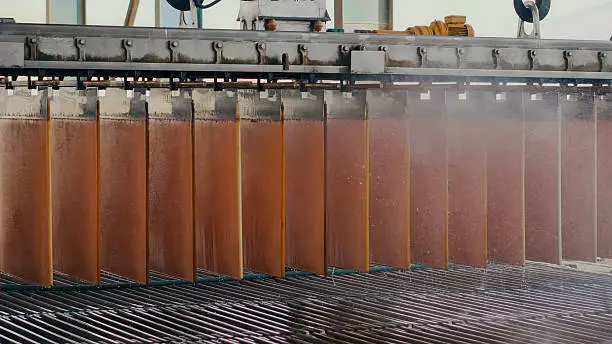
Why an Integrated Supplier Reduces Procurement Complexity
One Controlled Supply Chain From Casting to Finishing
Casting, CNC machining, heat treatment, surface treatment, inspection, and packaging are all coordinated by a single supplier, which can improve the overall consistency of copper castings. This approach cuts down on handoffs, makes it clear who is responsible for each dimension, makes it easier to trace problems, and shortens the time needed to correct them. The benefits are even greater when casting allowances, machined features, pressure testing, and protective finishing all depend on each other during the production of copper castings. You should also find out which tasks the supplier performs in-house and which tasks are assigned to subcontractors. Ask the supplier how these external processes are controlled and inspected. A good partner should be able to support copper castings through prototypes, small production runs, replacement parts, and OEM manufacturing. The supplier should also understand how factors such as wear, corrosion, vibration, electrical conductivity, heat load, and fluid pressure affect the performance and production requirements of copper castings. Coordinating these processes through one experienced supplier can help improve quality, simplify communication, and reduce production risks.
How Fudebao Technology Supports Marine and Automotive Buyers
Some of the main things that Zhejiang Fudebao Technology Co., Ltd. does are casting metal and precision machining stainless steel, copper alloy, and aluminum alloy. Customers from all over the world buy from us in the automotive, industrial equipment, machinery manufacturing, aviation, and marine industries. Laser cutters, high-speed routers, low-pressure casting machines, and die casting machines are all in our plant. We can make a part from a blank to a finished one in one step, since our process includes melting, casting, finishing, and surface treatment. The accuracy of the machine is ±0.05 mm. When a casting needs to fit with a shaft, a seal, or a housing, that level of control is helpful.
Copper Casting Supplier Selection Checklist
Use this short list before you accept any supplier. Each point guards a different part of your program.
- Technical fit: Make sure the supplier can pour your alloy, handle the size and casting method of the part, and meet your needs for tolerances, mechanical properties, conductivity, and corrosion. Make sure that machining, heat treatment, and surface treatment are all available so that the part that is made can match the drawing without having to go through extra sellers.
- Look over ISO 9001, IATF 16949, marine approvals, customer standards, traceability, calibration, corrective action, and change control to make sure the quality is good. This way you'll know what kinds of records come with each shipment. Ask to see examples of inspection reports that include chemical analysis, dimensional checks, and non-destructive testing.
- Clarity in business: It should be easy to read and understand when it comes to tooling, unit costs, testing, packaging, shipping, minimum order quantities, and lead times. If a supplier ships the same part the same way every time, it lowers your inventory and planning risk. Look for export experience and repeat orders.
Before the first sale is made, these checks cover technical, quality, and business risk.
Conclusion
When it comes to marine and auto copper castings, choosing a supplier means finding one that has the right alloy, process, inspection plan, and way to finish the part. Brass, aluminum bronze, silicon bronze, and copper-nickel are all different grades that are used for various tasks. Sand casting, investment casting, centrifugal casting, permanent mold casting, and continuous casting are some of the different types of casting. There are different shapes and sizes that each can handle. Forging and wrought products are still better for some parts. It's fair to compare when there are clear drawings, written standards, and quotes for the total cost. Records from chemistry, mechanical, dimensional, and non-destructive tests show how well a foundry handles flaws. A weighted selection method with first-article approval lowers risk, and an integrated supplier cuts down on the number of times that casting and machining have to be swapped between people. The best supplier is the one whose track record, skills, and ability to communicate meet the needs of the part.
FAQ
Which alloy is best for marine copper castings?
The openness is what makes it work. Water that has salt in it is good for pipes and heat exchangers made of copper-nickel. Bronze, made of nickel and aluminum, is good for blades and pumps that need to be strong and not cavitate. To be sure of your choice, look at facts on temperature, pressure, and wear.
Should I choose sand casting or investment casting?
Sand casting works best for samples, small amounts, and large parts. Investment castings can be made with complicated forms and thin walls that are close to net-shape and need less work. Tolerance, surface finish, and volume are used to make the choice.
Which documents should I request from a supplier?
As for inspection papers, testing records, and certificates of material, you should ask for them. Let you keep track of batches and make changes to drawings, that way you can connect each package to the lot it came from.
Can the supplier machine and finish the parts?
Sure, Fudebao Technology can cast and CNC machine parts. The accuracy of the CNC cutting is up to 0.05 mm.
Request Custom Copper Castings From Fudebao Technology
Fudebao Technology is ready to review your drawings, 3D files, alloy specifications, target quantities, and tolerances. As a copper castings supplier with casting, CNC machining, and surface treatment in one process, we can recommend a suitable alloy and route and provide a clear quotation. Email hank.shen@fdbcasting.com or visit fdbcasting.com to request a technical consultation or prototype quotation for your marine or automotive project.
References
1. ASM Handbook, Volume 15: Casting, ASM International, 2008
2. Copper and Copper Alloys, ASM Specialty Handbook, ASM International, 2001
3. ASTM B148, Standard Specification for Aluminum-Bronze Sand Castings, ASTM International, 2018
4. ASTM B584, Standard Specification for Copper Alloy Sand Castings for General Applications, ASTM International, 2014
5. IATF 16949, Automotive Quality Management System Standard, International Automotive Task Force, 2016
6. ISO 9001, Quality Management Systems: Requirements, International Organization for Standardization, 2015



YOU MAY LIKE