
Aerospace Aluminium Die Castings Improve Lightweight Aircraft Component Manufacturing Efficiency
2026-08-17
Aerospace aluminium die castings represent a transformative advancement in aircraft component manufacturing, delivering the precise combination of reduced weight and structural integrity that modern aviation demands. By leveraging specialized aluminium alloys through high-pressure die casting processes, manufacturers achieve complex geometries with exceptional dimensional accuracy while slashing production timelines. This manufacturing approach addresses the aerospace industry's persistent challenge of balancing strength requirements against weight penalties, ultimately improving fuel efficiency and operational performance across commercial and defense aircraft platforms.

Understanding Aerospace Aluminium Die Castings and Their Role in Aircraft Manufacturing
Aerospace aluminium die castings are the building blocks of contemporary lightweight aircraft design. They are precision-engineered solutions that meet the high-performance standards of the aviation industry. Molten aluminium alloys are injected into steel dies under high pressure in carefully controlled metallurgical processes that make these parts. The parts have very low weight and great mechanical qualities.
Specialized Aerospace-Grade Alloys
The aviation business focuses on certain types of aluminium alloys that have been shown to work well in harsh flight conditions. A356 aluminium alloy is a great choice because it has silicon and magnesium added to it, which make the casting process smoother and keep the alloy's high strength-to-weight ratio. This metal has great resistance to fatigue and works well with heat treatment methods, reaching T6 temper conditions that make the mechanical qualities better. Aural-1 is another interesting material that has copper and silver added to it to make it even stronger for use in structures that are under a lot of stress. These materials are made for aerospace use and are resistant to corrosion, which is important for parts that will be exposed to chemicals, extreme temperatures, and moisture in the air for many years.
The Tailored Die Casting Process
Every step of the production process for aerospace aluminium die castings needs to be done with great care. The process starts with choosing an alloy based on its performance needs. Next, a precise mold is made that takes into account patterns of shrinkage and thermal properties. During casting, molten metal flows into dies at pressures higher than 10,000 psi. It fills complex holes and hardens quickly to make parts that are almost net-shaped. When you cool something down slowly, it forms fine-grained microstructures that make it stronger than when you cool it quickly. At quality control stages, measurements are checked to make sure they are accurate within 0.05 mm, which is what flight systems need. After being cast, steps like trimming, heat treatment, and surface finishing turn raw castings into flight-ready parts that meet strict aerospace certification standards.
Overcoming Manufacturing Challenges Through Optimized Aluminium Die Casting
Modern flight needs parts that are lighter, stronger, and have more complicated shapes, but traditional ways of making things can't keep up. Conventional machining from solid billets wastes a lot of material—often 80–90% of the raw stock is thrown away as chips—and takes a lot of time, which increases costs and lead times. Even though sand casting can make big parts, it doesn't have the accuracy in dimensions and quality of the surface that current aircraft assemblies need, so a lot of extra work has to be done.
Transformative Advantages of Die Casting Technology
Aerospace aluminium die castings technology solves these long-standing problems in production by introducing a number of new features. Cycle times are cut down by a huge amount, and most aircraft castings harden in minutes instead of hours, as other methods require. This speeding up is due to the high-pressure drilling process and the fact that steel equipment handles heat well. Dimensional accuracy gets a lot better because die casting makes tolerances that are tighter by nature, which means that extra machining processes are reduced or eliminated. The process is great at making complicated internal passages, thin-walled sections, and built-in fixing features that would be too expensive or technically impossible to make with just cutting.
Real-World Applications Demonstrating Enhanced Efficiency
Aerospace companies have seen huge increases in efficiency by switching to aerospace aluminium die castings production for key parts. Before, engine accessory housings were made by milling billets. Now, they are made from die casts, which cuts production time by 60% and costs of materials by half. These housings have mounting bosses, cooling fins, and interior galleries built in. They are cast all at once, instead of being machined and put together separately. In the same way, die casting makes it possible for electromagnetic protection structures with thin walls that are both light and very stable in terms of their shape. One commercial aircraft program used aerospace aluminium die castings for structural brackets and support fittings, which cut the weight of parts by 35% and sped up delivery times by eight weeks. These gains in performance directly lead to better fuel economy, more payload space, and lower operational costs over the life of the aircraft.
Comparison and Selection of Aerospace Aluminium Die Casting Materials and Methods
To choose the right materials and manufacturing methods, you need to carefully weigh a number of performance factors against the needs of the product. Aerospace engineers often compare casts made of aluminium alloy to those made of other materials, weighing technical skills against cost considerations.
Material Performance Comparisons
Aerospace aluminium die castings are a good choice for aerospace materials because they have benefits that magnesium and titanium alternatives don't always have. Aluminium castings are better at resisting rust and can handle a wider range of temperatures than magnesium casts. These are important qualities for parts that will be used in a variety of environments. Magnesium has a slightly lower density, but aluminium has been used for a long time and has established certification pathways that lower program risk. Titanium casts are very strong and don't react badly to high or low temperatures, but they are very expensive, so they can only be used in very specific situations where the performance is worth the cost. Aerospace aluminium die castings are about 70% as strong as titanium, but they cost only a third as much. This makes them the most cost-effective choice for most aircraft structure and housing needs.
Alloy Selection and Treatment Options
Aerospace metal casting alloys are carefully chosen based on certain needs for their mechanical properties. After the right heat treatment, A356-T6 has tensile strengths close to 310 MPa and yield strengths close to 240 MPa, making it a great material for many uses. In the T6 temper, the material is heated in a solution and then aged artificially, which causes hardening phases to form throughout the substructure. Surface treatments, like anodizing or chemical conversion coats that make protective oxide layers, make parts last longer by making them less likely to rust. These finishing steps also make it easier for paint to stick to parts that need to be color-coded or need extra protection from the environment.
Process Method Evaluation
Die casting works best for medium to large production runs because the cost of the tools can be spread out over thousands of parts. For very big, low-quantity airframe structures, where die costs would be too high, sand casting is still a possible option. Precision machining is still used for tasks that need very tight tolerances or small batches, and time frames for making new tools can't be met. For each part, the decision matrix looks at the production volume, geometric complexity, tolerance standards, and program schedule to find the best way to make it.
Procurement Insights for Aerospace Aluminium Die Castings: How to Choose the Right Supplier
Finding suppliers of aerospace-quality molds requires a thorough review of each one to make sure uniform quality, compliance with regulations, and on-time delivery. If you choose the right manufacturing partner, they will become an extension of your engineering team, providing technical knowledge and output capability.
Essential Certification and Capability Requirements
Suppliers to the aerospace industry must show that they follow quality standards by getting recognized certifications. The ISO 9001 quality management system sets the basic rules for how things should be done, and the AS9100 aircraft standards cover extra needs like tracking, managing configurations, and lowering risks. The fact that heat treatment and non-destructive testing operations are Nadcap-approved shows that important special processes meet aircraft technical standards. In addition to certifications, you should look at the prototyping skills of providers. This way, you can make sure the plan works before committing to production tools. Companies that offer combined CNC machining services make supply chains more efficient by sending fully finished parts instead of aerospace aluminium die castings that need to be sent to other machine shops.
Supplier Selection Criteria
Talking to possible casting providers about metal choice, gating design, and quality control methods is a good way to get a sense of how technical they are. Ask for case studies that show experience with similar aircraft parts. Pay attention to how they solved problems and how they improved the process. Manufacturing capacity is important. Make sure that your sources keep enough equipment and staff on hand to meet your volume needs without putting supply plans at risk. Transparency in the supply chain lets you see where materials come from, how processes are controlled, and quality documentation, which boosts confidence in consistent output. Referrals from customers who have worked on other aerospace projects can tell you a lot about how well you communicate, how quickly you adapt to changes in the engineering, and how well you do at meeting deadlines.
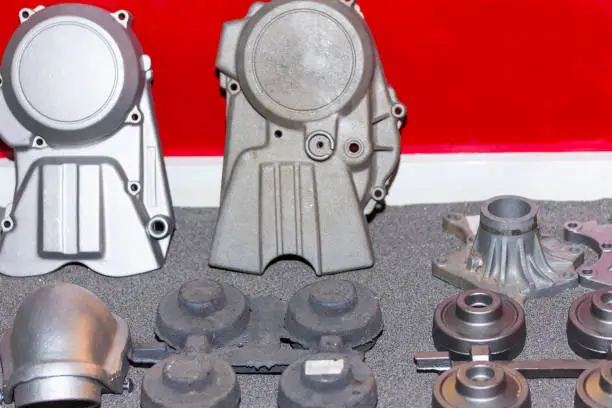
Technical Considerations for Designing with Aerospace Aluminium Die Castings
To make the best plans for die-cast parts, you need to know how the process works and how the material acts. When engineers plan with manufacturing in mind, they can get the most out of metal casting technology and avoid having to make expensive changes to the design.
Design Best Practices for Manufacturability
Dimensional tolerances should be in line with what aerospace aluminium die castings can do, which is usually 0.13mm per 25mm of length without any other work being done. When the standards are tighter, more machining processes are needed, which adds to the cost and wait time. Draft angles between 1 and 3 degrees make it easier for castings to come out of dies without damaging the surface or distorting the dimensions. Even cooling is helped by walls that are all the same thickness, and interior stresses that could cause warping or breaking are kept to a minimum. For structural integrity, designers should aim for wall thicknesses of at least 2.5 to 3 mm. However, too much thickness can make buildings heavier and take longer to cool down. Allowances for shrinkage must take into account the 1.5% volumetric contraction that happens when molten metal cools to room temperature and hardens.
Balancing Weight Reduction with Structural Performance
When designing aerospace parts, it's hard to find the right balance between keeping weight low and making sure parts are strong and last a long time. You can use finite element analysis to find areas with high stress that need more material and areas with low stress that can be made lighter by removing material without affecting safety. Ribbing patterns effectively spread loads, allowing thinner base parts that are supported by supports placed in a smart way. By combining several features into a single casting, fasteners and interfaces are eliminated. This cuts down on the number of parts and assembly work needed while also making the structure more efficient.
Post-Processing for Enhanced Properties
Aerospace aluminium castings' mechanical qualities get a lot better with heat treatment procedures. Solution treatment at high temperatures breaks down strengthening elements into a solid solution. This is then quickly quenched, which freezes the oversaturated state. When you age something artificially at temperatures in the middle, fine strengthening phases form all over the microstructure. This gives the material its best strength and hardness. Shot peening and other surface finishing methods add beneficial compressive stresses that make materials more resistant to fatigue. This is especially helpful for parts that are loaded and unloaded many times. Anodizing and chemical processes stop corrosion and protect the base metal from moisture and airborne contaminants, which extends its useful life in tough working conditions.
Conclusion
By balancing the competing demands for less weight, higher strength, and more efficient production, aerospace aluminium die castings have fundamentally changed the manufacturing of aircraft components. Manufacturers make parts that meet the strict performance standards of flight while cutting costs and speeding up production times by using special metal formulations, precise die casting methods, and strategic design optimization. This technology works really well for complicated shapes and medium to large quantities of work that are hard for older methods. As long as aerospace projects keep putting an emphasis on fuel economy and operational costs, aluminium die casting technology will play a bigger role in designing and making next-generation planes.
FAQ
Why choose aluminium die castings over traditional machined aerospace components?
When cutting from solid billets is compared to aerospace aluminium die castings, up to 90% less material is wasted. At the same time, production steps are sped up. The process makes structures with complex internal features and thin walls that are too expensive to machine. These structures have high strength-to-weight ratios that are needed for aircraft uses. Near-net-shape accuracy is achieved by die casting, which cuts down on extra processes, speeds up production, and lowers overall manufacturing costs.
What lead times should aerospace buyers expect for custom die cast components?
Die cast aerospace projects usually need 8 to 12 weeks for tooling development, which includes designing the mold, making it, and testing samples. Once the tool is approved, production runs can begin. Cycle times for each casting vary from 2 to 5 minutes, based on the size and complexity of the part. Volume production plans deliver thousands of parts every month, which meets the needs of aircraft programs that need to ramp up. Timelines can be cut down to 4 to 6 weeks for prototypes and low-volume orders by using existing tools or rapid tooling methods.
Do aluminium die castings meet aerospace certification requirements?
Aerospace aluminium die castings providers with a good reputation keep their AS9100 approval and follow the rules for aerospace materials, such as the AMS standards for aluminium alloys. To make sure that components meet engineering standards, they are inspected carefully using methods like measuring, testing for metals, and looking at them without damaging them. Full documentation for traceability keeps track of certifications for materials, process parameters, and quality records, meeting the needs of aerospace regulations and customer audit standards.
Partner with Fudebao Technology for Aerospace-Grade Aluminium Die Castings
Zhejiang Fudebao Technology is ready to help you with your aerospace aluminium die castings needs. They have a track record of success and a lot of experience making things. Our factory has both high-tech die casting machines and precise CNC milling centers, so we can make parts from molten metal all the way through finished products with tolerances of up to ±0.05mm all in one place. We are an ISO-certified supplier of aerospace aluminium die castings, and we follow strict quality systems and traceability protocols that meet the needs of the aerospace industry. During the design optimization, prototype development, and production ramp-up phases, our engineering team works closely with clients to make sure that parts meet performance requirements and are as easy to make as possible. Reach out to hank.shen@fdbcasting.com to discuss your project requirements, request technical consultation, or obtain detailed quotations for aerospace aluminium die castings for sale. We welcome the opportunity to demonstrate how our capabilities can enhance your aircraft component manufacturing efficiency.
References
1. Campbell, John. "Complete Casting Handbook: Metal Casting Processes, Metallurgy, Techniques and Design." Butterworth-Heinemann, 2015.
2. Kaufman, J. Gilbert and Rooy, Elwin L. "Aluminum Alloy Castings: Properties, Processes, and Applications." ASM International, 2004.
3. Aerospace Industries Association. "Aluminum Applications in Commercial Aircraft." AIA Technical Report Series, 2018.
4. SAE International. "AMS 4260: Aluminum Alloy, Die Castings, 7.0Si-0.3Mg." Society of Automotive Engineers Aerospace Material Specification, 2020.
5. Totten, George E. and MacKenzie, D. Scott. "Handbook of Aluminum: Vol. 1: Physical Metallurgy and Processes." Marcel Dekker, 2003.
6. ASM International Handbook Committee. "ASM Handbook, Volume 15: Casting." ASM International Materials Park, 2008.



YOU MAY LIKE