



Fordberg 3D printed castings redefine speed to market for critical components
2025-11-26 19:36:17
As we said before, we spontaneously use 3D printing mold-free technology to achieve the landing of casting and processing products into small batch production. This time, we will take you to analyze and study the advantages of this technical method based on cases
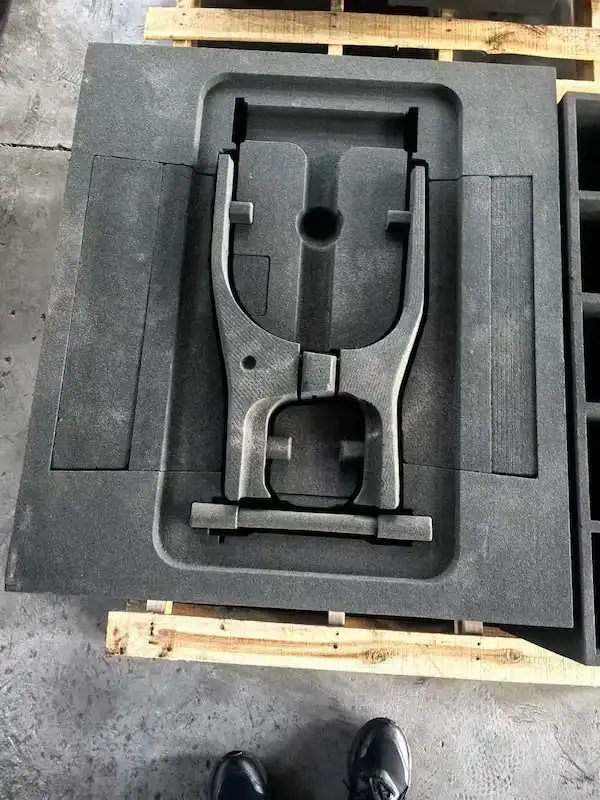
Case study: motorcycle frame
Production in 48 hours Hangzhou, China – October 12, 2025 – Zhejiang Fudebao Technology has set a new benchmark in the industry by using 3D printed molds to create motorcycle frame prototypes, with final products delivered within 48 hours. This milestone underscores the company's commitment to bridging innovation with industrial efficiency.
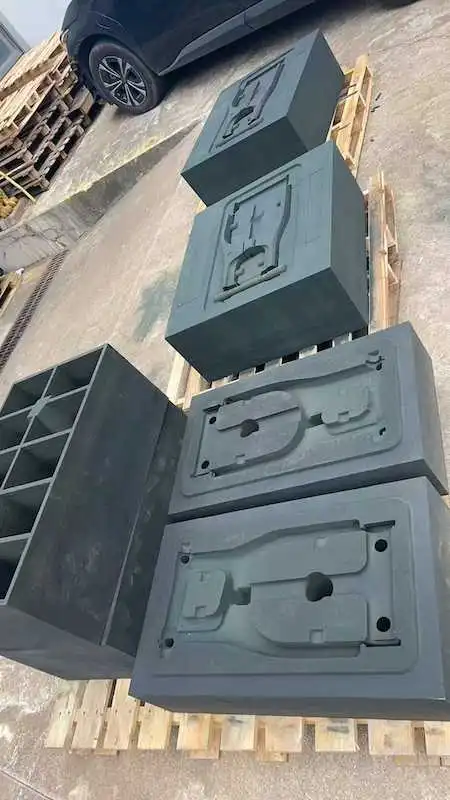
Customer: The European original factory requires a lightweight, ergonomic motorcycle frame for the limited edition electric vehicle. Due to the complex tube geometry and strict weight limits, traditional methods typically take 6 to 8 weeks.
We use direct metal laser sintering (DMLS) to print sand molds with internal channels for rapid cooling. Key features include:
• Topology Optimization: Reduces weight by 18% while maintaining structural integrity.
• Microporous Surface: Improves paint adhesion for aesthetic customization.
• Thermal Management: Uniform heat dissipation to prevent deformation during CNC machining.
The result prototype met all functional requirements.
• Material diversity: compatible with aluminum alloy (A356.2), brass (C36000) and stainless steel (316 liters).
• Tolerance Control: Critical dimensions ± 0.05 mm, crucial for assembly compatibility.
• Surface Finish: Choice of electroplating, polishing, or powder coating.
Industry Impact This advancement is particularly transformative for industries that require rapid iteration:
• Medical Devices: Custom surgical instruments with biocompatible coatings.
• Renewable energy: wind turbine gearbox housing with integrated sensors.
• Defense: Rapid production of non-lethal vehicle barriers for military contracts.
Sustainable Benefits By reducing material waste (up to 70% less than sand casting) and energy consumption, Floydberg supports circular economy goals. Our life cycle assessment shows a 45% reduction in CO2 emissions per component.



YOU MAY LIKE
