
What Should Manufacturers Check When Purchasing Cast Copper Parts?
2026-11-24
Manufacturers should confirm five items before buying cast copper parts: the exact alloy, the certified material properties, the casting method, the dimensional and internal quality plan, and the supplier's traceability. Price comes after these checks. Cast copper can mean pure copper or a copper alloy such as brass, bronze, or copper-nickel, and each one differs in conductivity, strength, and corrosion resistance. I wrote this guide for engineers, OEM project teams, and sourcing managers who want fewer surprises from porosity, size drift, and missing paperwork. Each section below gives you a clear check to apply to your next order.
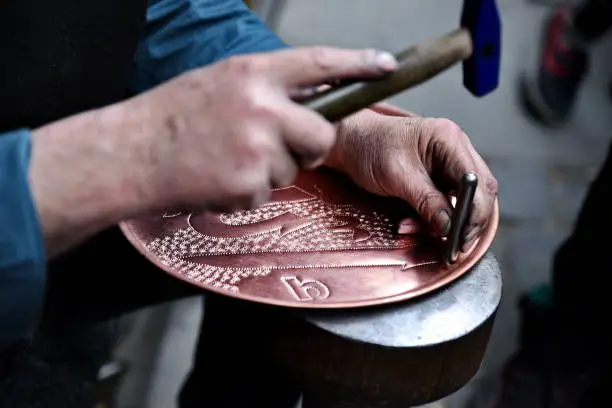
Confirm the Alloy, Composition, and Properties of Cast Copper
Define the Application Before the Alloy
Start with where the part will work. A switchgear contact arm needs high conductivity. A pump bushing needs wear resistance. A marine valve body needs resistance to chloride corrosion. Write down the electrical and thermal load, mechanical stress, operating temperature, pressure, vibration, and expected service life. Then decide which family fits: commercially pure copper, brass, tin bronze, aluminum bronze, or copper-nickel. I also suggest sending drawings, CAD models, and operating data before quotation. A supplier who sees the full picture can flag design risks early, such as thin walls or sharp corners that invite shrinkage. This step costs little and prevents rework later.
Request the Exact Designation and Standard
Avoid vague wording such as "copper casting" on a purchase order. Name the UNS designation, the governing standard, and the delivery condition. ASTM B584 covers copper alloy sand castings for general use, and ASTM B148 covers aluminum-bronze sand castings. ASTM B824 sets general requirements for copper alloy castings, while EN 1982 covers copper and copper alloy ingots and castings. Strength shows why precision matters. Tensile strength runs from about 220 MPa in unleaded red brass to more than 750 MPa in high-strength manganese and aluminum bronzes. Two parts that both get called "copper" can differ by more than three times in strength.
Verify Composition and Conductivity With Test Data
People who want to buy cast copper parts should ask for a material certificate that lists the chemicals that were used, the maximum impurities that can be present, and the heat or batch number that matches the real production lot. For important projects, it's also a good idea to get test results from a separate spectrometer to make sure the material is uniform, and the alloy provided meets the needs. Electrical conductivity is something that should be thought about when cast copper is being used in power and energy. The International Annealed Copper Standard (IACS) says that pure copper that has been annealed has a conductivity of 100%, which is around 58 MS/m at 20°C. It's true that cast copper parts don't always conduct electricity well because alloying elements, internal porosity, oxides, and nonmetallic inclusions can make them not work as well. As copper melts and is cast, it can also take in gases. To stop flaws caused by oxygen, foundries may use deoxidation processes. Even more electrical conductivity can be lost because of phosphorus that is left over from some deoxidation processes. So, people who buy cast copper products shouldn't think that all of them are as conductive as pure tempered copper. Instead, they should ask the seller to explain the lowest conductivity value, the testing method, the sampling process, and how the product will be tested before it is made. The people who make cast copper should be able to show you proof that each batch of their products meets the agreed-upon electrical and chemical standards. They should also have records that let you find the materials they use and reliable test results.
Assess the Casting Method and Manufacturing Process
Match the Process to Geometry and Volume
Sand casting, permanent mold casting, centrifugal casting, and investment casting all appear in copper alloy production. Sand casting suits large or complex shapes and flexible batch sizes, and tooling investment stays moderate. Permanent mold casting gives a finer surface and tighter repeatability at higher volumes. Centrifugal casting produces dense rings and sleeves. Investment casting handles fine detail. Each choice changes dimensional accuracy, surface finish, wall thickness limits, internal soundness, and unit cost. Ask the supplier why they picked a given process for your part, and what they would change if your annual volume doubled.
Review Gating, Risers, and Solidification Control
Copper alloys shrink as they solidify, so feeding matters. Ask how the foundry designs gates and risers, controls pouring temperature, filters the melt, and prevents gas entrapment. Tin bronzes freeze over a wide temperature range and tend toward dispersed micro-porosity. Aluminum bronzes form oxide films that can fold into the metal during turbulent pouring. A supplier who explains these points in plain terms has usually solved them on real parts. For new, complex designs, request a documented gating plan or a solidification simulation, and ask which defect-reduction steps they apply after first samples.
Clarify Secondary Operations in the Quote
A casting rarely ships as poured. Confirm which operations the quote includes: machining, heat treatment, weld repair, brazing, coating, surface treatment, and assembly. Also ask which steps happen in-house and which go to subcontractors, since each handoff adds risk and shifts responsibility. Zhejiang Fudebao Technology Co., Ltd. runs the full path of melting, casting, finishing, and surface treatment. High-speed machining centers and CNC lathes support that path, so blanks move to finished parts within one operation. Whatever supplier you choose, request a written process flow that names each step and who owns it.
Inspect Dimensions, Tolerances, and Internal Quality
Separate As-Cast Tolerances From Machined Tolerances
Casting alone cannot hold every dimension economically. ISO 8062-3 defines tolerance grades for cast parts, and sand casting typically sits at coarser grades than permanent mold or investment casting. Mark the critical features on the drawing: bores, mating faces, threads, flatness, concentricity, and surface roughness. Then let the supplier set machining allowances. Fudebao Technology machines to accuracy up to ±0.05 mm, which suits tight interfaces such as bearing seats and sealing faces once the casting is sound. Put tight tolerances on machined features, not on raw cast surfaces, and you avoid paying for accuracy the process cannot deliver.
Ask for First-Article Reports and Process Control Plans
If someone buys cast copper parts, they should make sure they get a first-article inspection report with CMM data for all the important sizes before the parts are put into mass production. This report is used to make sure that the measurements are correct and that the parts made are in line with the proper engineering drawings and technical rules. When people buy cars, they might also need PPAP papers. When people buy military goods, though, they often want to know more about where the materials came from and how they were made. What does the seller check to make sure the process can handle important features when you buy cast copper goods? How will samples be picked for mass production? What will happen if measurements start to go beyond what is allowed? It is just as important to learn everything you can about how to make cast copper in order to get better results and save money. The metal can move and feed better when the wall width, fillet radii, and draft angles are changed in small ways. This can also lower the number of mistakes in the casting and the work that needs to be done afterward. After a die or mold has been made, it costs more and takes longer to change it. This engineering study should be done before the tools are made. Work on designs early on, check the first piece that is made, and keep an eye on the whole process at all times. This can help manufacturers get better cast copper quality and lower production risks.
Test for Internal Defects, Not Just Surface Flaws
Visual checks miss internal porosity, shrinkage cavities, cracks, cold shuts, and inclusions. Here are the test methods I would match to part risk:
- Radiographic and ultrasonic testing: These methods reveal internal voids and shrinkage in thick sections. Use them for pressure-bearing or fatigue-loaded parts, and agree on acceptance levels, such as maximum pore size and location, before production starts. Ask how the supplier records results against each batch.
- Dye penetrant and pressure testing: Penetrant testing finds surface-breaking cracks and cold shuts. Pressure or leak testing confirms tightness in pump housings and valve bodies. State the test pressure, hold time, and allowed leak rate in the specification so both sides judge parts the same way, and record every result.
- Conductivity and functional testing: Eddy-current or conductivity checks confirm that electrical parts meet the stated IACS value. For demanding duty, add thermal cycling, corrosion exposure, wear, vibration, or assembly trials that mirror real operating conditions. Set the sampling level for each test in advance, and name who pays for retests.
These tests turn a general quality promise into measurable acceptance criteria.
Compare Cast Copper With Alternative Materials and Processes
Cast Copper Versus Wrought or Forged Copper
Wrought and forged copper usually offer higher density, ductility, and consistency, which suits heavily loaded or highly conductive parts such as busbars. Casting wins when geometry gets complex. It can form internal passages, bosses, and mounting features in one piece and avoid cutting everything from a solid billet. Ask which route gives the better result for your shape and volume. If the part is mostly flat or tubular, wrought stock may cost less overall. If it has cavities and integrated features, castings often do. Ask the foundry how much machining each casting still needs before you compare.
Cast Copper Versus Aluminum
Aluminum weighs about 2.70 g/cm³, while copper weighs about 8.96 g/cm³, so aluminum helps where mass matters, as in automotive brackets and housings. Copper conducts better. Pure aluminum reaches roughly 61% IACS, and its thermal conductivity is about 237 W/(m·K), compared with about 390 for copper. Copper also expands less under heat, at about 16.5 µm/m·K versus 23 for aluminum, which helps joints stay stable through heating cycles. Choose copper where heat flow, conductivity, or wear leads the requirements, and aluminum where weight leads. Because Fudebao Technology works in both metals, we can compare them honestly for your part.
Cast Copper Versus Brass, Bronze, and Cast Iron
Brass and bronze are copper alloys themselves, and many buyers actually need one of them. Leaded tin bronze suits bushings, bearings, and worm gears because it resists galling against steel shafts. Nickel-aluminum bronze handles seawater and cavitation in propellers and pump casings. Copper alloys are also non-sparking, which matters in hazardous areas. Cast iron suits some structural jobs but offers far less conductivity and corrosion resistance. Build the comparison on conductivity, strength, density, corrosion behavior, thermal expansion, machinability, tooling, and lifecycle cost, not price per kilogram. Check lead content against the regulations that apply to your product.
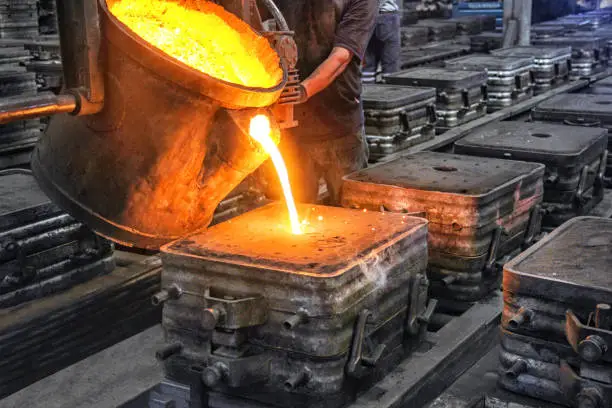
Evaluate Supplier Capability, Certifications, and Traceability
Check Technical Expertise and Equipment
It's best to ask a good cast copper source a lot of technical questions. They should be able to answer them fast and show you the tools and production skills they use. When buyers compare makers, they should pay attention to how well they manage the heating process, how many parts they can cast at once, and whether or not they have CNC machines on staff. Zhejiang Fudebao Technology Co., Ltd. is an expert at making precise cuts and castings out of stainless steel, copper alloy, and aluminum alloy. In its plant, it has CNC lathes, high-speed machining centers, low-pressure casting machines, and die casting machines, which let it make a lot of different things. The business has worked with clients in the marine, aviation, automotive, industrial equipment, and machinery fields. They look at the engineering plans to make sure the product can be made before they start making it. This type of engineering analysis can help people who are buying cast copper parts find possible casting issues, make better use of materials, and cut down on machining that isn't needed. Also, make sure that every possible cast copper provider has a complete list of their tools. They should also know which casting and machining methods will work best for the chosen alloy, the part's shape, and the quantity that needs to be made. Making sure that the cast copper manufacturer has a lot of experience, the right tools, and technical know-how can help keep production steady and make sure that the finished parts meet the needs of the project.
Review Certifications and Traceability Records
Ask for the certificates the supplier actually holds, such as a quality management system registration, and confirm that the scope and dates are current. Then test traceability. Can the foundry link a finished part to its heat number, material certificate, inspection record, and ship date? Aerospace and defense buyers usually require this chain, and automotive buyers expect lot control for PPAP and recall readiness. Electrical and energy buyers should also ask how the supplier meets the standards named in their own specifications. A short audit or a video walk-through of the shop floor often tells you more than a brochure does.
Judge Communication, Lead Time, and Long-Term Value
Compare delivery performance with facts: quoted lead times, on-time history, sample turnaround, and the way the supplier handles engineering changes. Ask about batch flexibility, since industrial machinery programs often start with small runs and move to larger releases later. Confirm that you will have one named point of contact who answers technical questions in clear English. Then add up the total cost. Scrap rates, rework, machining time, freight, and downtime risk all affect the final number more than the quoted unit figure does. A supplier who tracks these items openly is easier to work with over several years.
Conclusion
Buying cast copper parts well depends on verifying facts before comparing price. The application defines the alloy, and the exact designation, standard, and material certificate confirm composition and conductivity, which porosity, oxides, and residual deoxidizers can reduce. The casting method, gating design, and secondary operations shape accuracy and soundness, while tight tolerances belong on machined features backed by first-article reports. Internal defects call for radiographic, penetrant, pressure, or conductivity tests with agreed acceptance levels. Comparing copper with wrought stock, aluminum, brass, bronze, and cast iron on conductivity, strength, density, expansion, and lifecycle cost keeps the decision objective. Supplier equipment, certifications, traceability, and delivery history show whether a foundry can repeat quality from the first lot to the last. Together, these checks lower both risk and total cost.
FAQ
What is the most common defect in cast copper parts?
Porosity is the most common defect. Gas absorbed in the melt and shrinkage during solidification create voids that lower conductivity and strength and can cause leaks. Careful gating, melt control, and radiographic or pressure testing reduce the risk.
Should I choose pure copper or a copper alloy?
Choose pure cast copper only when conductivity is the main requirement. Alloys such as brass, bronze, and copper-nickel offer higher strength, wear resistance, or corrosion resistance. Share your load, environment, and electrical needs, and the supplier can recommend a suitable grade.
What documents should I request with an order?
Request a material certificate with chemical composition and batch number, a first-article inspection report, test records that match your acceptance criteria, and a written process flow. Automotive projects may also require PPAP documents.
Send Your Cast Copper Drawings to Fudebao Technology
If your next project needs a cast copper supplier, Fudebao Technology can review your drawings and alloy requirements. We cover melting, casting, finishing, and surface treatment, with machining accuracy up to ±0.05 mm and one-stop delivery from blank to finished part. Email hank.shen@fdbcasting.com with your drawings, quantities, and operating conditions, or visit fdbcasting.com for more details.
References
1. ASM Handbook, Volume 15: Casting, 2008
2. Copper and Copper Alloys (ASM Specialty Handbook), 2001
3. Complete Casting Handbook, 2015
4. ISO 8062-3: Geometrical Product Specifications, Dimensional and Geometrical Tolerances for Moulded Parts, 2007
5. ASTM B584: Standard Specification for Copper Alloy Sand Castings for General Applications, 2014
6. Foundry Technology, 2001



YOU MAY LIKE