
How Does Die Cast Aluminium Reduce Weight in Vehicle Manufacturing?
2026-08-18
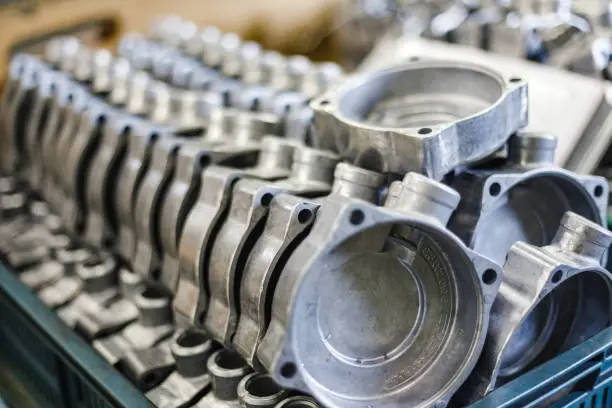
Die cast aluminium achieves weight reduction in vehicle manufacturing by replacing heavier steel and iron components with lightweight aluminum alloy parts produced through high-pressure die casting. This process creates thin-walled, structurally robust components with a superior strength-to-weight ratio—approximately three times lighter than steel while maintaining comparable mechanical integrity. The technology enables design consolidation, merging multiple parts into single castings that eliminate excess fasteners and welds. With alloys like A380 offering tensile strength around 47 ksi at just 2.71 g/cm³ density, die cast aluminium delivers mass savings of 40-60% compared to traditional materials without sacrificing performance or safety standards.
Introduction
Today's automobile engineers have to quickly come up with ways to make cars that meet stricter fuel economy rules and environmental laws without sacrificing safety or speed. The weight of a vehicle directly affects how much fuel it uses—a 10% drop in mass makes the vehicle about 6-8% more efficient. Die cast aluminium has become a game-changing material, allowing automakers to make smaller cars while still upholding the structural strength needed to meet today's safety standards.
This way of making things uses material science and modern production methods to make parts that are hard to make with standard methods. OEMs and tier-1 providers in the car industry need to know how die cast aluminium helps reduce weight as pollution standards get stricter, and customers demand better performance. Our research looks into the technical foundations, real-world applications, and buying strategies that make this technology essential to making cars today.
Understanding Die Cast Aluminium in Vehicle Manufacturing
The High-Pressure Die Casting Process
Die cast aluminium parts are made using a complex process in which liquid aluminum metal is pressed into precise steel molds at very high pressures, usually over 30,000 psi. This high-pressure die casting (HPDC) method pushes the liquid metal into every tiny hole. The result is parts that are very accurate in size and have a smooth surface. Unlike sand casting or permanent mold techniques, HPDC can make walls as thin as 1.5 mm in some places while still keeping the structure strong through strategic ribbing design.
The first step is to melt aluminum alloys in controlled ovens that are hotter than 1,200°F. Optical Emission Spectroscopy (OES) checks the chemical makeup while it's melting, making sure that elements like iron, copper, and zinc stay within certain limits to keep the metal from breaking. After being checked, the melted metal is sent to the die casting machine, where it is injected into a hardened steel die by a hydraulic system. Since cooling happens quickly, cycle times can be measured in seconds instead of minutes. This makes HPDC a very efficient way to make a lot of things.
Material Properties That Enable Weight Reduction
A380, A383, and ADC12 are some common aluminum alloys used in car die casting. Each has its own unique properties that make it good for a different purpose. A380 has a tensile strength of about 47 ksi and a yield strength of about 23 ksi, which means it is easy to cast and has good mechanical qualities. These alloys have a density of about 2.71 g/cm³, which is about a third of that of steel. This means that they are lighter right away, before the design optimization even starts.
In addition to reducing weight, aluminum alloys have a thermal conductivity of about 96 W/m-K, which turns structural parts into active heat management systems. This property is very useful for engine parts and the housings of electric vehicles, where heat loss directly impacts how well they work and how long they last. The material doesn't naturally rust, and it stays strong even in harsh automotive environments with salt, water, and changing temperatures. This is especially true when the surface is treated according to ASTM B117 standards.
Distinguishing HPDC From Alternative Methods
While sand casting and low-pressure casting are useful for some industrial tasks, they are not as precise or thin-walled as high-pressure die casting (HPDC). Sand casting makes parts that are bigger, heavier, and need thicker walls for structural integrity. This makes the parts weigh a lot more. Extrusion makes cross-sections that are all the same, which is great for structural beams, but it can't handle the geometric complexity that HPDC can in just one process. CNC machining from billet aluminum makes precise parts, but it gets too expensive to do in large quantities. For most production volumes below 1,000 to 2,000 units, die casting is more cost-effective.
Challenges in Traditional Vehicle Manufacturing Methods
Weight Penalties of Steel and Iron Construction
Steel and cast iron were used a lot in traditional car making for structural parts, engine parts, and housings. Because steel has a density of about 7.85 g/cm³, even the best designs had a lot of mass. A typical steel engine block could weigh 200 to 250 pounds. A similar aluminum die cast version would weigh only 80 to 120 pounds, saving more than 100 pounds per car. When these weight differences are added up across frame parts, suspension parts, and transmission housings, they become very noticeable.
Iron was the most common material for engine blocks and cylinder heads because it was the least likely to wear down. However, its weight made vehicles less maneuverable and used more gas. The material was also hard to shape, which limited design options and forced engineers to use bulkier shapes that added to the mass. Over the course of the 2000s, fuel economy standards got stricter. These weight fines made it harder for makers to meet the rules without using expensive hybrid or electric powertrains.
Manufacturing Limitations With Legacy Processes
Traditional casting processes have a hard time making thin-walled shapes with complex designs that save the most weight. To make sure the metal flows properly and the structure stays strong, sand casting needs walls that are at least 5 to 8 mm thick. This makes the parts much heavier than they need to be. To get acceptable tolerances, the process also needs a lot of secondary machining, which adds steps to the manufacturing process that raise costs and lengthen production times.
Even tho stamped steel parts are lighter than cast iron parts, they need to be formed many times and welded together a lot to make three-dimensional structures. Each weld adds weight because of the overlapped material and bolts, and it also creates possible weak spots that mean extra engineering is needed for safety. Compared to near-net-shape die casting, which combines features into single parts, these methods require more assembly, which extends production cycles and makes quality control harder.
Regulatory and Performance Pressures
In the United States, stricter Corporate Average Fuel Economy (CAFE) standards require that fleet-wide fuel efficiency keep getting better. To meet the 2025 goals of getting about 49 mpg on average for passenger cars, automakers are forced to use extreme weight loss tactics. At the same time, safety rules require stronger crash structures and more features like advanced driving aid systems. This makes it hard because cars need to get lighter while also being able to do more.
Emissions rules make these problems even worse because larger cars use more gas and release more CO2 into the air. In European markets, manufacturers are punished if they don't meet fleet emission targets. In California, the Zero Emission Vehicle mandates speed up the adoption of electric vehicles. Even for electric vehicles, lowering weight is still very important. This is because lighter cars need smaller battery packs to have the same range, which lowers costs and raises efficiency. This creates a positive cycle that makes die cast aluminium parts more valuable.
How Die Cast Aluminium Enables Weight Reduction
Thin-Wall Design Capabilities
The ability of die cast aluminium to create buildings with thin walls is arguably its most important weight-saving feature. Standard wall thickness for structures is between 2.5 mm and 3.5 mm, but in certain places, where the right rib shape is present, it can reach 1.5 mm. It is not possible to safely get these sizes with sand casting or steel manufacturing. The high injection pressure makes sure that the mold is fully filled, even in small gaps. This gets rid of the problems with porosity that come up with lower-pressure processes.
Engineers use this ability to their advantage by making parts that only put material where structural analysis shows it is needed. Finite element analysis (FEA) finds stress points and load paths, which lets designers add strengthening ribs exactly where they are needed and reduce wall thickness in other places. Parts that meet or go beyond strength standards can be made with this improvement at a fraction of the weight of traditional parts. A die cast transmission housing might have 2 mm walls in low-stress areas and 4 mm walls with mounting holes built in. This makes the housing 30 to 40 percent lighter than similar steel structures.
Superior Strength-to-Weight Performance
By comparing the properties of different materials, we can see why die cast aluminium works better in car uses than other options. Even tho steel is stronger in absolute terms, its higher density cancels out this benefit when looking at strength-to-weight ratios. Specific strength, which is strength divided by density, is about 40% higher in aluminum alloys than in steel. This means that lighter parts can hold the same amount of weight. Because of this relationship, engineers can directly switch out aluminum parts for steel parts with little change to the design.
The study of materials goes beyond simple replacement. The elastic modulus of aluminum is different from that of steel. This means that design changes are needed, which often lead to more optimization opportunities. Aluminum's properties can be used more effectively when parts are made to fit the metal's properties instead of using steel replacements. Integrated cooling fins use thermal conductivity to their advantage, mounting bosses group together fastening points, and complex internal shapes make the structure more efficient. All of these features add up to weight reductions that are greater than simple material swap gains.
Part Consolidation and Integration
To make three-dimensional parts in traditional production, many times you have to put together several pressed or machined pieces. For every part, you need screws, welds, or adhesives, which add weight and make the process of making it more difficult. Die casting makes geometrically complicated parts in a single step, so there are no building steps and the weight costs that come with them. It is possible to make a structural bracket out of one die cast aluminium piece that weighs half as much as four pressed steel pieces, twelve screws, and three welds.
This merging benefit can be seen in Fudebao Technology's manufacturing skills. Our high-pressure die casting machines make parts with built-in features like mounting bosses, cooling channels, and alignment surfaces that used to need to be machined out separately or added as separate parts. This lowers the number of parts that go into making a car, which makes logistics and quality control easier and saves weight. This method works especially well for battery housings in electric vehicles, where it creates lightweight, thermally efficient enclosures from a single casting by incorporating thermal management pathways and structural support.
Reduced Secondary Operations
When die cast parts come out of molds, they are almost exactly the right shape and don't need as much machining as castings from other methods. Important mounting surfaces and bearing bores need to be finished, but most of the part doesn't need any extra material to be taken off. Compared to sand molds, which need a lot of machining to get the right size specs and surface finishes for car use, this feature stands out very clearly.
Less cutting means keeping more of the weight—the stuff that is taken away during secondary processes is weight that wasn't needed in the first place. Because die casting is naturally accurate, plans can set tighter limits knowing that they will be met during the casting process. Surface treatments like powder coating or e-coating don't add much weight but protect against corrosion better than bare steel, which means that parts last longer without adding extra weight. When proven by cross-hatch adhesion testing according to ASTM D3359 and salt spray resistance testing according to ASTM B117, these coatings last hundreds of hours outdoors.
Case Studies: Applications of Die Cast Aluminium in Automotive Industry
Lightweight Engine Components
Engine blocks and cylinder heads are great places to use die cast aluminium to cut down on weight. Cast iron blocks usually weigh more than 200 pounds, but metal blocks only weigh 80 to 120 pounds, which is a savings of more than 100 pounds per car. Modern aluminum blocks stay strong with smart ribs and improved bearing support designs that have been proven to last through a lot of testing. The advantage of thermal conductivity is also very useful, because aluminum's ability to get rid of heat makes it possible to package engines more tightly and make cooling systems that work better.
At first, manufacturers were hesitant to use aluminum engine blocks because they were worried about wear at the sides of the cylinder bores. These problems with durability were fixed by making plasma-sprayed bore coatings and cast-in iron liners. Now, aluminum blocks can last as long as or longer than iron blocks. Aluminum engines in production today regularly have service lives of 200,000 miles or more, which proves that the material is reliable under long-term high-temperature, high-stress use. Less weight in the engine bay lowers the center of gravity and makes the vehicle easier to handle, so the weight savings directly lead to better vehicle stability.
Structural and Suspension Components
Die cast aluminium chassis and suspension parts take advantage of the material's high strength-to-weight ratio in situations where impact resistance and fatigue endurance are important. When you switch from steel to aluminum for suspension control arms, steering knuckles, and chassis parts, you save 40 to 50 percent of the weight. These weight savings on unsprung and semi-sprung parts directly improve ride quality and handling response because lighter suspension parts respond more quickly to road inputs with less inertia.
At first, safety concerns made people doubt aluminum structural parts, but a lot of crash tests proved that properly built aluminum parts meet or exceed safety standards. The way the material absorbs energy during impacts is different from steel's, but it can be designed to protect people just as well. More and more, modern vehicle frames use aluminum castings in key places where their lighter weight and design freedom give the most benefit without lowering the safety of the vehicle in a crash.

Electric Vehicle Battery Housings and Thermal Management
Die cast aluminium parts for electric cars have their own problems and chances. Battery housings need to protect the structure, keep the temperature down, and block electromagnetic waves. Aluminum does a great job of meeting all of these needs. Large-format die castings combine into a single structural component what would normally need dozens of stamped steel pieces and a lot of welding. This method makes manufacturing easier while adding cooling tubes that use the thermal conductivity of metal to control the temperature of the battery.
Leading electric vehicle (EV) makers use structural battery housing castings that are 30–40% lighter than similar steel assemblies. These castings also protect against crashes better by absorbing energy more efficiently. The thermal management feature is especially useful because keeping the battery at the right temperature affects how fast it charges, how well it works, and how long it lasts. Aluminum's ability to conduct electricity provides grounding paths and EMI shielding that keep sensitive electronics safe from interference. This makes it possible to combine multiple functions into fewer parts, which simplifies the structure of the vehicle.
Procurement Considerations for Die Cast Aluminium Parts
Alloy Selection and Material Specifications
To choose the right aluminum alloys, you have to weigh the cost, the ease of casting, the mechanical properties, and the heat qualities. A380 is still the most common die casting metal because it flows easily, doesn't rust, and has balanced mechanical qualities. Applications that need more strength might ask for A356 or similar metals that have better tensile properties. However, casting these materials is harder, which can increase costs and lengthen wait times.
Before casting starts, the chemistry of the material is checked using OES analysis while it is melting. Controlling the composition is especially important for elements that affect mechanical qualities. For example, too much iron makes something less flexible, and copper presence affects how strong something is and how hot it is. Reliable suppliers keep tight controls on the production process and give certified material test reports that show the material meets the ASTM B85 compositional and mechanical property requirements.
Supplier Evaluation Criteria
To find die cast aluminium parts, you have to carefully evaluate suppliers in a number of different areas. Production capabilities are very important. Die casting machines with the right tonnage ratings and vacuum-assist systems make better parts with fewer holes. The building of Fudebao Technology shows these skills with high-speed machining centers, CNC lathes, low-pressure casting machines, and die casting machines that weigh between 280 and 2,500 tons. This wide range of tools serves the whole production process, from melting to finishing and surface treatment. This means that blank castings can be delivered along with finished parts in just one trip.
Quality control systems are very important for making sure that production is always the same. Suppliers should have at least ISO 9001 certification, and automotive suppliers should also have IATF 16949 certification. Check out the inspection tools they have, such as CMM equipment for checking dimensions, X-ray systems for finding internal holes, and leak testing tools for making sure parts don't leak. For automotive applications, being able to make PPAP documentation is still very important. This shows that the process can be done through production part approval procedures that make sure design specifications are always met in production.
Geographic and Logistic Considerations
When you buy things from other countries, the processes get more complicated, which changes wait times, inventory needs, and the total cost of ownership. Suppliers in Zhejiang Province, China, like Fudebao Technology, offer lower costs for production and a well-established shipping network that connects them to markets around the world. Usually, it takes 3–4 weeks for ocean freight to get to the U.S. West Coast ports, which means that inventory planning has to take into account both the cost of transporting goods and the cost of keeping them.
When working with foreign providers, the ability to communicate has a big effect on the success of the project. Check the engineering knowledge and language skills of the technical staff to make sure that design requirements are translated correctly into manufacturing specifications. Due to different time zones, communication protocols need to be set up so that technical questions can be answered quickly without causing project delays. Reliable suppliers give each project its own project manager. This person works with the design teams, production offices, and quality testing to keep the project moving forward even tho they are in different places.
Cost-Benefit Analysis and ROI
Die casting requires a big investment in tools. For example, sharpened steel dies for complicated car parts can cost a lot before the first one is made. This way of setting prices makes die casting more cost-effective for making more than 1,000 to 2,000 units, since the costs per piece drop by a huge amount compared to CNC machining options. When you make a lot of things, the cost of the tools is spread out over a lot of parts, which lowers the cost per unit compared to machined options.
The return on investment is more than just comparing piece prices. Losing weight saves money on gas over the life of a vehicle—a 100-pound loss in weight improves gas mileage by about 1% to 2%, which adds up to big savings for fleets of vehicles. Following the rules keeps you from getting fined for exceeding emission standards, and better vehicle performance can justify higher prices that increase profits. Include lower transportation costs from fewer parts, less assembly work from combining parts, and possible guarantee improvements from getting rid of multi-piece assemblies that fail often when figuring out the total cost of ownership.
Conclusion
Die cast aluminium changes the way cars are made by lowering their weight, which lowers emissions, improves performance, and saves gas without sacrificing safety or durability. High-pressure die casting makes it possible to make thin-walled, geometrically complicated parts that aren't possible with traditional methods. Also, aluminum has a better strength-to-weight ratio than steel options, so it saves 40–60% of the weight. Part consolidation gets rid of the extra weight and complexity of assemblies, making manufacturing processes more efficient, which lowers costs and raises quality. As rules for cars get stricter and more electric cars come out, die cast aluminium parts will become even more important for meeting energy goals and meeting the performance standards of competitors.
FAQ
What advantages does die cast aluminium offer over sand cast alternatives in automotive applications?
Die cast aluminium creates parts with tighter size specs (±0.002 inch/inch vs. ±0.010+ inch/inch for sand casting), smaller walls that allow for more weight reduction, and better surface finishes that require less secondary machining. The high-pressure process gets rid of most of the porosity problems that come with sand casting, making parts that are pressure-tight and can be used in fluid-containing situations. Although cycle times are measured in seconds instead of minutes, die casting is a much more efficient way to make a lot of identical parts for cars.
How durable are die cast aluminium parts under rigorous engine conditions?
When properly designed, die cast aluminium parts last a very long time in the conditions that cars are used in. When the right cylinder bore techniques are used, modern aluminum engine blocks regularly have service lives of 200,000 miles or more. The material is better at transferring heat than cast iron because it is thermally conductive. This helps control thermal stresses that cause parts to wear out. Parts are made sure to meet car durability standards before they are put into production by going through a lot of thermal cycles, vibration testing, and accelerated life testing.
What timelines should we expect for design and production of custom die cast aluminium components?
Die casting projects usually go like this: design and simulation take two to four weeks, die design and manufacturing take eight to twelve weeks, and first article production starts one to two weeks after die finish. Making PPAP documentation takes an extra two to four weeks before full production authorization. From the design freeze to being ready for production, the whole job usually takes between 14 and 20 weeks. Once an item is in production, lead times depend on how many are ordered, but are usually between 4 and 6 weeks. This includes both manufacturing and shipping to U.S. destinations from other countries.
Partner With Fudebao Technology for Advanced Die Cast Aluminium Solutions
Precision aluminum alloy die casting and CNC machining are what Zhejiang Fudebao Technology Co., Ltd. does best. They provide automotive OEMs and tier-1 suppliers with parts that meet the strictest requirements for dimensional accuracy. We can melt, cast, finish, and treat the surface all at the same time, and we can meet tolerances of ±0.05mm for important automotive applications. As a reliable die cast aluminium provider, we offer full PPAP documentation and keep up-to-date certifications that allow direct supply to foreign names, such as American HAAS automation equipment and ESS energy storage systems. Get in touch with our engineering team at hank.shen@fdbcasting.com to talk about your lighting projects and find out how our knowledge of aluminum die casting can help you make vehicles lighter while still meeting your performance requirements and production schedules.
References
1. Kaufman, J. Gilbert, and Elwin L. Rooy. Aluminum Alloy Castings: Properties, Processes, and Applications. ASM International, 2004.
2. American Foundry Society. Die Casting Defects and Solutions: A Technical Guide for High-Pressure Die Casting. 2018 Edition.
3. Hirsch, Jürgen. "Recent Development in Aluminium for Automotive Applications." Transactions of Nonferrous Metals Society of China, vol. 24, no. 7, 2014, pp. 1995-2002.
4. North American Die Casting Association. Product Specification Standards for Die Castings Produced by the Semi-Solid and Squeeze Casting Processes. NADCA, 2020.
5. Lumley, Roger N., editor. Fundamentals of Aluminium Metallurgy: Production, Processing and Applications. Woodhead Publishing, 2011.
6. Shehata, Mahmoud T., et al. "Lightweight Materials in Automotive Applications: A Comprehensive Review." Journal of Materials Engineering and Performance, vol. 30, no. 3, 2021, pp. 1523-1544.



YOU MAY LIKE