
Copper Casting for Precision Electrical and Mechanical Components
2026-11-10
Professional copper casting turns molten copper or a copper alloy into precise, near-net-shape parts for electrical and mechanical use. It works best when a part needs strong conductivity, corrosion resistance, good machinability, and a complex shape that a solid bar would waste metal to produce. Results depend on four choices: the alloy, the casting process, the tolerance plan, and the supplier. I wrote this guide to help engineers and buyers in the United States compare those choices, prevent common defects, and request accurate quotations. Each section builds on the last, so you can move from basics to a confident RFQ.
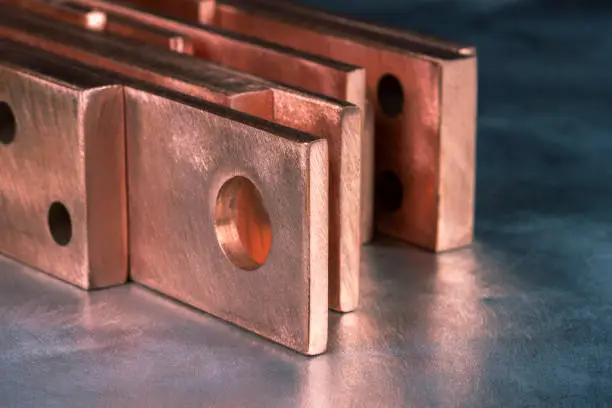
What Professional Copper Casting Means for Precision Parts
How the Process Works
Copper or a copper mixture is melted down in a furnace and put into a frame that has already been made. This is important to remember: pure copper melts at about 1,085 °C (1,985 °F). Getting the mold or pattern ready, melting, filling the mold, letting it harden, letting it cool, shaking it out, finishing, inspecting, and cutting are all parts of the process. The last part is changed by each step. One example is that hydrogen from water can be taken up by liquid copper. This gas then shows up as pores. When a foundry is good, they pay close attention to the temperature, the speed of the filling, and the shape of the charge. These three things show if the casting is clean and dense. That is why I start every review of a supplier with "why they melt."
Common Copper Alloy Groups
When people want to buy something, they usually choose from five groups of things. It's important to be exact here because copper alloys come in hundreds of different forms. Pure copper has the best conductivity, and annealing copper is what the IACS standard calls for. Brass is a metal that is made of copper and zinc. It is easy to work with and makes good valve parts and fittings. Bronze is good for bushings and sleeves because it doesn't wear down quickly. Pumps and other marine gear are stronger and less likely to rust when they are made of aluminum bronze. Salt water is good for copper-nickel. With UNS numbers, you don't need to guess. Cast high-conductivity copper is written as C81100, and aluminum bronze is written as C95400. Always write down the exact metal on the model. Two bronzes can have very different strengths, wear, and machinability.
Casting Compared with Machining, Forging, and Fabrication
When a component contains internal cavities, ribs, or channels, machining it from a solid copper bar can result in significant material waste. Copper has a relatively high density of 8.96 g/cm³, meaning that removed chips represent a considerable amount of valuable raw material. Professional copper casting offers a more efficient alternative for manufacturing complex geometries because it allows features such as bosses, ribs, internal channels, and connecting sections to be produced as a single integrated component. Although forging can produce strong and durable parts, it is generally less suitable for components with complex internal structures. Fabrication also involves additional welding, brazing, and assembly operations, which can increase production time and labor costs. By comparison, Professional copper casting can reduce material waste, minimize the number of separate components, and simplify subsequent assembly. Casting is particularly cost-effective when component geometries are complicated, or production volumes are relatively stable, helping manufacturers spread pattern and tooling costs across multiple units. After casting, CNC machining can be used to achieve the required dimensional accuracy on critical features, including sealing surfaces, precision bores, and connection interfaces. Combining Professional copper casting with targeted machining provides a practical balance between material utilization, manufacturing efficiency, and finished component quality.
Casting Processes and Design Guidelines for Copper Parts
Sand Casting and Investment Casting
Sand casting is a cheap way to make both big and small parts. It can be used for valve bodies, big housings, and pump bodies. To make an investment cast, you cover a pattern made of wax in clay, melt the wax, and then add metal to the shell. It's possible to copy small details and thin parts, and it usually leaves less cutting stock. Allowances for cutting are usually between 1.5 mm and 6 mm, but they depend on the process and the size of the part. The most freedom is available for sand casting. People who want to buy something should not choose the process with the lowest cost of tools. Instead, they should choose the process that fits the wall thickness, surface finish, and annual demand.
Die, Centrifugal, and Continuous Casting
When you make a lot of them, die casting makes consistent results that are close to a net shape. However, copper melts at temperatures that are much higher than aluminum. This means that the dies don't last as long. We should first look at the alloy and the shape. The mold is spun in centrifugal casting, which makes the metal push outward. These steps make cylinder-shaped parts that are thick and clean, like rings, sleeves, and bushings. The bars, rods, plates, and tubes that are made by continuous casting are then used to make finished parts by machine operators. Long-span metal can also be used to make simple turned parts. Before you decide, look at how much the tools cost, how well the alloy works, the wall thickness, the surface finish, the annual demand, and how often the tools need to be inspected. If you have a quick chat with the maker now, you might not have to rethink later.
Design Guidelines for Castability
When you make something well, the metal can fill the mold and harden all the way through. Make the wall as thick as possible all the way through, add a lot of fillets, and make sure the ribs and bosses don't block the heat. Plan the draft angles, splitting lines, cores, and vents around getting rid of the mold and the features on the inside. For electrical parts, keep holes and other unwanted items away from the parts that carry electricity, the parts that touch, and the parts that get hot. Any parts with deep holes, undercuts, or thin walls should get a design-for-manufacturing (DFM) review as soon as possible. The foundry can find problems before they start making tools if you send them 3D CAD files, 2D models, performance needs, and key limits. Before these files are used to make molds, engineers at Fudebao Technology look them over.
Tolerances, Quality Standards, and Defect Prevention
Tolerances and Surface Finish
Dimensional tolerances in Professional copper casting depend on several factors, including the casting method, alloy composition, component size and geometry, and subsequent machining requirements. Buyers should clearly distinguish between as-cast dimensions and final machined dimensions when preparing engineering drawings. Critical functional features should also be identified separately from non-critical reference surfaces to avoid unnecessary machining costs. Establishing clear tolerance requirements helps manufacturers allocate machining allowances more effectively and prevents customers from paying extra for surfaces that do not require precise contact or fitting. ISO 8062-3 is commonly referenced in casting drawings because it specifies dimensional and geometrical tolerance grades and machining allowance grades for castings. Different manufacturing methods, including sand casting, investment casting, and die casting, offer different levels of dimensional accuracy and surface quality. After casting, additional finishing operations such as grinding, sanding, deburring, polishing, and CNC machining can improve the final component. In Professional copper casting, contact surfaces, sealing faces, and bearing bores generally require particular attention because their dimensions directly affect assembly accuracy and operational performance. Our machining equipment can achieve accuracy of up to 0.05 mm, allowing these critical features to be finished in-house. By combining controlled Professional copper casting with precision machining, manufacturers can improve dimensional consistency, reduce unnecessary processing, and deliver components that meet demanding engineering specifications.
Quality Documents and Inspection
There is proof of what you get. Parts of a package that are often found are material certificates, chemical analysis, dimensional reports, conductivity results, mechanical tests, NDT records, pressure tests, and First Article Inspection reports. Copper alloy sand castings are used in a lot of different situations. ASTM B584 tells us what they should be made of and how strong they should be. This makes things clear for buyers to begin with. Make sure the measuring tools are correct, that you can keep track of the product from the time it melts until it's shipped, and that the inspection plan fits your needs. Electric parts need to be checked to see if they conduct electricity, and valve and pump bodies often need to be checked for pressure. People who buy things in the military and aircraft businesses often put traceability and advanced testing needs at the top of this list. Put these needs in the RFQ so that when the price comes in, there are no shocks.
Common Defects and How to Prevent Them
Many things can go wrong with copper casting, like holes that shrink, misruns, cold shuts, cracks, warping, inclusions, and rust. This could happen because of things like not getting enough feeding, gas building up, turbulence, low filling temperature, and uneven cooling. Because copper alloys often have hydrogen in them, foundries use nitrogen or argon to get rid of the gas and deoxidizers like phosphor copper to get rid of the oxygen. If you put gates and risers in the right places, they help directional solidification. This means that when the part shrinks, it goes into the riser instead of the part. Any risks of filling or solidification can be seen in simulations and first-article validation before the product is made. The standard of each batch is kept high by a written defect report that includes a root-cause analysis. Plus, records of what a service does to fix problems show what they do when something goes wrong.
Materials, Alternatives, and Applications
Copper Compared with Aluminum, Brass, and Bronze
Choose the right metal for the job, not just because that's what you always do. About 400 W/m·K of heat moves through copper, while only 237 W/m·K of heat moves through pure aluminum. Casting alloys made of both metals don't conduct heat as well. The weight of copper is about 3.3 times that of aluminum, so aluminum is lighter. Brass is handy because it doesn't rust and is easy to work with. Bronze is better for use in the ocean because it lasts longer. There are materials like bismuth bronze and selenium brass that can be made without lead and are used in drinking water in the US. These materials help meet NSF/ANSI 61 guidelines. Custom castings are a good choice when standard parts don't have the right shape, built-in features, or special alloys.
Electrical and Thermal Applications
Copper castings can be used to make conductive housings, motor parts, grounding parts, switchgear parts, and terminals and plugs. Parts like these need to be conductive, clean, and have low porosity so that voids don't get in the way of current flow or trap heat. For thermal uses, there are manifolds, housings, cooling channels, and parts that move heat. The tunnels must stay pressure-tight on the inside, and testers must be able to make sure they do. For power tools and people who want to use green energy, copper and aluminum castings can be put together in one piece. When it comes to conductivity, copper is used. On the other hand, aluminum is used when weight and cost are more important. When sourcing teams and electrical engineers talk about materials early on, they can find a good balance.
Mechanical and Fluid-Handling Applications
The wear rings, impellers, bushings, sleeves, and valves work based on how well they close, how strong they are, how well they balance, and how simple they are to make. When steel meets steel, it can get angry and stop moving. This can't happen because of bronze bushings. Bronze and copper-nickel castings are used to make pumps and other nautical tools that will be used in salt water. These parts are used by people who build industrial machines like heavy machinery, pumps, and gears because they can stay in shape at high temperatures. OEMs can also make a single casting with ribs, ends, channels, and connection points. This cuts down on the time it takes to put the parts together and gets rid of any parts that could leak. Mechanical engineers and technical buyers should write on the model what kind of fluid it is and what temperature it works at.
Choosing a Supplier and Planning Your Project
What to Look for in a Copper Foundry
When comparing suppliers, don't focus only on the price per unit. A reliable service provider should understand your metal materials, production processes, tooling requirements, cutting operations, and finishing needs. They should also have a clear design-for-manufacturing (DFM) process, agree on sample approval standards, use appropriate inspection tools, maintain product traceability, and have a defined procedure for handling nonconforming products. For buyers seeking Professional copper casting, it is important to evaluate both technical capabilities and the overall production workflow. Zhejiang Fudebao Technology Co., Ltd. specializes in casting and machining aluminum alloys, copper alloys, and stainless steel. Our factory is equipped with CNC lathes, high-speed machining centers, low-pressure casting machines, and die-casting machines, allowing us to handle melting, casting, machining, finishing, and various surface treatments. This integrated production setup supports Professional copper casting and other metal manufacturing requirements, helping customers obtain products from initial blanks to finished components while reducing the need for multiple external suppliers. Our customers include businesses in the automotive, industrial equipment, machinery, marine, and aerospace parts sectors. We also supply products directly to international brands and customers, including ESS energy storage batteries and HAAS automation machine tools. By combining casting expertise with in-house machining capabilities, we provide a more coordinated approach to Professional copper casting, helping buyers manage production quality, communication, and delivery more efficiently.
From RFQ to Production
A well-organized process makes technical doubts less likely. Send the drawings, CAD files, alloy needs, annual demand, tolerances, surface finish, test standards, packaging needs, and where the goods are going as the first thing. When the supplier gets the RFQ, they look it over and make sure the drawings are clear. They then send back a quote that includes the costs of shipping, tools, samples, production, inspection, and production. It is part of the DFM and tooling approval process that the team checks the parting lines, draft, cores, machining allowances, gating, risers, and shrinkage compensation. Next, the team checks the first items' look, size, form, composition, ability to conduct electricity, and ability to withstand pressure. Once it's okay, it writes down the details for mass production, does one last check, packs up the goods, and sends them out. When there is change control, the specs don't change.
Cost Factors in Custom Copper Casting
A one-of-a-kind copper casting doesn't just cost what it does on the metal market. Among the things that make up the material part of a price are the amount of copper, the alloy's makeup, melt loss, certification, and the ability to be inspected. The tooling is affected by the type of mold, how complicated it is, how long it is meant to last, the volume, and how likely it is that the design will change in the future. The last number might be different because of tight tolerances, internal features, special tests, cutting, and polishing the surface. It takes longer and costs more to make tools for small batches, but it works better when expectations are stable, and orders come back. When buyers compare goods from different countries, they should think about how much they cost altogether, including shipping, duties, packaging, and the warranty. It's easier to compare prices fairly when there is a clear split.
Conclusion
Professional copper casting enables mechanical and electrical designers to create intricate, conductive, and corrosion-resistant parts with less metal waste and fewer pieces that need to be put together. The study showed that the outcome relies on the type of metal used, the manufacturing method, and the design. Some types of casting, like die, centrifugal, and continuous, work best for certain shapes and sizes. Sand and investment casting, on the other hand, work best for different sizes and levels of detail. To keep quality stable, make sure there are clear tolerance splits between as-cast and finished features, keep records of inspections, and use flaw controls like degassing and proper gating. Aluminum is lighter than copper, but copper is a better conductor. Bronze and brass are durable and easy to work with. A clear breakdown of costs and an organized process from RFQ to production help buyers choose providers based on how well they do technical things instead of just how much each one costs.
FAQ
Which casting method works best for complex copper parts?
Sand casting can be used for big and small parts, as well as cores to put inside things. An investment cast can be used to make thin pieces and small parts with fine details. The best things to cast centrifugally are rings, sleeves, and bushings. Which choice is best depends on the form, wall thickness, finish, and demand each year.
Are copper castings suitable for electrical components?
Yes. Parts that ground electricity, plugs, connections, and housings that carry electricity are all common examples. On the drawing, write down the alloy, the conductivity you want, and the porosity levels in between. This will help the foundry plan tests and melt control.
How do tolerances differ between as-cast and machined features?
Tolerances for as-cast parts rely on the method and the size of the part. ISO 8062-3 gives general grades. Parts that have been made have stricter limits. Our cutting tools can be accurate to within ±0.05 mm.
What information do you need for an accurate quotation?
Send drawings, 3D CAD files, the amount of alloy you need, the annual volume, the standards for testing, the finishing standards, how you want the goods to be packed, and where they need to be delivered. It is possible to make small amounts, but each one costs more to set up.
Request a Review of Your Copper Casting for Precision Electrical and Mechanical Components
Send your drawings, CAD files, and volume goals to hank.shen@fdbcasting.com, and one of our engineers will look over your project. We are a Professional copper casting Supplier with machines that can be accurate to within 0.05 mm. We can melt, cast, finish, and treat the surface all in one place. See what we have to offer at fdbcasting.com and then let us know what you need for your next part.
References
1. ASM Handbook, Volume 15: Casting (2008)
2. Copper and Copper Alloys, ASM Specialty Handbook (2001)
3. Complete Casting Handbook (2015)
4. Foundry Technology (2001)
5. ASTM B584, Standard Specification for Copper Alloy Sand Castings for General Applications (2014)
6. ISO 8062-3, Geometrical Product Specifications: Dimensional and Geometrical Tolerances for Moulded Parts (2007)



YOU MAY LIKE